How Much Does It Cost to Build a 3 Bedroom House?
Building a 3 bedroom house costs $195,000 to $390,000 for construction alone, based on the national average of $162 per square foot reported by the National Association of Home Builders. Most 3 bedroom homes fall between 1,200 and 2,400 square feet, which is why the range is that wide. A modest 1,200 sq ft build on a tight budget can come in near $156,000. A 2,400 sq ft custom home can blow past $600,000 without trying very hard.
That number does not include land. And it moves a lot depending on three things: how big you build, what finish level you choose, and which state you build in. This guide breaks down all three, with real numbers, plus the stuff builders don't put in the brochure.
Quick answer: the most common 3 bedroom build in America, a 3 bed 2 bath around 1,500 to 1,800 sq ft at standard finishes, costs $243,000 to $292,000 to construct. For the full breakdown at that size, see our guide to the cost to build a 1,500 sq ft house.
3 Bedroom House Cost by Size
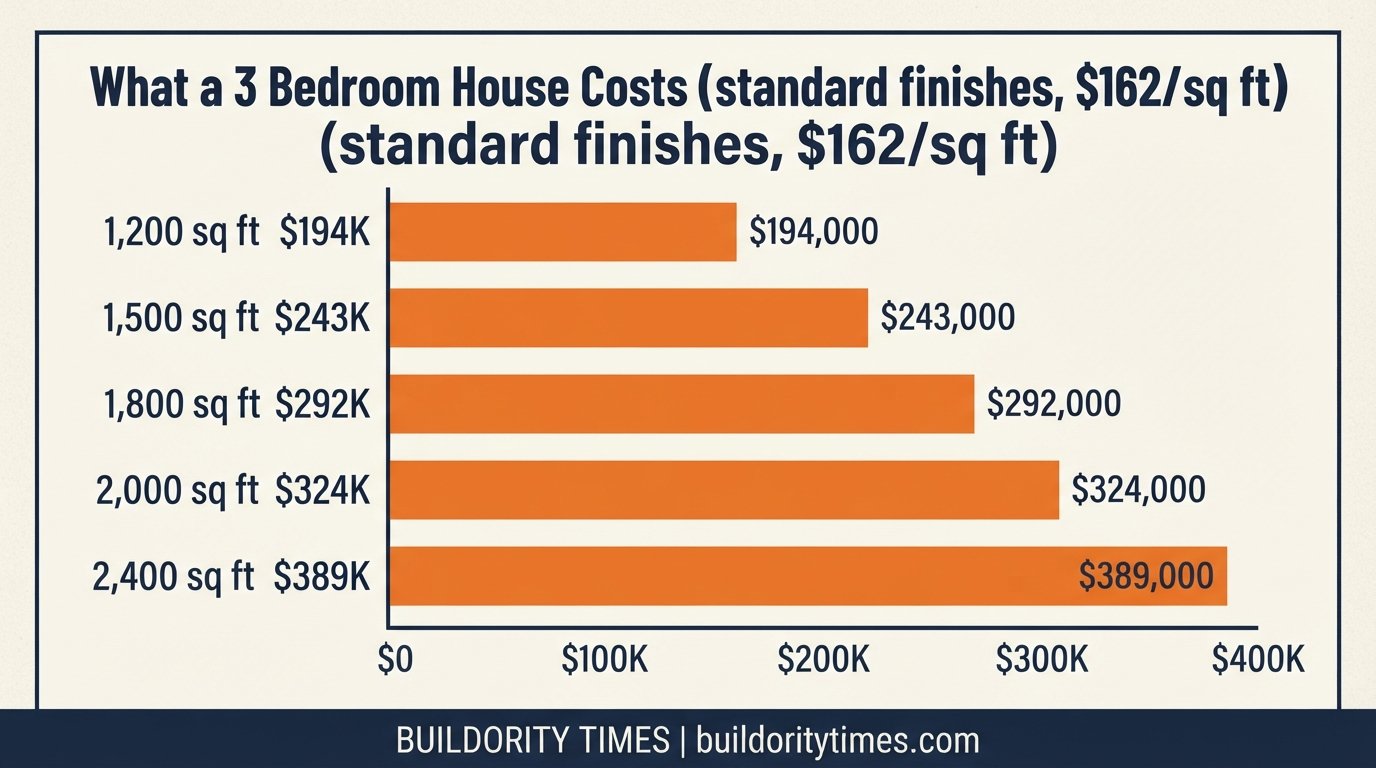
Square footage is the single biggest cost driver. Three bedrooms can fit in 1,200 sq ft or sprawl across 2,400, and the price roughly doubles between those two.
| House size | Budget build ($130/sq ft) | Standard build ($162/sq ft) | Custom build ($250/sq ft) |
|---|---|---|---|
| 1,200 sq ft | $156,000 | $194,000 | $300,000 |
| 1,500 sq ft | $195,000 | $243,000 | $375,000 |
| 1,800 sq ft | $234,000 | $292,000 | $450,000 |
| 2,000 sq ft | $260,000 | $324,000 | $500,000 |
| 2,400 sq ft | $312,000 | $389,000 | $600,000 |
A few notes on reading this table honestly:
- Budget build means a simple rectangular footprint, builder-grade finishes, laminate counters, vinyl plank floors, stock cabinets. Perfectly livable. Just not what you see on Instagram.
- Standard build is the NAHB national average: some upgraded finishes, 9 ft ceilings, a mix of carpet and hard flooring.
- Custom build covers architect involvement, complex rooflines, high-end kitchens, and premium siding or stone.
If you're comparing against smaller homes, we've done this exercise for the cost to build a 1 bedroom house and the cost to build a 2 bedroom house. Here's the pattern worth knowing: the per-square-foot math gets cheaper as houses get bigger, because the kitchen, the systems, and the site work get spread across more area. A 3 bedroom house is usually the best cost-per-foot value of the three.
How Much Does It Cost to Build a 3 Bed 2 Bath House?
The 3 bed 2 bath is the classic American starter home, and it deserves its own numbers because it's what most people searching this question actually plan to build.
A typical 3 bed 2 bath runs 1,300 to 1,800 square feet. At current prices:
| 3 bed 2 bath size | Budget | Standard | Custom |
|---|---|---|---|
| 1,300 sq ft | $169,000 | $211,000 | $325,000 |
| 1,500 sq ft | $195,000 | $243,000 | $375,000 |
| 1,800 sq ft | $234,000 | $292,000 | $450,000 |
The second bathroom adds roughly $15,000 to $35,000 compared to a 3 bed 1 bath of the same size. Here's what surprises almost every first-time builder: bathrooms are the most expensive rooms per square foot in the entire house. It looks like the smallest room on the plan. Then you add up the plumbing rough-in, waterproofing, tile on the floor and the walls, the vanity, the fixtures, and suddenly that little room costs more than a bedroom twice its size. Owner-builders who track every receipt say the same thing over and over: nobody warned them about the bathrooms.
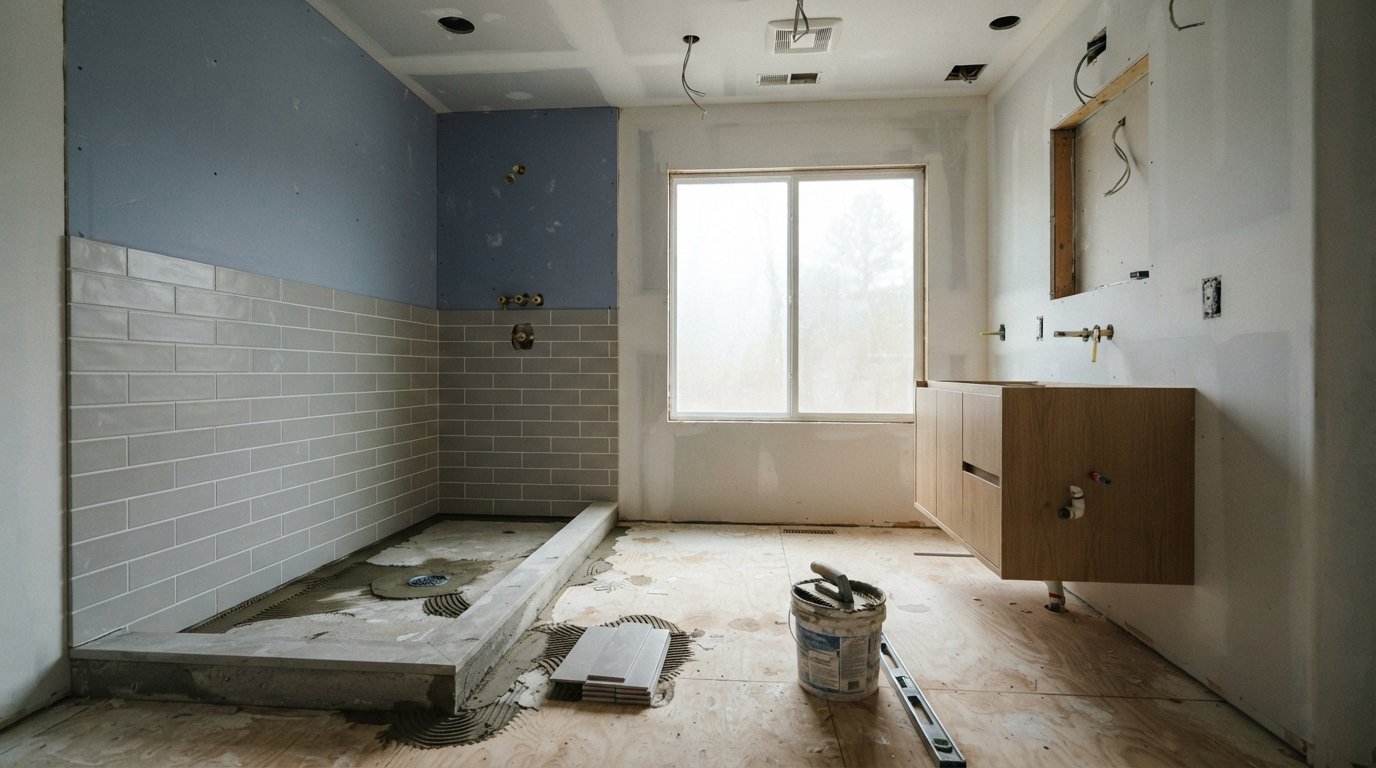
Even so, almost no builder recommends skipping the second one. It returns most of its cost at resale and is close to mandatory for a family of four. If you're choosing between 3 bed 2 bath and 3 bed 2.5 bath, the half bath is the cheap upgrade: usually $5,000 to $12,000, since a powder room needs no shower waterproofing or tub.
Where the Money Goes: Cost Breakdown
Here's roughly how a $290,000 standard 3 bedroom build splits across construction phases, following NAHB cost-of-construction survey proportions:
| Phase | Share of budget | On a $290,000 build |
|---|---|---|
| Site work, permits, foundation | 14% | $40,600 |
| Framing and trusses | 16% | $46,400 |
| Exterior finishes (roof, siding, windows) | 14% | $40,600 |
| Major systems (plumbing, electrical, HVAC) | 17% | $49,300 |
| Interior finishes (drywall, floors, kitchen, baths) | 27% | $78,300 |
| Final steps, landscaping, driveway | 6% | $17,400 |
| Builder overhead and margin | 6% | $17,400 |
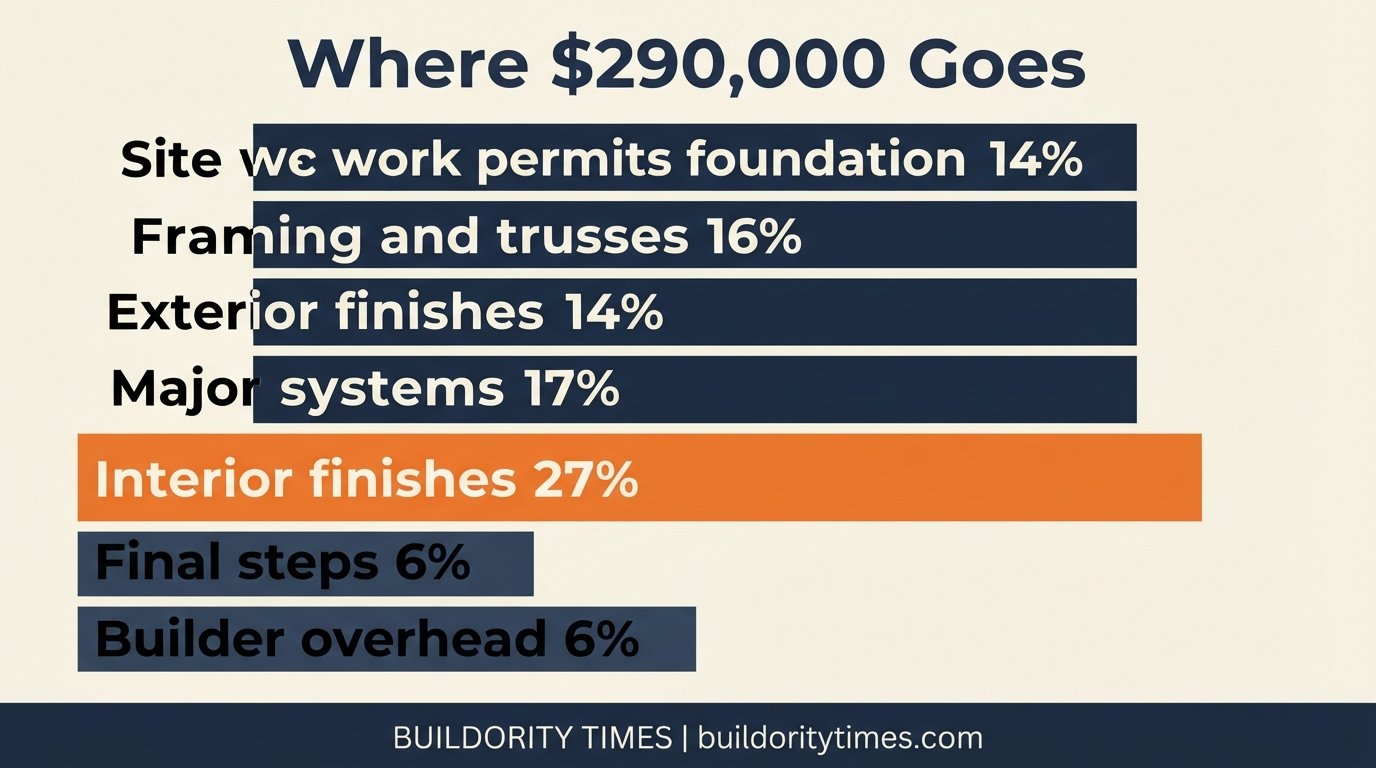
Two takeaways. First, interior finishes are the biggest line, which means they're also your biggest savings lever: choosing standard cabinets over custom can move the total by five figures without touching the structure. Second, the "invisible" categories (site work, systems, framing) are almost half the budget, and those are the ones you should never cut corners on. Nobody compliments your foundation at a housewarming party. It still matters more than the backsplash.
One more thing experienced builders will tell you about finishes: paint last. Walls take a beating during construction. Trades lean ladders on them, furniture scrapes them, dust settles everywhere. Do a primer coat if you want the house to feel clean, then hold the final paint until every other trade is out. Painting twice is a rookie tax.
Not sure what your specific build would cost? Run your square footage, state, and finish level through our free Construction Cost Calculator and get a personalized estimate in under a minute.
How to Read a Builder's Quote (Because No Two Look Alike)
Ask four builders to quote the same 3 bedroom house plan and you'll get four documents that barely resemble each other. This is not an exaggeration. It's the single most disorienting part of the process for first-time builders, and it's where expensive mistakes get signed.
The differences aren't just price. They're philosophy. One builder includes foundation reinforcement by default; another lists it as "optional," which should make your eyebrows go up. One folds electrical conduit into the walls price; another bills it as a separate extra you discover later. One quotes plastering or drywall as a single lump sum; a better one separates interior walls, exterior, and floor leveling so you can actually see where the money goes.
So here's the rule: never ask "how much for the whole house." Ask for the quote broken down by stage: foundation, framing or walls, roofing, systems, finishes. Stage-by-stage quotes do three things for you. They expose what's excluded (the gaps are where budgets die). They make quotes comparable across builders. And they map cleanly to a stage-based payment schedule, which protects you if the relationship goes wrong mid-project.
Three more signals worth watching:
- Vague timelines are a red flag. A builder who can't estimate how long each stage takes either hasn't read your plan or is keeping the schedule loose on purpose. Press for stage-level estimates, then see what a realistic build timeline looks like in Georgia or in Florida to sanity-check the answer.
- A site consultation is worth more than three phone quotes. A builder standing on your actual lot, pointing at where the foundation sits and how the slope affects excavation, will surface costs that no plan-based quote catches. Good builders offer this readily. Some charge a small fee for it, and honestly, that fee is fine.
- Bundle discounts are real, so ask. Builders quoting stages separately will often knock a few percent off if you commit to the full scope. That negotiation only works if you have the stage breakdown first.
How to Vet a Builder Before You Sign Anything
Photos lie. References are curated. Any builder can show you a portfolio, and you have no idea how much of it is actually their work. The vetting method that consistently beats everything else is old-fashioned: go look at standing walls.
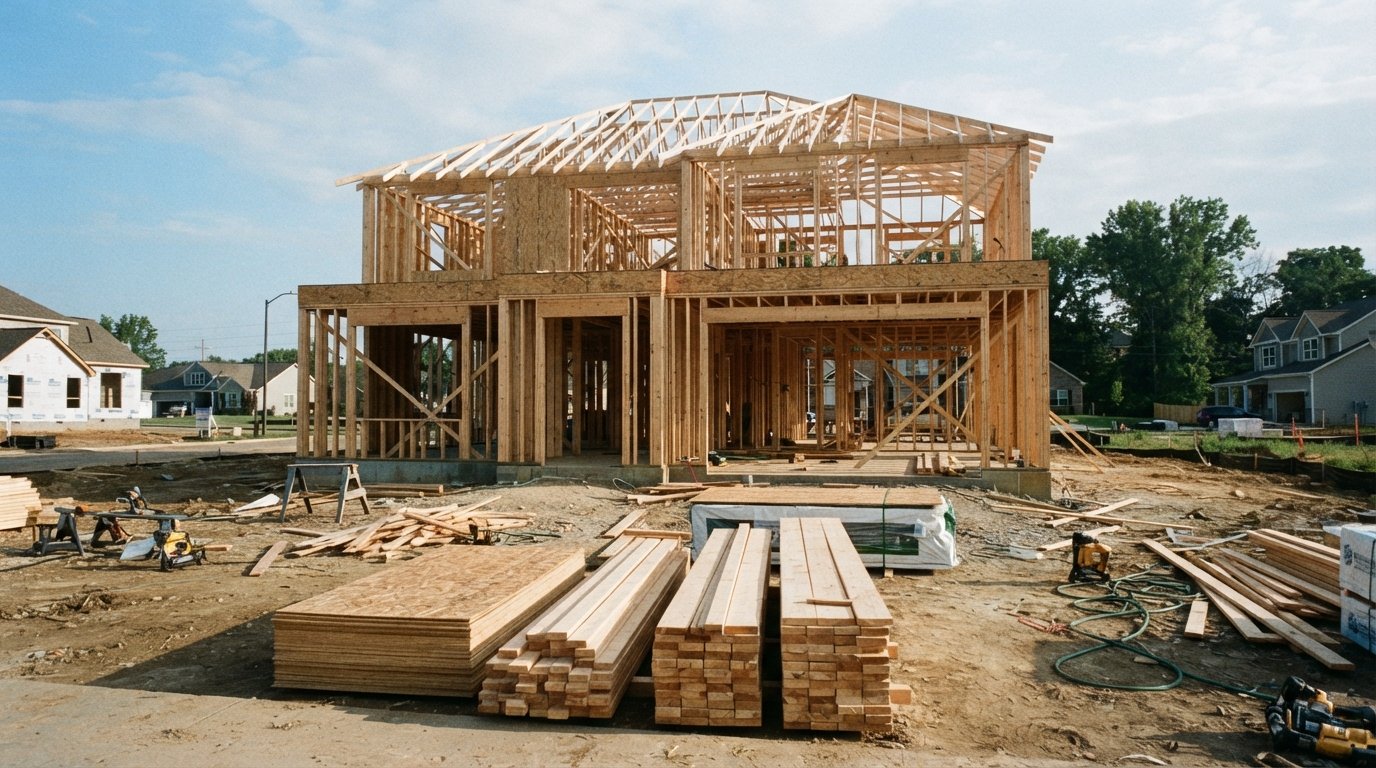
Drive the neighborhoods where construction is active. Walk sites at different stages: one at foundation, one framed, one nearly done. You can read a builder's habits in the details: how straight the walls run, how clean the site is kept, whether materials are stacked and covered or scattered in the mud. A messy site isn't just aesthetics. It usually predicts how your budget and schedule will be treated.
Better still, find the homeowners. Someone standing in the yard of a recently finished house has no reason to protect a builder's reputation. They'll tell you in two minutes whether they'd hire them again, and that answer is worth more than any online review.
And one uncomfortable truth to plan around: the builder who starts your house may not be the one who finishes it. Crews change mid-project constantly, over money, over schedules, over disagreements you'll never fully know. You can't always prevent it. You can protect yourself from it: stage-based contracts, stage-based payments, and never paying meaningfully ahead of completed work. If the foundation crew and the framing crew end up being different people, your money should be exactly where the work is.
Stick-Built vs Modular vs Barndominium
The numbers above assume traditional stick-built construction. Two alternatives are pulling serious demand for 3 bedroom homes:
| Build method | Cost per sq ft (finished) | 1,500 sq ft 3 bedroom | Typical timeline |
|---|---|---|---|
| Stick-built (traditional) | $130-250 | $195,000-375,000 | 7-12 months |
| Modular | $100-160 | $150,000-240,000 | 4-7 months |
| Barndominium | $70-130 | $105,000-195,000 | 5-9 months |
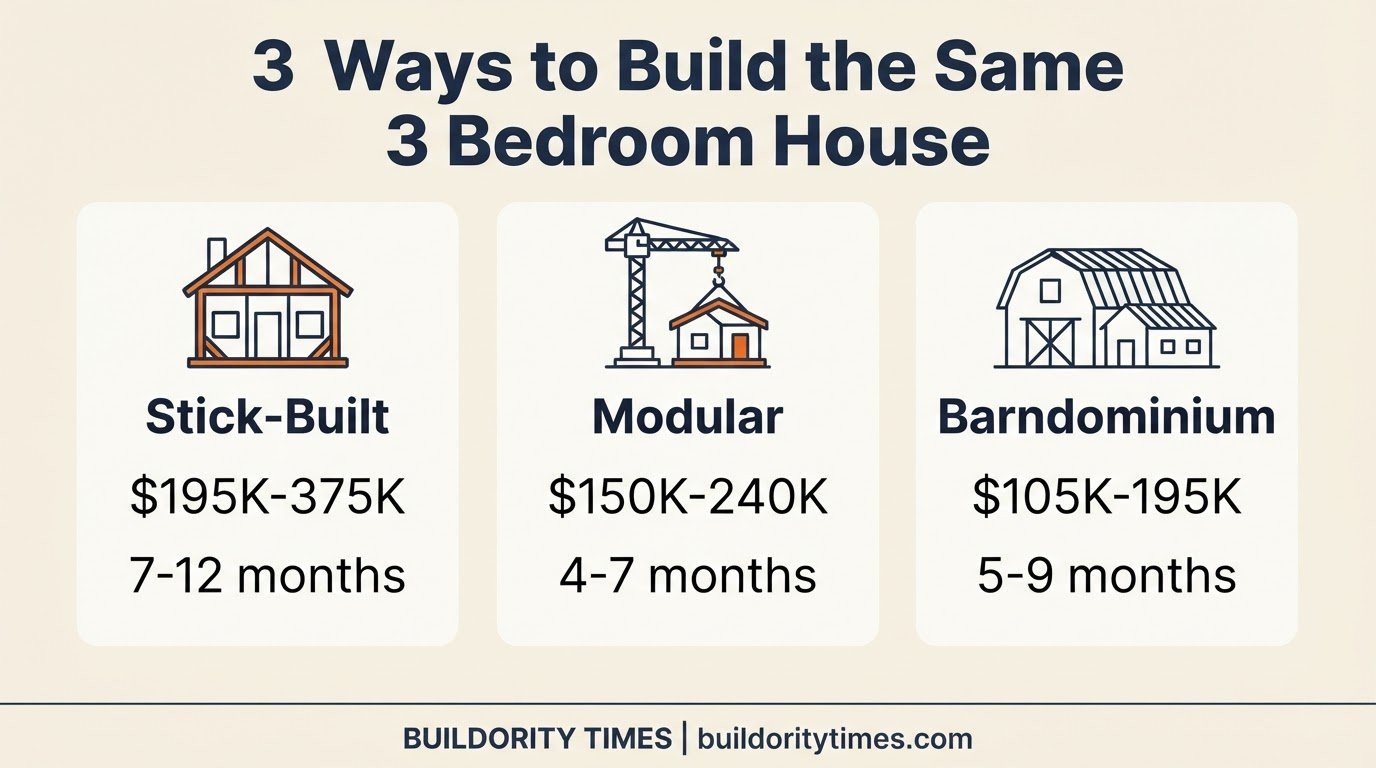
Modular homes are factory-built in sections and assembled on your foundation. Quality has improved dramatically, financing is mainstream now, and the 20 to 30 percent savings is real. The catch: less design flexibility, and you still pay full price for land, foundation, and utility hookups.
Barndominiums (metal shell buildings finished as homes) are the budget king for rural lots, but plenty of suburban zoning codes still reject them, and resale demand is regional.
If you're considering a manufactured home instead and renovating it to your taste, our manufactured home remodel guide covers what that path really costs.
Your State Changes the Number More Than Your Floor Plan
The $162/sq ft national average hides a huge spread. The same 1,500 sq ft 3 bedroom house can cost $180,000 in the Southeast and $330,000 in coastal California. Labor rates, permit costs, and code requirements (seismic, hurricane, snow load) drive the gap.
We track state-level costs in dedicated guides:
- Cost to build a house in Georgia
- Cost to build a house in North Carolina
- Cost to build a house in Florida
- Cost to build a house in Texas
- Cost to build a house in California
For the full picture, see our state-by-state cost guide.
The Costs Nobody Puts in the Brochure
Construction cost is not the check you write. Budget for these on top:
- Land: wildly variable, from $20,000 rural lots to $300,000+ suburban parcels. National median for a build-ready lot sits near $60,000.
- Site prep surprises: clearing, grading, and soil issues can add $5,000 to $50,000. Loose or wet soil means digging deeper for the foundation, and that money is invisible in the finished house. Sloped lots and bad soil are the classic budget killers.
- Utility connections: $5,000 to $30,000 if city water and sewer are at the street. Far more if you need a well and a septic system. And connection fees have a habit of being paid twice when plans change, so lock the service point before you apply.
- Permits and impact fees: $2,000 to $25,000 depending on jurisdiction. Some fast-growing counties charge five-figure impact fees alone.
- Material overage: experienced owner-builders order 5 to 10 percent extra on framing lumber, concrete, and drywall from the start. Running short doesn't just cost a delivery fee. It can idle a paid crew for days while you wait on a supplier.
- Delivery logistics: every separate materials trip has a price. Combining deliveries by stage instead of ordering piecemeal quietly saves four figures over a whole build.
- Site security: material theft and "shrinkage" are real on residential sites. A locked container and a habit of counting what arrives against what was invoiced is boring, cheap insurance.
- Financing costs: construction loans carry higher rates than mortgages and charge interest during the build.
- Contingency: every experienced builder says the same thing. Hold 10 to 15 percent in reserve. On a $290,000 build, that's roughly $30,000 to $43,000. Unspent contingency becomes your furniture budget.
A realistic all-in budget for a standard 1,800 sq ft 3 bedroom house on a purchased lot lands between $380,000 and $450,000 in most of the country.
7 Ways to Build a 3 Bedroom House for Less
- Build up, not out. A two-story 1,800 sq ft house needs half the foundation and half the roof of a single-story one. Savings: $15,000 to $30,000.
- Keep the footprint simple. Every corner, bump-out, and roof valley adds labor. A rectangle is the cheapest shape in construction, and nobody regrets it from the inside.
- Stack the plumbing. Bathrooms back-to-back or directly above the kitchen shortens pipe runs and cuts rough-in costs.
- Choose builder-grade now, upgrade later. Countertops and light fixtures are easy to swap in five years. Foundations and framing are not.
- Shop the plan, not just the builder. Stock house plans cost $1,000 to $3,000. Full custom architecture runs 8 to 15 percent of construction cost.
- Time your contracts. Builders in most markets negotiate harder on projects signed for winter starts, when their pipelines thin out.
- Consider building in phases, with the right pause point. If financing the whole thing at once doesn't work, the natural place to pause is a dried-in shell: walls up, roof on, windows in. The structure is protected from weather, and you can save toward finishes with something real standing in front of you. Pausing before the roof, on the other hand, is how shells rot.
A note on the most tempting savings idea of all: acting as your own general contractor. Owner-builders save 10 to 20 percent on paper. Some pull it off. But you become the person responsible for sequencing trades, catching mistakes before they're covered by drywall, and eating the cost when a sub no-shows. One failed inspection can erase the entire savings. Be honest about your experience before you take this on.
Frequently Asked Questions
Is $200,000 enough to build a 3 bedroom house? Yes, for construction only, if you keep it modest: around 1,200 to 1,400 sq ft with builder-grade finishes, or up to 1,900 sq ft with a modular build. It won't cover land or site costs in most markets.
How much does it cost to build a 3 bedroom 2 bath house? Between $211,000 and $292,000 at standard finishes for the typical 1,300 to 1,800 sq ft range. Budget builds start near $169,000 and custom builds run $325,000 and up.
Is it cheaper to build or buy a 3 bedroom house? In most markets, buying an existing home is still cheaper upfront. Building wins when land is affordable, when local inventory is old or overpriced, or when you plan to stay 10+ years and want zero renovation needs.
How long does it take to build a 3 bedroom house? Seven to twelve months from breaking ground for a stick-built home, plus one to four months of pre-construction (permits, plans, financing). Modular cuts on-site time to four to seven months.
Can you build a 3 bedroom house for $150,000? Only with the aggressive options: a barndominium up to roughly 1,500 sq ft, a compact modular around 1,100 to 1,300 sq ft, or an owner-builder project in a low-cost state. Traditional stick-built at that price means going under 1,200 sq ft.
What size is a typical 3 bedroom house? Between 1,200 and 2,400 sq ft, with the sweet spot at 1,500 to 1,800. Below 1,200 sq ft, bedrooms get tight. Above 2,400, you're usually paying for bonus spaces, not the bedrooms.
How much does each extra bathroom add? A full bathroom adds $15,000 to $35,000 to new construction. A half bath adds $5,000 to $12,000. Costs rise if the new bathroom sits far from existing plumbing lines.
Should I pay a builder a large deposit upfront? No. Reasonable mobilization deposits exist, but payments should track completed stages: foundation done, framing done, roof on. If a builder wants a large share of the money before meaningful work stands on the lot, walk away. Stage-based payment is also your protection if crews change mid-project, which happens more often than anyone admits.
Does a garage count in the cost per square foot? No. The $162/sq ft average covers finished living space. An attached two-car garage adds roughly $28,000 to $45,000 on top.
What is the cheapest state to build a 3 bedroom house? The Southeast and parts of the Midwest consistently come in lowest, with Mississippi, Alabama, Arkansas, and Oklahoma often under $140/sq ft. See the state-by-state guide for current numbers.
Should I budget for cost overruns? Always. Industry surveys consistently show most custom builds run over the initial estimate. A 10 to 15 percent contingency is the standard professional recommendation.
Planning a build? Join the Buildority Times newsletter and get monthly cost data, state trends, and builder-negotiation tactics before you sign anything. Subscribe here. No spam, one email a month.