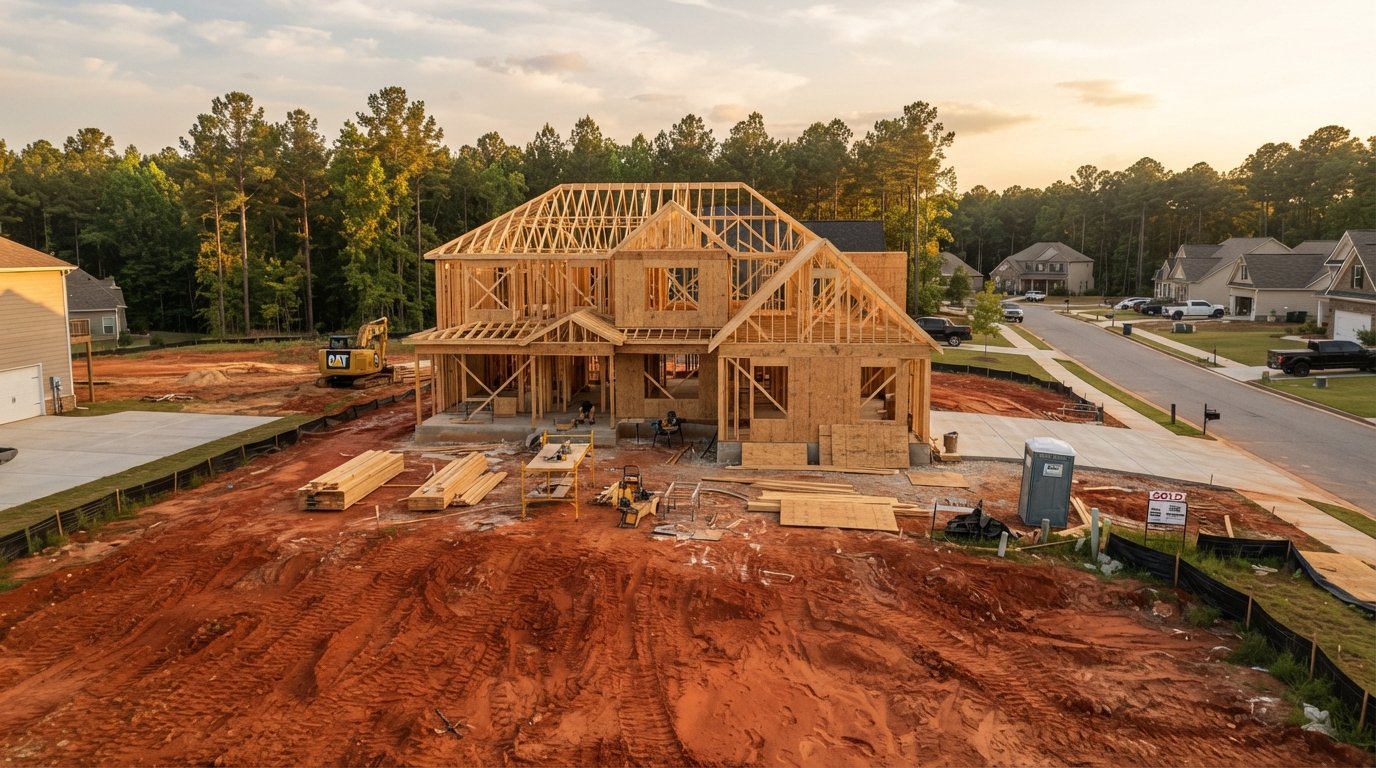
Building a house in North Carolina typically costs between $150 and $260 per square foot, which works out to roughly $300,000 to $520,000 for a standard 2,000 square foot home, not including land. Where you build matters almost as much as what you build. A lot in Wake County or Mecklenburg County pushes both land and labor costs well above what you'd pay in a rural county in the western mountains or the northeastern coastal plain.
That range is wide because North Carolina isn't one housing market, it's several. A production-style home in a growing suburb outside Charlotte looks nothing like a custom build on a mountain lot near Asheville or a coastal home near Wilmington built to hurricane code. The rest of this guide breaks down where your money actually goes and how to keep the number as close to the low end as possible.
If you already have your budget mapped and are planning your schedule next, see our companion guide on how long it takes to build a house in North Carolina for the full phase-by-phase timeline.
Average cost per square foot to build in North Carolina
| Build tier | Cost per square foot | Total for a 2,000 sq ft home |
|---|---|---|
| Basic or production build | $130 to $170 | $260,000 to $340,000 |
| Mid-range or semi-custom | $170 to $230 | $340,000 to $460,000 |
| High-end custom | $230 to $350+ | $460,000 to $700,000+ |
These figures cover the structure itself: foundation, framing, roofing, systems, and finishes. They don't include land, site work, or permitting, which we'll get to below. Think of them as a planning range, not a quote. The only way to get a real number is a bid from a licensed local contractor who has walked your specific lot.
Where your money goes: typical cost breakdown by phase
For a rough sense of how a North Carolina build budget splits across phases:
| Phase | Typical share of total cost |
|---|---|
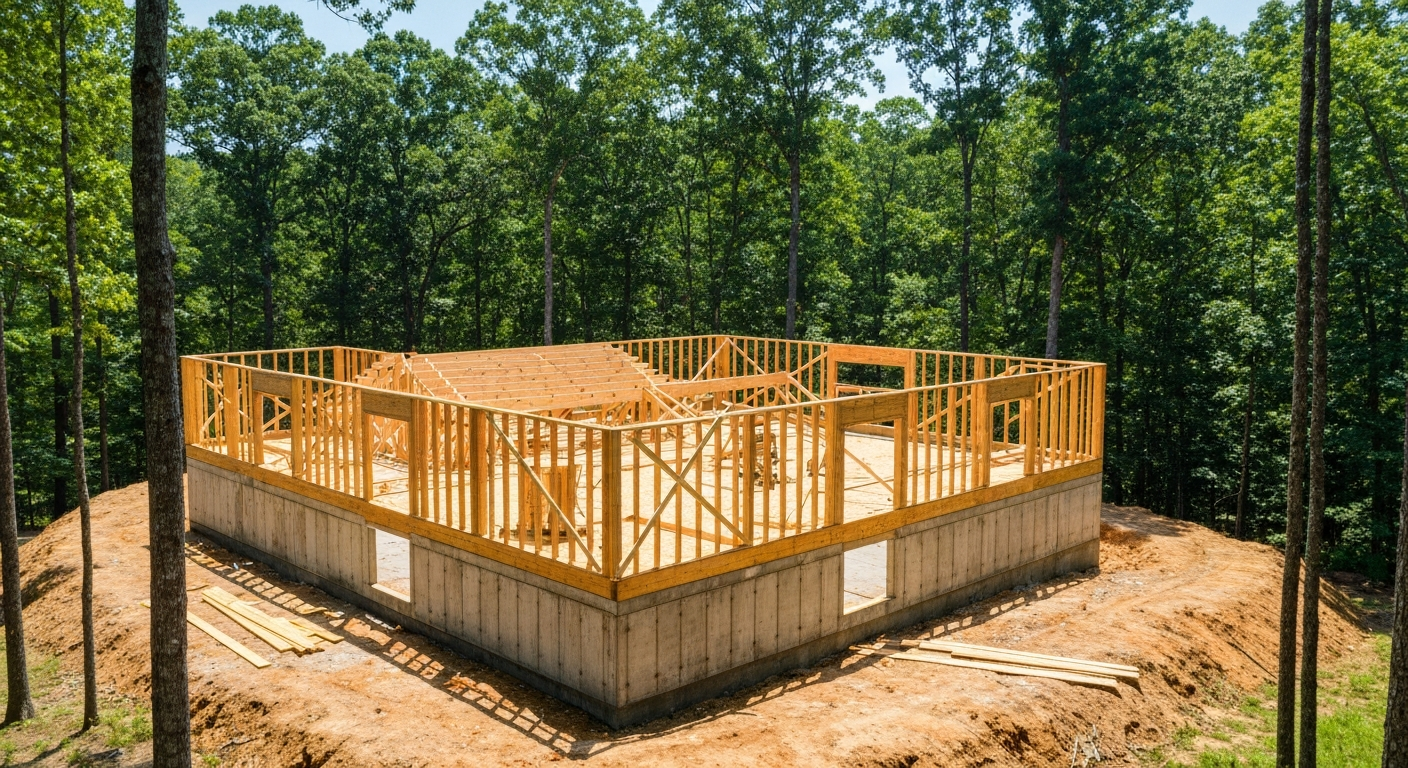
| Site work and foundation | 10 to 15% |
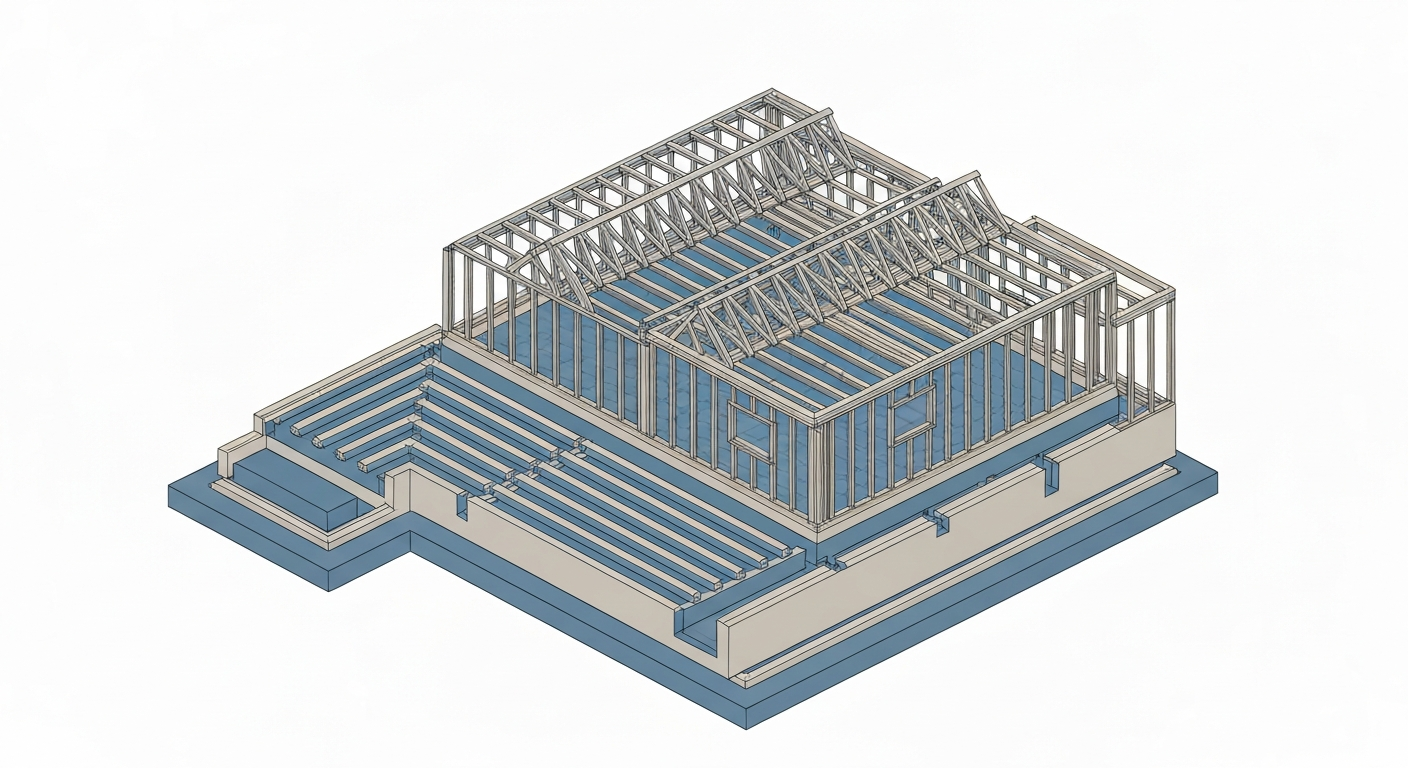
| Framing and structural shell | 20 to 25% |
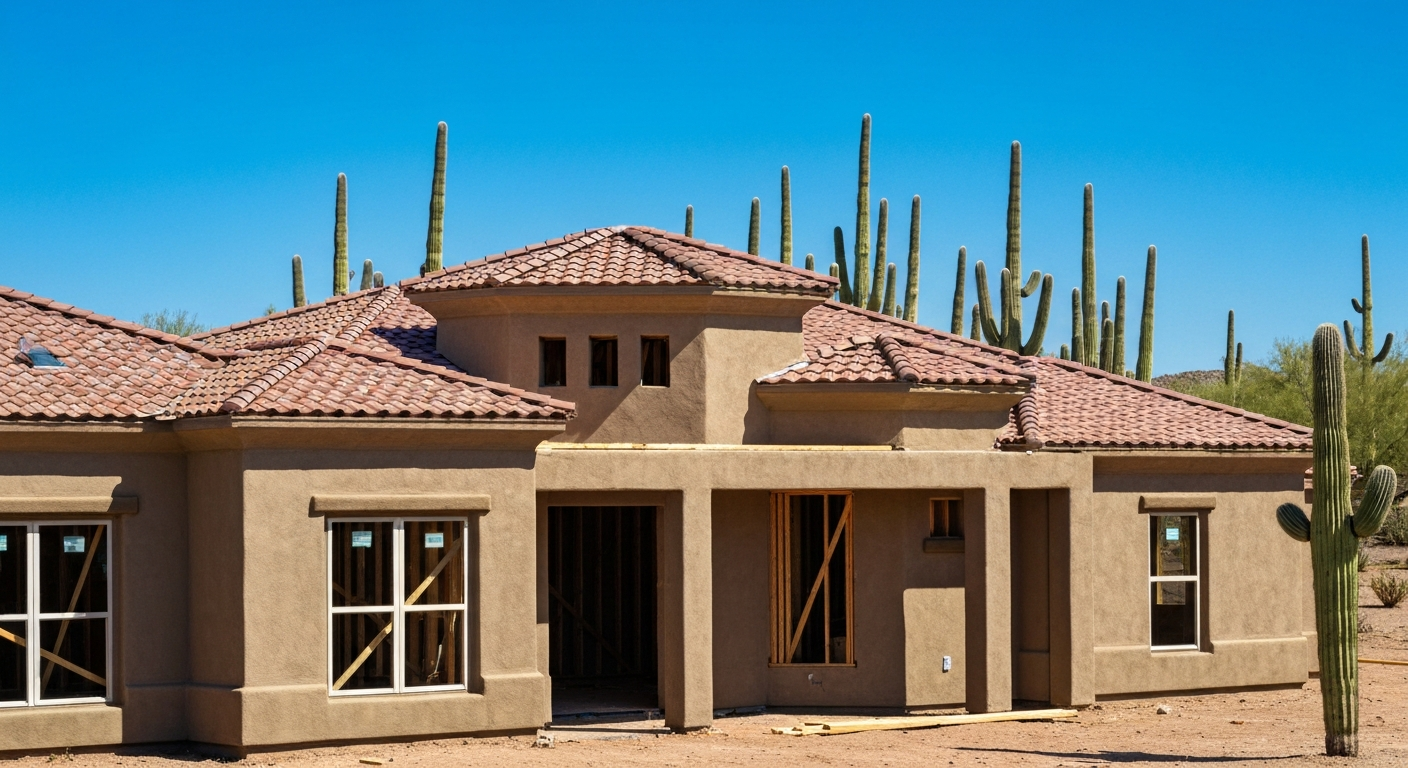
| Roofing and exterior finishes | 8 to 12% |
| Plumbing, electrical, and HVAC | 12 to 15% |
| Insulation and drywall | 6 to 9% |
| Interior finishes, cabinetry, and countertops | 18 to 22% |
| Permits, fees, and general contractor overhead | 8 to 12% |
These shares move around based on your choices. Upgrading cabinetry and countertops, for example, pulls more of the budget toward interior finishes without changing the structural cost at all. This is also where most of the room to customize your final number actually lives, since the structural phases are harder to shrink without changing the size or footprint of the house.
What drives construction costs in North Carolina
Labor market pressure. The Charlotte and Raleigh-Durham metro areas are among the fastest growing in the country, and that growth pulls skilled framers, electricians, and plumbers toward the biggest job sites. When demand for labor outpaces supply, every project in the area pays more for the same work, whether it's a custom home or a small addition.
Material transport. Building materials have to get to the site somehow, and that's more expensive in the mountain counties of western North Carolina than it is along the interstate corridors of the Piedmont. A remote lot with a steep driveway can add real cost before a single wall goes up, just from getting equipment and materials up the hill.
Building codes by region. Coastal counties near Wilmington and the Outer Banks require wind-rated construction and often flood-resistant foundation systems, both of which cost more than standard inland framing. If you're building near the coast, budget for this from the start rather than treating it as a surprise change order.
Permitting variance. Permit fees and review timelines are set at the county level, not the state level, so they vary a lot. Fast-growing Piedmont counties often have higher fees and longer review queues simply because of how much building activity they're processing at once.
Land, site work, and costs people forget to budget for
The per-square-foot numbers above are just the structure. A realistic North Carolina budget also needs to account for:
- Land. This is the single biggest source of variation in the state. A buildable lot in a Raleigh suburb can cost several times what a comparable rural lot costs two counties over.
- Water and septic. Many rural North Carolina lots aren't connected to municipal sewer and water, which means budgeting for a well and septic system, typically $10,000 to $25,000 combined depending on soil conditions.
- Site prep and grading. Sloped mountain lots and low-lying coastal lots both need extra grading work compared to a flat Piedmont lot.
- Permit and impact fees. These vary by county and can run from a few thousand dollars to well into five figures in high-growth areas that charge impact fees to fund new infrastructure.
How North Carolina compares to other states
North Carolina generally lands in a similar cost range to Georgia, both of which sit below high cost-of-living states like California. That gap closes somewhat inside the booming Charlotte and Raleigh-Durham corridors, where labor demand and land prices have climbed closer to national averages. If your build isn't tied to a specific metro area, moving even one county out from the fastest-growing suburbs can meaningfully lower both land and labor costs.
Ways to lower your building costs in North Carolina
- Consider a production or semi-custom floor plan instead of a fully custom design. Standardized plans let builders work faster and buy materials in bulk, and that savings gets passed on.
- Look one county over from the hottest suburbs. You often get a very similar commute with a meaningfully lower land and labor cost.
- Lock in material prices early. Framing lumber, windows, and roofing materials all fluctuate. Ordering early with your builder can protect you from mid-project price jumps.
- Build with long-term energy costs in mind. Better insulation and efficient HVAC cost more upfront but lower what you spend on utilities for as long as you own the home.
- Run your numbers before you commit. Use a construction cost calculator to sanity-check a builder's estimate against typical ranges for your area before you sign anything.
Frequently asked questions
Is it cheaper to build or buy a house in North Carolina right now? It depends heavily on the local resale market you're comparing against. Building generally lets you avoid competing for scarce resale inventory in fast-growing areas, but it adds time and usually requires a contingency budget for the unexpected. Buying can be faster but may mean compromising on layout or location.
How much does land cost in North Carolina? Land cost varies more than any other line item in this guide. Rural land in the mountains or coastal plain can cost a fraction of a lot in a Charlotte or Raleigh suburb. Get a firm land price before estimating your total build cost, since it's the number that moves the most.
Do I need a licensed general contractor to build in North Carolina? Yes, for any residential project above a modest cost threshold. Beyond a small repair or addition, plan on hiring a contractor licensed by the North Carolina Licensing Board for General Contractors.
How long does it take to build a house in North Carolina? Most builds run 7 to 12 months from permit approval to move-in, depending on the complexity of the design, the builder's schedule, and how quickly your county processes permits and inspections.
What's the average cost to build a 3-bedroom house in North Carolina? A typical 3-bedroom home runs 1,800 to 2,200 square feet. At the mid-range cost tier above, that puts most 3-bedroom builds somewhere between $310,000 and $500,000 before land.
Does cost vary between the coast, the Piedmont, and the mountains? Yes, meaningfully. Piedmont metro counties tend to have the highest labor costs but the most predictable permitting. Coastal counties add cost through wind and flood-resistant building codes. Mountain counties add cost through site access and material transport rather than labor or code requirements. None of the three is reliably cheapest, it depends on which cost driver affects your specific lot.
Costs above are general planning estimates, not quotes. Get bids from two or three licensed North Carolina contractors before finalizing your budget, since your specific lot, material choices, and county permitting fees can move these numbers meaningfully in either direction. For a broader look at how North Carolina stacks up against other states, see our state-by-state cost guide.