How much does it cost to build a house in Georgia?
Building a house in Georgia costs between $150 and $225 per square foot for standard stick-built construction, not including land. For a typical 2,000 to 3,000 square foot custom home, that puts your total construction budget between $300,000 and $675,000, depending on finishes, region, and how complex your design gets.
If you go the manufactured home route, entry-level 3-bedroom units start around $69,000 including delivery and setup. On the other end of the spectrum, luxury custom builds in metro Atlanta regularly cross $370 to $550 per square foot once high-end finishes enter the picture.
Here is the short version before we go deep:
| Build type | Cost per sq. ft. | Total for 2,500 sq. ft. |
|---|---|---|
| Manufactured home | $50 - $90 | $69,000 - $185,000 (unit sizes vary) |
| Modular home | $100 - $150 | $184,000 - $375,000 |
| Production / tract build | $130 - $180 | $325,000 - $450,000 |
| Semi-custom build | $170 - $230 | $425,000 - $575,000 |
| Full custom build | $200 - $300+ | $500,000 - $750,000+ |
| Luxury custom | $370 - $550+ | $925,000 - $1.4M+ |
That table is the map. The rest of this guide is the territory: land costs, hard costs, soft costs, the hidden costs builders rarely explain upfront, financing, and the proven ways to cut your budget without cutting corners that will haunt you later.
If you want to run your own numbers as you read, our free Construction Cost Calculator lets you plug in square footage, finish level, and region to get a personalized estimate in about a minute.
Let's break it all down.
Cost to build a house in Georgia by square footage
The single biggest driver of your total budget is size. Using Georgia's average range of $150 to $225 per square foot for standard construction, here is what different home sizes cost to build:
| Home size | Low estimate ($150/sq. ft.) | High estimate ($225/sq. ft.) |
|---|---|---|
| 1,000 sq. ft. | $150,000 | $225,000 |
| 1,500 sq. ft. | $225,000 | $337,500 |
| 2,000 sq. ft. | $300,000 | $450,000 |
| 2,500 sq. ft. | $375,000 | $562,500 |
| 3,000 sq. ft. | $450,000 | $675,000 |
| 4,000 sq. ft. | $600,000 | $900,000 |
Two important caveats on this table.
First, these figures cover construction only. Land, site development, permits, closing costs, and furnishings all come on top, and we will price every one of those below.
Second, cost per square foot is not linear. A 1,200 square foot home often costs more per foot than a 2,800 square foot home because the expensive rooms, the kitchen and bathrooms, get spread across less total area. Kitchens and baths are where the plumbing, cabinetry, countertops, and appliances live, and those line items do not shrink much just because the house is smaller.
Cost to build by region: North Georgia, metro Atlanta, and South Georgia
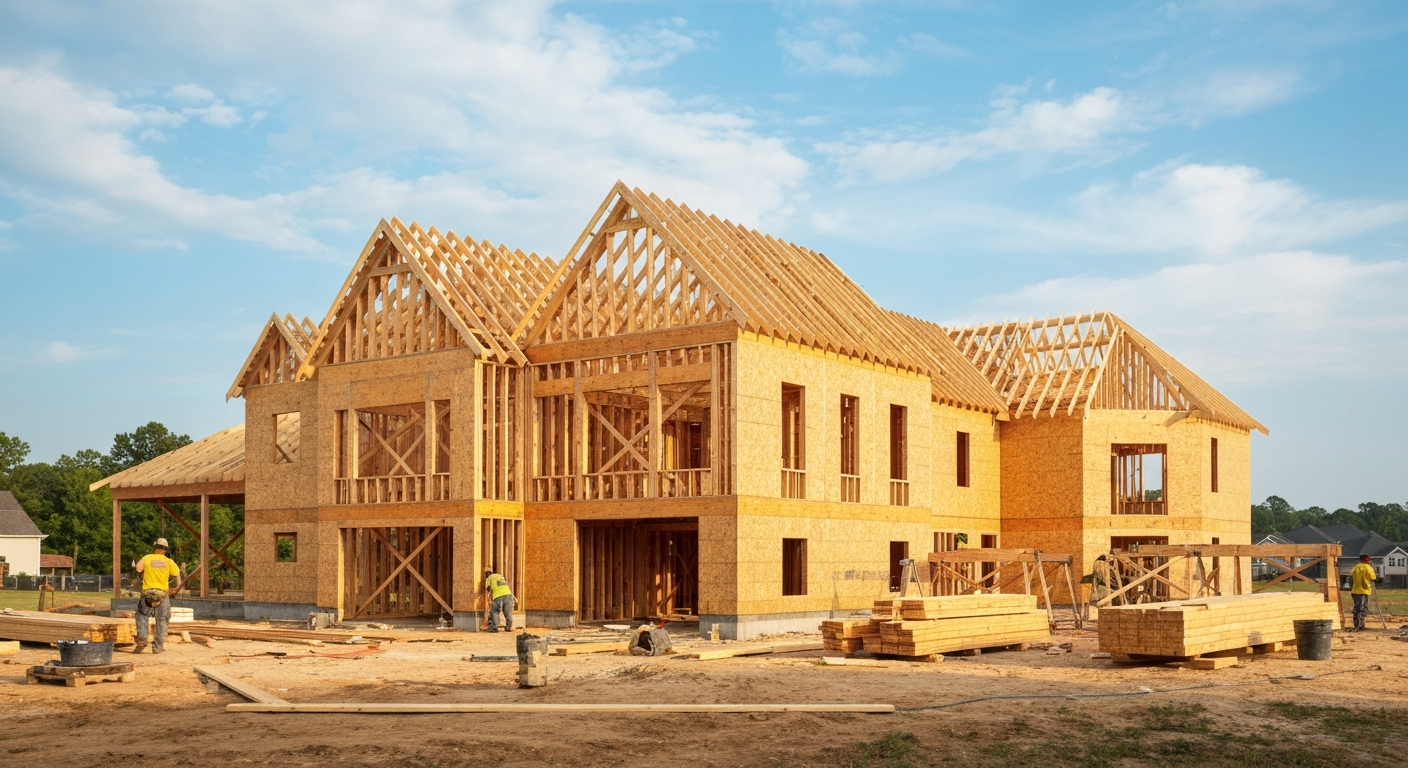
Georgia is a big state, and where you build changes the math dramatically. The same floor plan can swing $100,000 or more in total cost between a Forsyth County subdivision and a rural lot in South Georgia.
| Region | Typical build cost per sq. ft. | What drives the price |
|---|---|---|
| Metro Atlanta (Fulton, Cobb, Gwinnett) | $200 - $250+ | Land scarcity, labor demand, stricter codes |
| North Atlanta suburbs (Cherokee, Forsyth) | $200 - $250 | High demand, new-construction premium |
| North Georgia mountains | $180 - $225 | Cheap land, but topography and access add cost |
| Middle Georgia (Macon, Warner Robins) | $140 - $190 | Lower labor and land costs |
| South Georgia | $130 - $175 | Cheapest land and labor in the state |
| Coastal Georgia (Savannah, Brunswick) | $170 - $230 | Wind codes, flood zones, insurance |
For reference, sales data from active builders in the North Atlanta corridor shows new construction averaging around $228 per square foot in Cherokee County and roughly $248 per square foot in Forsyth County in recent selling seasons. Those are finished-home sale prices in builder communities, which bundle land, development, and margin, but they give you an honest ceiling for what the market actually pays.
South Georgia tells the opposite story. It is still possible to find brand-new construction homes on multiple acres for around $300,000 in the southern half of the state, a price point that would barely cover a lot premium in parts of Forsyth County.
If you are comparing Georgia against other high-growth states, we have run this same analysis for Texas, Florida, and California. Georgia consistently lands cheaper than Florida and dramatically cheaper than California, while running close to Texas outside the major metros.
Land costs in Georgia: the number that changes everything
Before a single nail gets driven, you need dirt. And in Georgia, dirt prices span an enormous range.
Raw land prices by area
The statewide average sits around $14,000 to $15,000 per acre, but averages hide the real story:
| Location | Typical land cost per acre |
|---|---|
| Urban metro Atlanta | $50,000 to several hundred thousand |
| Suburban North Atlanta | $30,000 - $100,000+ |
| North Georgia mountain counties | $5,000 - $10,000 |
| Rural Middle and South Georgia | $3,000 - $12,000 |
That mountain-county number is not a typo. Buildable acreage in parts of North Georgia still trades for $5,000 to $10,000 per acre, which is why so many custom builds happen up there. The tradeoff is what it costs to make that cheap land buildable, and we will get to that.
Lot premiums in builder subdivisions
If you build in a community with a production or semi-custom builder, you do not buy the land separately. You pay a lot premium, a set price the builder attaches to each specific lot in the contract.
Premiums are not uniform across a subdivision. In a 29-lot community, the big cul-de-sac lot in the back will carry a meaningfully higher premium than the smaller lots near the entrance. Builders price lots the way airlines price seats: same neighborhood, very different tickets.
As a rule of thumb, in suburban Atlanta the finished lot represents roughly 25 to 30 percent of the base price of the home. That figure covers everything it took to turn raw dirt into a build-ready pad: roads, sidewalks, utilities, grading, the entry monument, all of it. You never write a separate check for that work, but you absolutely pay for it.
The land questions that cost real money
Buying your own private lot instead? Three questions determine whether your cheap land stays cheap:
Water: city or well? If the lot has no access to municipal water, drilling a well in Georgia typically runs $5,000 to $15,000 depending on depth.
Sewer: city or septic? A new septic system adds $5,000 to $12,000, more if the soil fails a perc test and you need an engineered system.
Topography: flat or fight? Grading a sloped lot, hauling fill, and dealing with drainage can consume tens of thousands. And if the excavator hits rock, you are now paying to have rock blasted or hammered out of the ground before the foundation can even start. There is functionally no ceiling on what severe topography can cost.
Clearing alone is meaningful: taking down trees, removing stumps, and prepping a three-quarter-acre wooded lot runs roughly $3,750 to $5,000 in the North Georgia market.
Hard costs: the physical house, line by line
Hard costs are everything you can physically touch: concrete, lumber, wire, pipe, shingles, labor. They typically consume 70 to 80 percent of your total budget. Here is the breakdown for a representative 2,500 square foot Georgia build.
Materials: roughly half your construction budget
Building materials account for approximately 50 percent of total construction cost, which means a $400,000 build carries around $200,000 in materials. The heavyweights:
| Material category | Typical cost range |
|---|---|
| Lumber package | $25,000 - $65,000 |
| Flooring | $1 - $15 per sq. ft. |
| Siding | $2 - $28 per sq. ft. |
| Drywall | $10 - $25 per sheet |
The spread inside each category is where your finish level decisions live. Luxury vinyl plank at $3 per foot versus site-finished hardwood at $12 per foot is a $20,000+ decision on a single line item.
Foundation: $5 to $10 per square foot
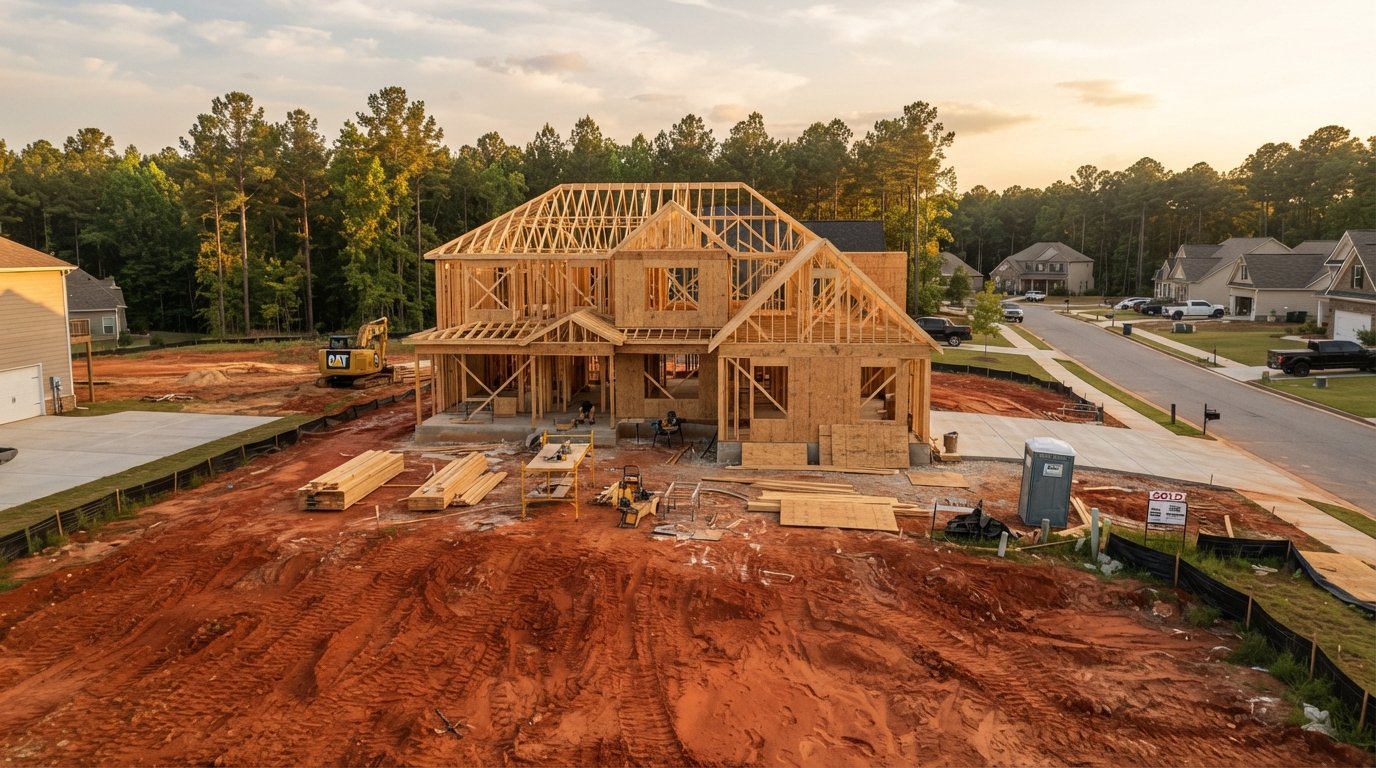
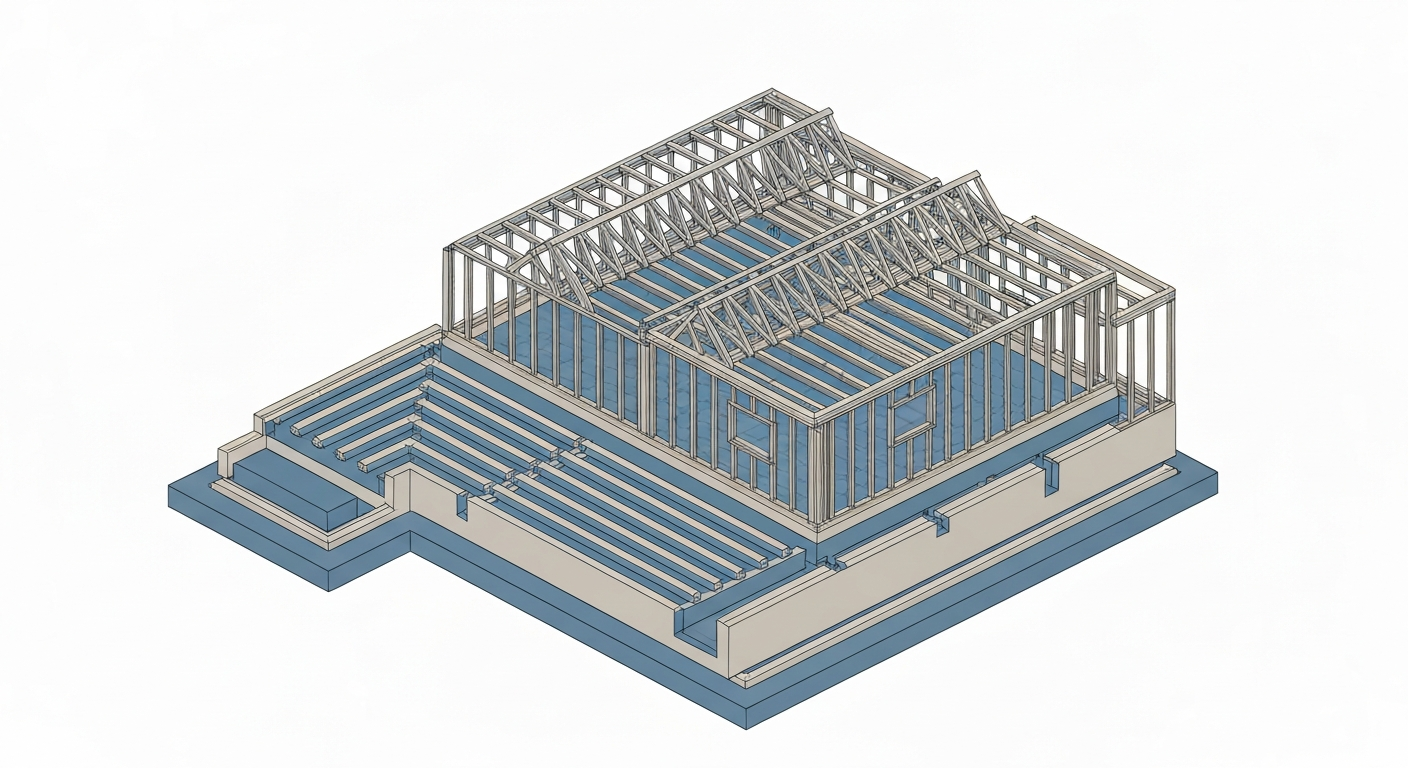
Georgia's clay soils are generally forgiving, and a standard slab-on-grade foundation runs $5 to $10 per square foot depending on thickness and reinforcement. Basements are popular in North Georgia's sloped terrain and add substantially more, but they also add the cheapest finished square footage you will ever buy if you finish them later.
One warning that every experienced construction manager in Georgia repeats: never cut costs on the foundation. It is the base your entire home sits on. Hire a reputable concrete contractor and a quality supplier here, even if it means saving elsewhere.
Framing: $7 to $16 per square foot
Framing is the skeleton, and it is the second place professionals tell you not to economize. Cheap framing lumber or cut-rate framing labor creates problems behind the walls, exactly where they are most expensive to find and fix later. Expect $7 to $16 per square foot for framing in Georgia.
Roofing: $3,700 to $41,000+ depending on material
Few line items swing as wildly as the roof:
| Roofing material | Cost per 100 sq. ft. |
|---|---|
| Asphalt shingles | $148 - $241 |
| Wood shake | $486 - $639 |
| Slate | $671 - $1,666 |
| Tile | $694 - $1,111 |
Asphalt architectural shingles dominate Georgia new construction for good reason: a full roof on a typical home costs $8,000 to $20,000, while slate or tile can push past $40,000.
Mechanical systems: electrical, plumbing, HVAC
Electrical runs $3 to $5 per square foot for a new build, covering rough wiring, panels, outlets, switches, and fixtures. Budget $7,500 to $12,500 for a 2,500 square foot home, more if you add extensive smart-home wiring or a car charger.
Plumbing averages around $4.50 per square foot in new construction, roughly $12,000 for our reference home, covering supply lines, drains, and fixture installation.
HVAC ranges from $1,500 to $12,500 installed, depending on system type, tonnage, brand, and zoning. In Georgia's climate, do not treat this as an afterthought: a properly sized, efficient system pays you back every July for the next twenty years.
Soft costs: the money you spend before and around the build
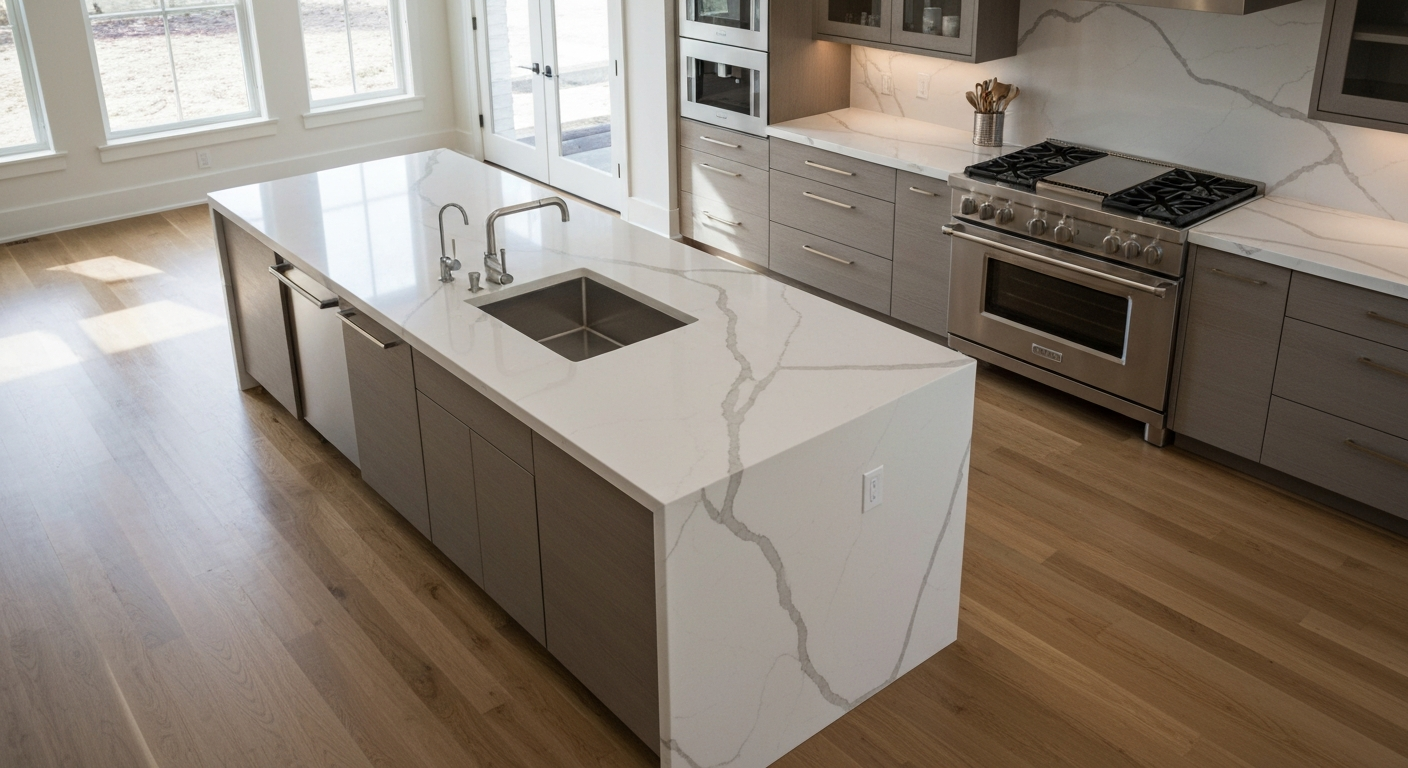
Soft costs never show up in a photo of your house, but they absolutely show up in your budget.
Permits: $1,500 to $2,500 and up
Georgia requires a building permit for new residential construction, and fees vary by county and jurisdiction. Expect $1,500 to $2,500 for the primary permit in most metro-area counties, plus trade permits:
| Permit | Typical cost |
|---|---|
| Building permit | $1,000 - $2,500 |
| HVAC permit | $250 - $400 |
| Plumbing permit | $50 - $500 |
| Electrical permit | $10 - $500 |
Permit structures differ meaningfully between counties, so check your specific county's building department before finalizing your budget.
Architectural plans: around $6,000
If you are building custom, professionally drawn architectural plans cost roughly $6,000 for a typical home, and they are worth every dollar. Plans let you tweak every detail on paper, where changes cost a revision fee, instead of in the field, where changes cost demolition.
One tip experienced builders give first-timers: before you approve a floor plan, walk your current home with a tape measure. Measure your furniture, your closets, your pantry. Numbers on a plan feel abstract until you realize the new "owner's suite" is smaller than your current bedroom.
General contractor fees: 10 to 20 percent
Your general contractor coordinates every trade, manages the schedule, and carries responsibility for the outcome. GCs charge 10 to 20 percent of total construction value. On a $400,000 build, that is $40,000 to $80,000, and it is the line item owner-builders target when they decide to run the project themselves. More on that gamble later.
The regulatory load nobody itemizes
Here is a number that surprises almost everyone: industry analysis puts the combined weight of regulatory compliance, code requirements, and insurance obligations at over $107,000 on a typical new Georgia build. That burden hides inside your builder's price. It covers engineering, inspections, stormwater compliance, energy code requirements, and the builder's risk insurance policy, which alone adds several thousand dollars to a project.
You do not write a check labeled "regulation." You just pay a higher price per square foot. Knowing it exists helps explain why new construction can never compete with 1990s prices, no matter what happens to lumber.
Interiors: the budget everyone forgets
Your construction loan ends at the certificate of occupancy. Your spending does not. Furnishing a new 2,500 square foot home from scratch, furniture, window treatments, electronics, kitchen essentials, realistically starts at $20,000. Hiring an interior designer to plan finishes and furnishings adds around $5,400 on average.
The hidden costs of building in Georgia (from people who build for a living)
This is the section most cost guides skip, because most cost guides are written by people who have never sat at a closing table. Here is what actually shows up, sourced from sales agents and construction managers who close Georgia new-builds every month.
Hidden costs baked into the builder's price
Some costs are invisible because the builder already paid them and folded them into your price. Lot clearing ($3,750 to $5,000 for a wooded three-quarter acre), permitting ($1,500 to $2,500), and all the site development work behind that 25 to 30 percent lot share we covered earlier. You are not writing checks for these, but understanding them explains the price tag.
Deposits: the cash you need long before closing
If you build from the ground up instead of buying a finished spec home, expect to escrow real money early. The industry norm in Georgia is 10 to 20 percent of the home price deposited before construction starts.
A common structure from semi-custom builders in metro Atlanta works like this: 5 percent of base price at contract, 20 percent of your design-center options when selections are finalized, and the remaining 5 percent of base price at drywall. Pick $20,000 in upgrades and you owe a $4,000 option deposit on top of your base deposits.
Two critical details. First, structural changes that are not standard options can require a 100 percent deposit on that change. Second, and this is the good news: all of these deposits are credited back to you at the closing table. They are not extra cost, they are prepayment. But they are cash you must have liquid, months before your mortgage exists.
Design center upgrades: where budgets go to die
The design center is where a $520,000 base-price home becomes a $610,000 home. Builders price base homes competitively and earn margin on upgrades: cabinets, countertops, flooring, trim packages, appliances. There is nothing wrong with this model, but walk in with a written upgrade budget and rank your wants, because the room is engineered to expand them.
Closing costs: 2 to 3 percent of purchase price
Plan on 2 to 3 percent of your purchase price in closing costs. On a $700,000 home that is $14,000 to $21,000. On an $800,000 home, $16,000 to $24,000. The big components:
| Closing cost item | Typical amount |
|---|---|
| Closing attorney (required in Georgia) | $2,000 - $4,000 |
| Mortgage origination fee | $3,000 - $4,000+ |
| Discount points (optional rate buydown) | $4,000 - $20,000+ |
| Title, recording, prepaids | Varies |
Georgia is an attorney-closing state, so a closing attorney is not optional. And note that buying points, prepaying interest to lock a lower rate for 30 years, is where closing costs can balloon fastest, though it is often the smartest money in the whole transaction when rates are elevated.
About a week before closing, your lender delivers the final figure called cash to close: the wire you send to actually get the keys. Your builder deposits get credited against it, which softens the blow considerably.
Is it cheaper to build or buy in Georgia?
The honest answer: buying an existing home is usually cheaper upfront. New construction in the North Atlanta market carries a premium of roughly $15 to $40 per square foot over comparable resale homes. On a 2,500 square foot house, that is a $37,500 to $100,000 premium.
So why does anyone build? Three reasons that have real dollar value:
1. Everything is new. New systems, new roof, new materials built to current code. A 1990s resale can look cheaper until you price a new roof ($8,000 to $20,000), aging HVAC ($8,000 to $12,000 per system), and window replacement ($20,000 to $30,000). Suddenly the new-construction premium looks like prepaid maintenance.
2. Warranties. Georgia builders commonly offer a 1-2-10 warranty structure: one year on workmanship, two years on mechanical, electrical, and plumbing systems, and ten years on structural elements. Resale homes come with none of that.
3. Builder incentives. In the current market, Georgia builders are offering $20,000 to $30,000 incentive packages, typically split between design-center credits and money toward a rate buydown or closing costs. A $15,000 rate buydown can save you far more than $15,000 over a 30-year loan. When incentives run hot, the effective new-construction premium shrinks fast.
Run both scenarios through our Construction Cost Calculator and compare against local resale listings before deciding. The right answer changes by county and by quarter.
How to finance a new build in Georgia
Financing works completely differently depending on what kind of build you choose.
Custom builds: the construction-to-permanent loan
Building custom on your own lot almost always means a construction-to-permanent loan. It starts as an interest-only loan during construction: you pay interest on funds as they are drawn, not principal. The lender releases money to your builder in roughly 10 draws tied to construction milestones, foundation, framing, dry-in, and so on. When the home is complete, the loan converts to a conventional 15 or 30 year mortgage.
A construction-only loan is the alternative: it funds the build, then the full balance comes due at completion, and you pay it off with cash or a separate mortgage. It means two closings and two sets of fees, but sometimes wins on rate.
We cover the mechanics, qualification requirements, and current rate landscape in our full construction loan guide.
Presale and spec homes in communities: conventional or FHA
Buying a to-be-built home in a builder community is simpler. Your loan is a standard conventional or FHA mortgage that does not activate until closing day. No draws, no interest-only phase. You make your deposits along the way, they get credited back at closing, and your first mortgage payment starts after you get the keys.
Already own a home? Your equity is a tool
Homeowners building their next house often tap existing home equity to cover deposits, land purchase, or the whole project. A home equity loan or HELOC can bridge the gap between contract and closing without liquidating investments. We break down when that makes sense, and when it is dangerous, in our guide to using a home equity loan.
How to save money building in Georgia (and where you must not)
Every dollar saved during construction is a dollar you did not have to finance for 30 years. But Georgia construction managers are blunt about where cutting costs becomes cutting your own throat.
Never cut costs here
Foundation. It is the base of your entire home. Hire a proven contractor and a quality concrete supplier, period.
Framing. The shell everything else attaches to. Cheap framing lumber or labor creates defects behind the walls, where repairs require demolition. Anything hidden behind drywall should be done right the first time.
Smart places to save
Choose swappable finishes. This is the single most underrated strategy. Go builder-grade on items that are easy to replace later without construction work: plumbing fixtures, light fixtures, and cabinet hardware. One caveat on hardware: commit to pulls or knobs now, because switching between them later means drilling new holes in your cabinet doors.
Simplify the footprint. A simple rectangular floor plan on a slab foundation is widely considered the most cost-effective house you can build. Every corner, bump-out, and roofline change adds framing complexity, roofing complexity, and labor hours.
Use your network. If you have a licensed contractor, plumber, or HVAC tech in your circle, negotiated friend-and-family pricing on mechanical trades can save thousands on a custom build.
Do your own grunt work. Owner-builders willing to invest sweat can self-perform site cleanup and, if genuinely handy, some trim work. Never DIY structural, electrical, or plumbing work that requires licensing and inspection.
The owner-builder option: massive savings, massive responsibility
Acting as your own general contractor eliminates the 10 to 20 percent GC fee and the markup layers underneath it. The savings can be staggering: Georgia owner-builders report bringing quotes in the $850,000 range down to roughly $350,000 by managing trades directly on the same plans.
The catch is that you become the project manager of a 9 to 12 month, six-figure logistics operation. You schedule trades, resolve conflicts, manage inspections, and eat every mistake. Lenders also scrutinize owner-builder construction loans far more heavily. It is the biggest lever in this entire guide, and the easiest one to get wrong.
Land red flags: mistakes that cost Georgia builders the most
Veteran Georgia agents who have toured thousands of homes agree: the most expensive mistakes happen before construction, when you pick the wrong lot. These factors will not just complicate your build, they will haunt your resale value.
Flood-prone areas. Metro Atlanta's 2009 flood put entire neighborhoods and stretches of interstate underwater across Cobb, Douglas, Paulding, and surrounding counties. Weather volatility has only increased since. Check FEMA flood maps for any lot, and treat proximity to creeks and low-lying drainage paths with suspicion even outside mapped zones. A sloped lot that drains toward the house invites water into basements and foundations.
Noise corridors. Lots near rail lines, interstate highways, and flight paths carry permanent resale discounts. In the Atlanta area that means checking distance to active CSX and Norfolk Southern lines, major interstates like I-285, and Hartsfield-Jackson flight paths, where homes can experience aircraft overhead every 48 to 60 seconds.
Industrial and institutional neighbors. Warehouses and distribution centers bring constant truck traffic. Fire stations, hospitals, and police stations bring sirens. Wood-processing and recycling operations bring all-day machinery noise. Zoom out on the satellite map and study everything within a half mile before you buy.
Rock. In North Georgia especially, subsurface rock can force blasting before your foundation can pour, an open-ended cost that has blown up countless lot budgets. A geotechnical soil test before purchase costs a few hundred dollars and can save tens of thousands.
The cheapest insurance in this entire process: talk to the neighbors. They know what the county records do not.
How long does it take to build a house in Georgia?
Budget 9 to 12 months from breaking ground to move-in for a typical custom or semi-custom build, with owner-built projects trending toward the longer end. Add 2 to 4 months upfront for land acquisition, plans, permits, and loan approval. Production homes in active communities move faster, often 6 to 8 months, because builders run repeatable plans with established trade crews.
Weather matters here too. Georgia's spring rains routinely stall grading and foundation work, so a project that breaks ground in late fall often moves faster through the dirt phase than one starting in March.
Assistance programs and the affordability picture
The income needed to comfortably afford a median Georgia home has climbed past $101,000 per year, which puts programs and incentives squarely in play for many builders and buyers.
The Georgia Dream program offers down payment assistance statewide, with enhanced assistance of up to $12,500 for eligible buyers in public-service professions including educators, healthcare workers, first responders, and military. Details and income limits live at the Georgia Department of Community Affairs.
Stack that with the builder incentives covered earlier, $20,000 to $30,000 packages toward rate buydowns and closing costs are common in metro Atlanta communities right now, and the effective cost of a new build drops meaningfully below sticker price for buyers who negotiate.
Cost to build in Georgia vs. other states
How does the Peach State stack up against the other big building markets we track?
| State | Typical build cost per sq. ft. | 2,500 sq. ft. build |
|---|---|---|
| Georgia | $150 - $225 | $375,000 - $562,500 |
| Texas | $140 - $220 | $350,000 - $550,000 |
| Florida | $160 - $250 | $400,000 - $625,000 |
| California | $250 - $450+ | $625,000 - $1.1M+ |
Georgia's combination of moderate labor costs, cheap rural land, no state-mandated hurricane engineering outside the coast, and a deep pool of builders keeps it among the most affordable high-growth states to build in. The pressure points are metro Atlanta land prices and the new-construction demand premium in the northern suburbs.
Frequently asked questions
How much does it cost to build a 2,000 square foot house in Georgia?
Between $300,000 and $450,000 for construction at typical rates of $150 to $225 per square foot, before land, permits, and closing costs. In premium metro Atlanta counties, plan closer to $400,000 to $500,000.
What is the cheapest way to build a house in Georgia?
A simple rectangular floor plan on a slab foundation, built in a lower-cost region, with builder-grade swappable finishes. Acting as your own general contractor multiplies the savings but requires serious project management capacity. Manufactured homes starting around $69,000 remain the absolute lowest entry point.
Is it cheaper to build or buy a house in Georgia?
Buying resale is usually cheaper upfront: new construction carries a $15 to $40 per square foot premium in metro markets. But warranties, builder incentives of $20,000 to $30,000, and zero deferred maintenance close much of that gap over a 10-year ownership horizon.
How much money do I need upfront to build a house in Georgia?
For a ground-up build with a builder, plan on deposits totaling roughly 10 percent of base price plus 20 percent of your upgrades, held in escrow and credited back at closing. Add 2 to 3 percent of purchase price for closing costs. On a $500,000 home with $30,000 in upgrades, that is roughly $56,000 in deposits plus $10,000 to $15,000 cash to close.
Do I need a permit to build a house in Georgia?
Yes. Every Georgia county requires a building permit for new residential construction, typically $1,000 to $2,500, plus separate HVAC, plumbing, and electrical permits. Fees and processes vary by county, so confirm with your local building department.
How much does land cost in Georgia?
The statewide average is around $14,000 to $15,000 per acre, ranging from $5,000 to $10,000 per acre in North Georgia mountain counties to $50,000 or more per acre near metro Atlanta. In builder subdivisions, the finished lot typically represents 25 to 30 percent of the home's base price.
How long does it take to build a house in Georgia?
9 to 12 months of construction for custom and semi-custom homes, 6 to 8 months for production homes, plus 2 to 4 months of pre-construction planning, permitting, and financing.
The bottom line: what building in Georgia really costs
Here is the full picture for a realistic 2,500 square foot semi-custom build in the North Atlanta suburbs:
| Budget category | Realistic range |
|---|---|
| Construction ($170 - $230/sq. ft.) | $425,000 - $575,000 |
| Lot / land share | Included at 25 - 30% of base, or $40,000 - $150,000+ if buying separately |
| Permits and soft costs | $8,000 - $20,000 |
| Design center upgrades | $20,000 - $80,000 |
| Closing costs (2 - 3%) | $12,000 - $20,000 |
| Interiors and furnishing | $20,000 - $30,000 |
The families who come out ahead are not the ones who find some secret cheap builder. They are the ones who budget for the hidden costs before signing, put their money into foundation and framing instead of light fixtures, pick lots with clean drainage and quiet surroundings, and negotiate builder incentives into rate buydowns that pay dividends for 30 years.
Start with your own numbers. Plug your target size, region, and finish level into our free Construction Cost Calculator, then use our construction loan guide to map the financing. For a timeline walkthrough, see our guide on how long it takes to build a house in Georgia. When you are ready to compare markets, our state-by-state cost series covers Texas, Florida, and California with this same level of detail.
Georgia remains one of the best value propositions in American homebuilding. Now you know exactly what that value costs.