Quick answer: how long does it take to build a house in Texas?
- Production builder home: about 6 to 9 months. Semi-custom: 7 to 10 months. Fully custom: 9 to 18+ months.
- Quick move-in (spec) home: often 30 to 90 days. Owner-builder: about 12 to 16 months.
- Every build has two halves: pre-construction (up to a year on a custom home) and construction. A "nine-month build" can realistically become a 14-month journey.
The Real Answer to How Long It Takes to Build a House in Texas
Here is the thing that trips up most first-time homebuyers. A production home and a custom home look like the same project from the outside, but they have almost nothing in common as a build. One is a refined plan a national builder has poured five hundred times already. The other is engineered from a blank sheet of paper around your exact wishlist.
When somebody quotes you "about seven months," they are usually quoting the national construction average, which measures construction only and assumes a fairly standard home. Try to hold a one-off custom build in Dallas to that clock and you will end up frustrated and probably a little broke on patience. The complexity, the approvals, the selections, and the back-and-forth all add real time that the headline number simply ignores.
That is why this guide refuses to give you a single magic number. The smart move is to figure out which kind of build you are doing, then layer in your city's permit reality and a sensible weather buffer. Do that, and your Texas home construction timeline stops being a guessing game and starts being a plan you can actually hold a builder to.
The Snapshot of Texas Home Building Timelines at a Glance
Before we go deep, here is the quick reference most people screenshot and come back to. These are realistic contract-to-keys windows for the Dallas-Fort Worth area as conditions stand currently, including the pre-construction and permitting front end that so many timelines leave out.
| Type of build | Realistic time to move-in | Best for |
|---|---|---|
| Quick move-in / spec home | 30 to 90 days | Buyers on a tight deadline |
| Production builder home | 6 to 9 months | Standard plans, predictable schedule |
| Semi-custom home | 7 to 10 months | Proven plans with personal tweaks |
| Owner-builder project | About 12 to 16 months | Hands-on owners with time and tolerance |
| Fully custom home | 9 to 18+ months | A one-of-a-kind, design-from-scratch home |
Keep this table in the back of your mind as we go, because every section that follows is really just an explanation of why these ranges look the way they do, and how to land on the faster end of yours.
Understanding the Two Halves of a Texas Home Building Timeline
If you remember nothing else from this guide, remember this. Every home build in Texas has two halves, and buyers almost always underestimate the first one. The first half is everything before construction. The second half is the construction itself. The crews, the lumber, the inspections, all of that is the visible half. The invisible half is where your timeline quietly gets won or lost.
People naturally fixate on construction because that is the part they can see and photograph and brag about on social media. But ask any Dallas custom home builder and they will tell you the same thing. The months spent designing, engineering, budgeting, choosing finishes, and getting approvals can easily match or even beat the time spent swinging hammers. Understanding this split is the single biggest expectation-setter in the entire process.
So let's break down both halves honestly, because once you see how the pre-construction phase and the construction phase actually interact, the full building timeline stops feeling so mysterious. You will also start to see exactly where you have control and where you simply have to wait your turn.
Pre-Construction: The Phase Most Texas Homebuyers Underestimate
The pre-construction phase is where your home goes from a daydream to a permit-ready set of drawings. It covers your initial design meetings, the floor plan and elevations, structural engineering, soil testing, budgeting, and the long parade of selections, meaning every finish, fixture, cabinet, and material you have to choose. On a custom home in Texas, this stage alone can run anywhere from three months to a full year.
Why such a wide range? Because this phase moves at the speed of your decisions. A decisive homeowner who knows what they want can blow through design in a couple of months. An indecisive one who keeps reworking the kitchen layout can stretch the same stage into a year without realizing it. The drawings cannot go to the city until they are finished, and they are not finished until you stop changing them.
Experienced builders across North Texas consistently advise treating this stage with respect rather than rushing it. A rushed design produces change orders later, and change orders during construction are far more expensive in time than the same decision made early. As one widely shared custom home timeline breakdown from Dunn and Stone Builders points out, much of a project's total duration is decided here, long before the foundation is poured.
There is also the paperwork side of pre-construction that has nothing to do with design. Financing for a construction loan can take sixty days or more to line up. If your lot sits inside a community with a homeowners association, the HOA architectural review can add a month or more on its own. None of this is construction, yet all of it counts against your move-in date.
Construction: When the Build Actually Happens
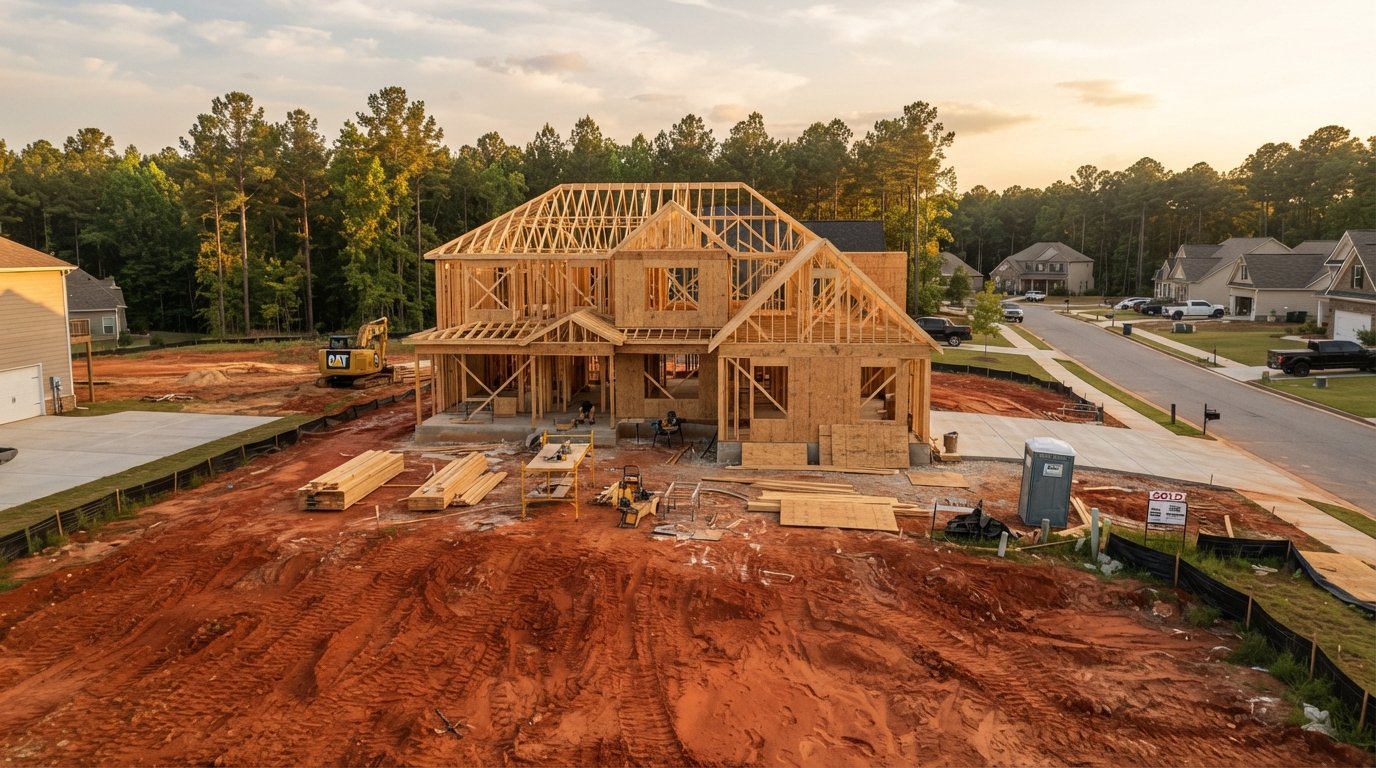
The construction phase is the half you picture when you imagine building a house. It starts the day crews break ground and runs through site work, foundation, framing, the exterior dry-in, the mechanical systems, drywall, interior finishes, and final inspections. For a standard DFW home, this active building window typically lasts somewhere between seven and eleven months for custom work, and quite a bit less for production builds.
The reason production builders move faster is no secret. They use plans they have built countless times, they buy materials in bulk, and they keep dedicated crews moving from one home to the next. A fully custom home cannot tap into that rhythm because every detail is bespoke, every trade has to coordinate around unique conditions, and inspections take longer when the work is one of a kind.
What surprises a lot of homeowners is how sequential this phase is. You cannot frame before the foundation cures, you cannot run electrical before the framing passes inspection, and you cannot hang drywall before the rough-ins are signed off. Each stage waits on the one before it, which is exactly why a single delay early in the construction timeline ripples through everything that follows.
Why the Gap Between These Two Phases Matters
Here is where homeowners get burned. They hear "nine months to build" and they assume that means nine months from the day they decide to build. In reality, that nine months usually refers only to the construction phase, and the pre-construction phase is sitting in front of it like a hidden runway. Add the two together and a "nine-month build" can realistically be a fourteen-month journey.
This gap is also where you have the most leverage. You cannot make a foundation cure faster, but you absolutely can compress pre-construction by finalizing your design quickly, choosing your selections decisively, and submitting a clean permit package. The buyers who hit their move-in dates are almost always the ones who did the slow, boring planning work up front instead of figuring it out as they went.
So when you map out how long it takes to build a house in Texas, always plan from the day you start designing, not the day you break ground. That one mental shift will save you from the most common disappointment in the entire home building process, which is watching your calendar slip month after month before construction even begins. Our home construction design planning guide walks through that early design phase step by step.
How Long Does It Take to Build a House in Texas by Builder Type
This is the question that actually determines your timeline, so let's spend real time here. The single biggest factor in how long it takes to build a house in the Dallas-Fort Worth area is the type of builder you choose. Each model trades speed for control in a different way, and understanding that trade is how you pick the right path for your situation.
Below we walk through every common builder type in North Texas, from the fastest to the most time-intensive. As you read, think about which trade-off fits you. Some buyers want their exact dream home and are happy to wait. Others just want a quality home by a certain school year and would gladly accept a proven plan to get there sooner.
Production Builder Timelines in the Dallas-Fort Worth Metroplex
Production builders are the large national and regional companies you see filling new communities across the DFW metroplex, names like Lennar, Pulte, Highland Homes, and Perry Homes. They build from a fixed menu of floor plans, and that repetition is their superpower. Because they have built the same plans hundreds of times, their construction schedule is tight, predictable, and well practiced.
For a production home, expect roughly six to nine months from contract to move-in once construction begins. Their dedicated crews, bulk material purchasing, and streamlined permitting relationships keep things humming. They also tend to know each city's permit office intimately, which shaves time off the front end that a less experienced builder would lose.
The trade-off is customization. You get builder-approved finishes and a set of plans, with limited room to change structural elements. If you stick to the menu and avoid major modifications, you get speed and predictability. The moment you start asking for significant changes, you start eating into the very efficiency that makes production builders fast in the first place.
Semi-Custom Home Building Timelines in North Texas
A semi-custom builder sits comfortably in the middle, and for a lot of North Texas families this is the sweet spot. They start with proven floor plans, the same advantage production builders enjoy, but they let you modify those plans and personalize finishes far more than a production builder would. You get a meaningful slice of the custom experience without the full custom timeline.
Plan on roughly seven to ten months from contract to keys for a semi-custom home. The base plan is already engineered and permit-friendly, so you skip the longest part of from-scratch design. Your modifications still add some time, especially if they touch the structure, but you are building on a tested foundation rather than reinventing everything.
This is the route many buyers land on once they realize a fully custom build will cost them months they do not want to spend. You still get to make the home feel like yours, you still pick a layout that suits your life, and you do it on a timeline that does not stretch into a multi-year saga.
Fully Custom Home Build Timelines in Texas
A fully custom home is the dream for a reason. Every wall, every window, every transition between indoor and outdoor space is designed around exactly how you want to live. That freedom is wonderful, and it is also why a custom home build in Texas takes the longest. Plan on nine to eighteen months or more from the start of design to move-in day, and longer still for luxury or highly complex homes.
The math breaks down roughly like this. Design and engineering can take anywhere from a few months to most of a year. Permitting adds weeks to over a month depending on the city. Construction itself runs nine to twelve months for the build alone on a typical custom home. Stack those together honestly and you can see why experienced North Texas builders so often tell custom clients to plan for the higher end of the range.
Practitioners who build custom homes around Dallas, including firms profiled by Union Main Homes and River Hills Builder, consistently echo the same advice. Do not compress a custom schedule too aggressively, because rushing the process tends to trade away the very quality and craftsmanship you wanted a custom home for in the first place. In affluent enclaves like Highland Park, Preston Hollow, and University Park, architectural review boards and stricter municipal review add even more layers, so seasoned builders bake that extra time in from the start.
If you are designing something genuinely unique, the right mindset is patience. You are not building a speculative home to flip. You are building a long-term residence, and a few extra months of deliberation up front protects the result for decades.
Owner-Builder Timelines When Building Your Own House in Texas
Some folks decide to act as their own general contractor, coordinating the trades, the permits, and the schedule themselves. This is the owner-builder route, and it can be deeply rewarding. It can also be a timeline minefield. Plan on roughly twelve to sixteen months, and understand that most of the delays owner-builders hit come from inexperience rather than from the construction itself.
The honest reality is that a professional builder has relationships, systems, and hard-won instincts that keep a job moving. An owner-builder is learning many of those lessons in real time, which means more scheduling gaps, more waiting on trades, and more small mistakes that cost days here and there. None of that is a reason not to do it, but it is a reason to plan generously.
If you go this route, lean hard on planning and documentation. The owner-builders who finish close to schedule are the ones who treat it like the full-time project it is, line up their subcontractors well in advance, and refuse to break ground before their drawings and selections are completely locked.
Quick Move-In and Spec Homes as the Fastest Path
If your timeline is the priority above all else, the fastest option in the Dallas-Fort Worth area is a quick move-in home, sometimes called a spec home. These are homes a builder has already started or even finished, built on speculation without a signed buyer. Because the hard part is already done, you can often close in thirty to ninety days.
This is the path for the buyer who needs to be in a home by a specific date and cannot absorb a six-month-plus wait. You sacrifice customization, since the major decisions were made by the builder, but you gain enormous speed. Many DFW builders keep a rotating inventory of these homes precisely because so many buyers value getting in quickly. Our guide to new construction homes in Dallas-Fort Worth covers builder incentives and inventory homes in more detail.
The table below sums up the builder type trade-offs in one place, so you can see at a glance how speed and control move in opposite directions.
| Builder model | Time to move-in | Customization level | Schedule predictability |
|---|---|---|---|
| Quick move-in / spec | 30 to 90 days | Very low | Very high |
| Production builder | 6 to 9 months | Low | High |
| Semi-custom builder | 7 to 10 months | Medium | Medium to high |
| Owner-builder | 12 to 16 months | High | Low |
| Fully custom builder | 9 to 18+ months | Very high | Medium |
How Texas Compares to the National Home Building Timeline
It helps to zoom out and see where the Lone Star State sits compared to the rest of the country, because context makes your own building timeline easier to judge. The good news for North Texas buyers is that Texas is generally a friendlier place to build than much of the nation, for a handful of practical reasons we will get into.
Understanding the national picture also helps you sniff out unrealistic promises. If a builder quotes you a timeline far below the national average for the kind of home you want, that is a flag worth questioning. Speed is great, but a number that sounds too good usually means corners somewhere, or a quote that conveniently leaves out pre-construction and permitting.
What the National Average Tells Us
The U.S. Census Bureau Survey of Construction is the most authoritative source on this, and it puts the average single-family construction time at roughly 7.7 months from start to completion. Add about another 1.4 months for the permitting front end, and the typical permit-to-finish window nationally sits a little over nine months.
It is worth repeating that this figure measures construction, not the full journey. It does not capture the months of design that a custom home demands, and it blends together everything from simple production homes to elaborate custom builds. So treat 7.7 months as a useful baseline, not as a promise about your specific home.
There is also meaningful regional variation worth knowing. National data shows the Northeast carrying the longest gap from permit issuance to construction start, while the Midwest tends to move fastest. Weather, local regulation, and labor availability all play into those regional differences, which is why a build in one part of the country can run on a noticeably different clock than the same build elsewhere.
Where the Dallas-Fort Worth Metroplex Fits
Texas lands comfortably in the middle of the national pack, and that middle position is mostly a gift. Compared to northern states, North Texas loses far fewer days to winter weather. The region also runs one of the deepest construction labor pools in the country, spread across Dallas, Fort Worth, Austin, San Antonio, and Houston, which keeps crews available even when demand is high. If you are comparing states, see how long it takes to build a house in Georgia and in North Carolina for the same phase-by-phase breakdown.
On top of that, many Texas cities have moved their plan review to online portals, which has trimmed permit waits in places like Dallas. As resources from Build Espino and McVaughn Custom Homes note, this combination of milder weather, abundant labor, and modernizing permit offices gives Texas builders an edge on speed that builders in colder, more heavily regulated states simply do not have.
The one asterisk is the high-growth collar counties around the metroplex. Cities absorbing explosive population growth file enormous volumes of permits, and that volume slows their offices down. So while the DFW core moves briskly, the fast-growing suburbs can add time on the front end, which brings us neatly to permitting.
How Long Does It Take to Get a Building Permit in Dallas-Fort Worth
Permitting is the part of the Texas home building timeline that frustrates people the most, partly because it feels like nothing is happening while you wait. The reality is that permit timelines across the DFW metroplex are wildly uneven. The exact same set of drawings can clear one city's office in a week and sit in another for over a month.
So let's go office by office, because knowing your specific city's pattern is one of the best ways to set a realistic building timeline. We will cover the two anchor cities, the booming suburbs, the smaller towns, and the often-forgotten HOA review that can quietly add weeks of its own.
Dallas Building Permit Timelines
The City of Dallas has improved its permit process meaningfully in recent years, largely by moving its Development Services Department to digital plan review. For straightforward residential projects, permits often clear in roughly one to four weeks. Complex projects, zoning variances, historic district overlays, and floodplain issues push that window out further.
Dallas builds to the International Residential Code with local amendments, and the city publishes current plan-review turnaround estimates on its website. Checking those estimates before you set a construction start date is one of those small habits that separates a smooth build from a frustrating one. The other key habit is submitting a complete package, because a missing document can trigger a rejection before a reviewer ever opens your plans.
Fort Worth Building Permit Timelines
Fort Worth tends to run faster than Dallas for standard residential work. Initial plan review on a typical home commonly takes about a week, and when revisions are needed they are usually processed in just a few days. The city also offers expedited review for qualifying projects, which can compress the wait further when timing is critical.
That relative speed is one reason Fort Worth and its surrounding communities remain attractive to builders and buyers who want to keep their timeline tight. As always, the speed assumes clean, complete drawings. A sloppy submission slows even the fastest office down, because the clock effectively resets every time you have to fix and resubmit.
Frisco, McKinney, Prosper, and the High-Growth Suburbs
Here is where North Texas growth shows up on your calendar. Booming cities in Collin and Denton counties, places like Frisco, McKinney, and Prosper, file thousands of permits a month. That sheer volume adds time, and it is common for permitting in the fastest-growing suburbs to add a month or more before ground breaks.
This is not a knock on those cities, it is simply the cost of building where everyone else wants to build too. If you are constructing in one of these high-demand suburbs, the smart move is to build that extra permit time into your plan from day one rather than treating it as a surprise. A builder who works these offices regularly will know the current rhythm and can plan around it.
Smaller Towns and Unincorporated County Permits
Smaller towns and unincorporated county areas often process permits faster, simply because they handle a fraction of the applications the big cities do. Lower workload usually means quicker approvals. That said, rural and county lots bring their own variables that can add time, like septic system approval, well permits, and floodplain review.
So a rural lot is not automatically faster end to end. The permit itself may clear quickly, but the site-specific approvals can introduce their own waits. The lesson is to understand the full set of approvals your particular lot needs, not just the building permit, before you assume a rural build will be quick.
How HOA Architectural Review Affects Your Timeline
In master-planned communities, there is an approval that has nothing to do with the city at all. The homeowners association architectural review committee reviews your home's exterior materials, colors, design, and overall look to make sure it fits neighborhood standards. Budget an extra two to four weeks for this, and more if the committee only meets monthly.
This one catches people off guard because it runs parallel to, or even ahead of, city permitting. If your community has an HOA, factor its review schedule into your timeline early. Missing a monthly committee meeting by a day can cost you weeks of pure waiting, which is a maddening way to lose time on something so avoidable.
The table below puts the main DFW jurisdictions side by side so you can see the permit timeline landscape at a glance.
| Jurisdiction | Typical residential permit wait |
|---|---|
| City of Dallas | About 1 to 4 weeks |
| Fort Worth | About 1 week, expedited available |
| Frisco / McKinney / Prosper | A month or more |
| Smaller towns | Often faster, lower volume |
| Unincorporated county | Faster permit, plus septic, well, floodplain review |
| HOA architectural review | Add 2 to 4 weeks |
How to Speed Up Permit Approval in the DFW Area
The single most effective way to speed up permit approval in Dallas-Fort Worth is not paying an expedite fee. It is submitting complete, accurate, code-compliant drawings on the first pass. No expedited fee makes up for a poorly prepared permit package, because the biggest delays come from the rejection-and-resubmit cycle that incomplete plans trigger.
A standard residential permit package generally needs a site plan showing boundaries and setbacks, full architectural drawings, and structural drawings. Missing even one required item can stall everything at intake. Working with a builder or designer who knows your specific city's requirements is the most reliable way to clear review on the first try and protect your building timeline.
The Step-by-Step Texas Home Construction Timeline Phase by Phase
Now for the part you can actually watch happen. Once permits are in hand and the lot is ready, here is how a standard 2,500 to 3,500 square foot North Texas home moves through construction, stage by stage. These durations compress for production builds and stretch for custom work, but the sequence is always the same.
The reason this sequence matters so much is that it is strictly sequential. Each phase waits on the one before it to pass inspection. That is why a delay in an early phase, like a rained-out foundation pour, pushes every single phase that follows it down the calendar.
Site Preparation and Lot Work
The build kicks off with site preparation, which usually takes two to four weeks. Crews clear the lot of trees, brush, and debris, then grade it for proper drainage, and arrange the utility connections for water, sewer, and electricity. Soil conditions and lot access drive how long this takes.
A flat infill lot in an established neighborhood is quick to prep. A sloped, wooded, or awkward-to-access lot is a different story. Hillside lots and properties with tricky terrain demand more grading, more engineering, and more coordination, all of which add time before the foundation can even begin.
Foundation Work in North Texas
Next comes the foundation, typically another two to four weeks. This involves pouring the slab, or building a pier-and-beam foundation, with plumbing and structural inspections built into the stage. In North Texas, this phase deserves extra respect because of the region's notorious expansive clay soils.
Those soils expand and contract with moisture, which is exactly why a properly engineered foundation matters so much here. Rushing this stage to save a few days is a false economy, because foundation problems are the kind of issue you pay for years down the road. A good builder takes the time to get it right and schedules around the weather to protect the pour. For how foundation and framing choices affect both cost and schedule, see our guide to new home structural design.
Framing Your Texas Home
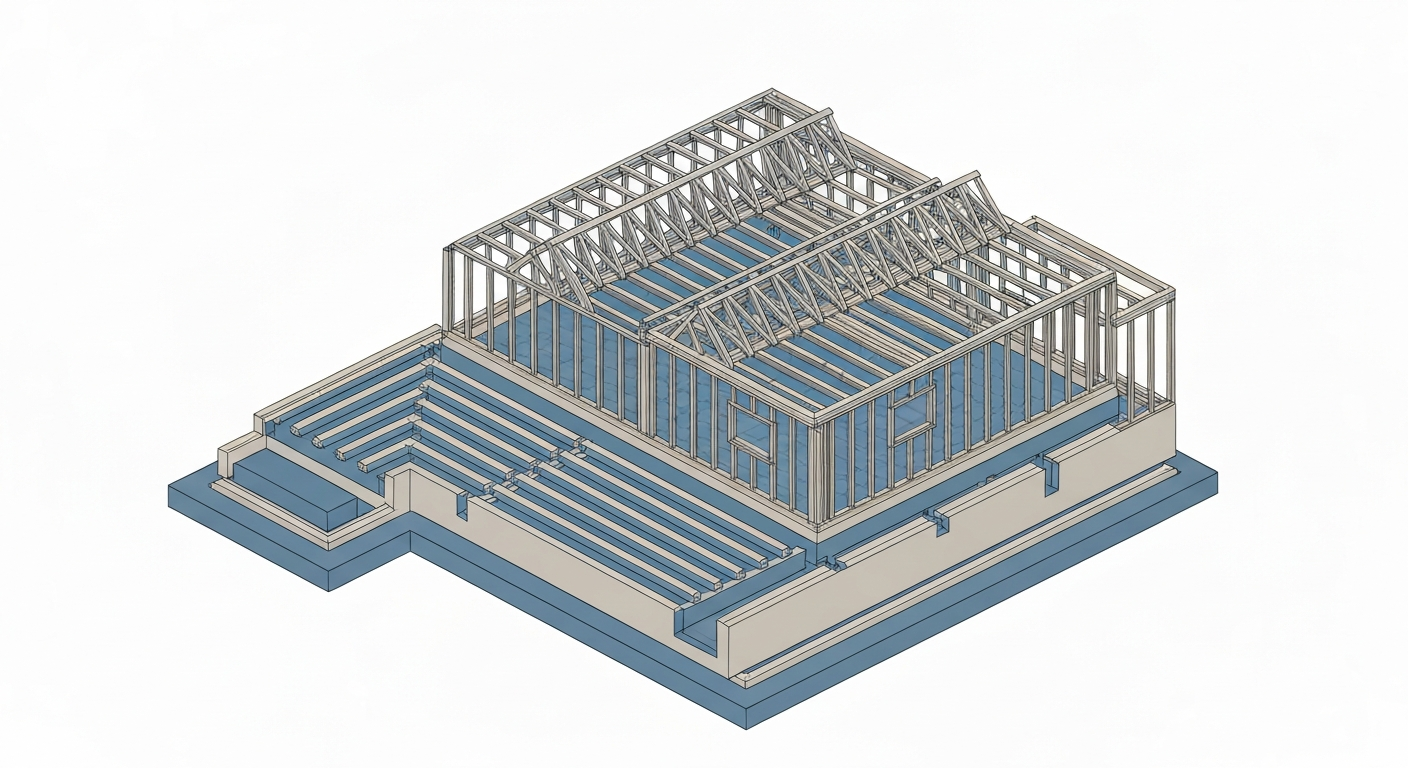
Framing is the stage where your home finally starts to look like a home, and it usually runs three to six weeks. Crews erect the skeleton: exterior walls, interior walls, roof trusses, and sheathing. This is the milestone homeowners get genuinely excited about, because for the first time they can walk through their actual rooms.
Framing is also weather-sensitive, since the structure is open to the sky until it is dried in. Heavy spring storms can stall framing, which is one reason builders pay close attention to the season when scheduling this stage. The framing inspection that follows has to pass before the interior trades can begin their work.
Dry-In and Exterior Work
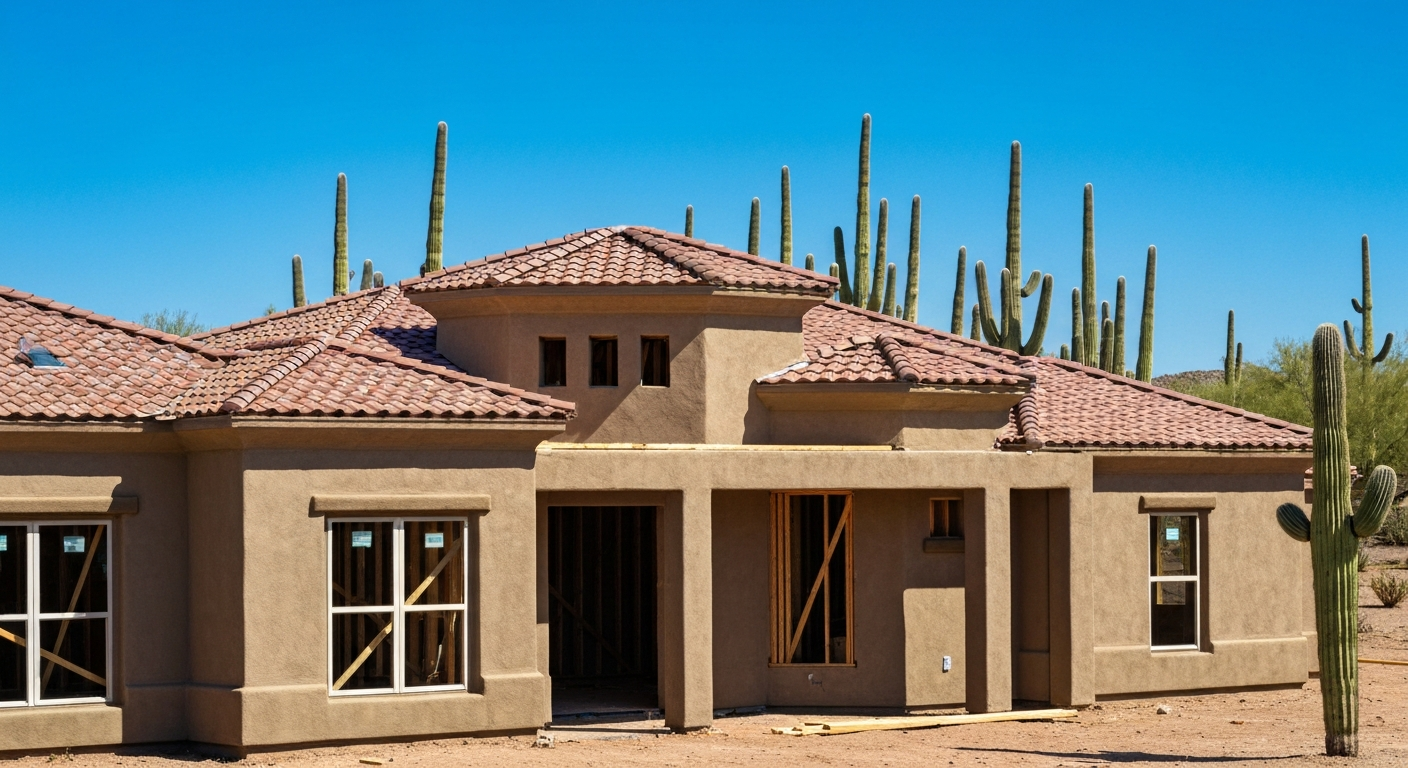
Once the frame is up, the home gets dried in over roughly three to five weeks. This means installing the roofing, windows, and exterior doors, and weatherproofing the structure so the interior trades can work protected from Texas rain and heat. Reaching dry-in is a major turning point in the construction timeline.
After dry-in, the home is far less exposed to weather delays, which makes the schedule more predictable from here forward. Exterior work like siding, brick, or stucco often progresses alongside the interior stages that come next, so multiple trades may be working in and on the home at the same time.
Mechanical, Electrical, and Plumbing Rough-In
With the home dried in, the mechanical, electrical, and plumbing rough-in begins, usually spanning three to five weeks. This is when the systems that make a house livable get run through the open walls: the plumbing lines, the electrical wiring, and the HVAC ductwork. Each system carries its own inspection that must pass.
This phase is invisible once the walls close up, but it is some of the most important work in the entire build. Coordination between trades matters enormously here, because the plumber, electrician, and HVAC crew all need access to the same open framing, and they have to sequence their work so nobody is stepping on anybody else.
Insulation and Drywall
After the rough-ins pass inspection, the home gets insulated and drywalled, a stage that typically takes three to four weeks. Crews insulate the walls and ceilings, then hang, tape, and finish the drywall. This is the point where the open, skeletal interior transforms into actual rooms with smooth walls.
Once the drywall is up and finished, the home feels dramatically closer to done. Psychologically this is a big moment for homeowners, though there is still meaningful work ahead. The finished walls set the stage for the longest interior phase, which is where your selections finally come to life.
Interior Finishes
Interior finishes is the longest interior stretch, usually running six to ten weeks, and it is the phase most affected by your choices. This is where the cabinets, countertops, flooring, trim, paint, light fixtures, and appliances all get installed. Everything you agonized over during selections shows up here, one detail at a time.
This stage is also where late change orders do the most damage. Deciding now that you want a different cabinet style or an upgraded floor sends trades back to reschedule and reorder, and that kind of mid-build pivot can add weeks. The homeowners who sail through interior finishes are the ones who locked their selections during pre-construction and left them alone.
Final Inspections and the Walkthrough
The home reaches the finish line with final inspections and the walkthrough, generally one to two weeks. The city conducts its final inspection and signs off, the builder completes the punch list of small fixes, and you do your final walkthrough before closing. Then the keys are yours.
The table below summarizes the full construction timeline so you can see how the phases stack up for a standard custom home in North Texas. Production builds move through this same sequence faster thanks to their practiced crews and systems.
| Construction phase | Typical duration |
|---|---|
| Site preparation and lot work | 2 to 4 weeks |
| Foundation | 2 to 4 weeks |
| Framing | 3 to 6 weeks |
| Dry-in and exterior | 3 to 5 weeks |
| Mechanical, electrical, plumbing rough-in | 3 to 5 weeks |
| Insulation and drywall | 3 to 4 weeks |
| Interior finishes | 6 to 10 weeks |
| Final inspections and walkthrough | 1 to 2 weeks |
Add those phases together and the active construction window for a standard custom home lands around seven to eleven months, which is exactly why the realistic contract-to-keys range for custom work is nine to fourteen months once you include pre-construction and permitting.
What Slows Down a Home Build in Texas
Even a perfectly planned build hits friction, and knowing the usual culprits ahead of time lets you plan around them instead of getting blindsided. Four factors move Texas home building timelines more than anything else. Let's look at each one honestly, because pretending delays will not happen is the surest way to be disappointed when they do.
The builders who consistently hit their dates are not the ones who avoid these factors entirely, since that is impossible. They are the ones who anticipate them and build a buffer into the schedule from the start. That mindset, planning for friction rather than hoping for a frictionless build, is the real secret to a predictable timeline.
How Texas Weather Affects Your Building Timeline
Weather is the classic timeline wildcard, and in Texas it cuts both ways. Heavy rain and spring storms delay the foundation and framing stages, the two phases most exposed to the open sky. On the other end, extreme summer heat slows crews working outdoors and can affect how concrete cures. Across a full Texas build, it is normal to lose two to four weeks to weather.
The trick is that good builders do not pretend the weather will cooperate. They schedule a weather buffer up front and try to position the most weather-sensitive stages during friendlier parts of the year. You cannot control the sky, but you can absolutely control whether your foundation pour is scheduled into the rainiest stretch of the calendar.
How Change Orders Stretch a Custom Home Timeline
A change order is a modification you request after construction has already started, and it is one of the most underestimated timeline killers. Deciding mid-build to expand the kitchen footprint or redesign a staircase triggers a chain reaction. The structural calculations may need redoing, the permits may need updating, and the affected trades have to be rescheduled.
Every change made after the build begins costs more time than the identical decision made during design. This is the strongest argument for taking pre-construction seriously. Affluent homeowners building luxury homes are especially prone to evolving their vision once the walls go up, and while that is natural, it is exactly how a twelve-month build becomes an eighteen-month one.
The Construction Labor Shortage and Your Schedule
The ongoing construction labor shortage is real, and it shows up directly in your schedule. Even in a deep market like Dallas-Fort Worth, the best subcontractors are booked out well in advance. A skilled framing or finish crew that cannot start on your scheduled date pushes every stage behind it, since the work is sequential.
This is part of why working with an established builder matters. Builders with long-standing relationships and dedicated crews can keep trades flowing far more reliably than a newcomer or an inexperienced owner-builder scrambling to find available labor. Crew availability is one of the quieter reasons production builders hit their dates so consistently.
Material Lead Times and Supply Chain Factors
Finally, material lead times can stretch a build, especially for custom or specialty items. Custom windows, particular finishes, and certain fixtures carry lead times that must be ordered well in advance. Supply chain shifts and broader cost volatility have also pushed many buyers to lock material orders earlier rather than risk a mid-build scramble.
The fix here is coordination during pre-construction. A good builder identifies the long-lead items early and orders them so they arrive when the schedule needs them, not weeks after. Leaving these orders until the last minute is a classic way to stall an otherwise smooth build at exactly the wrong moment.
When Is the Best Time of Year to Build a House in Texas
If you have any flexibility on when to break ground, timing your start can quietly save you weeks. The stages you most want to protect from weather are the foundation and framing, since those are the ones exposed to the elements. Positioning those early stages so they land in the drier, milder stretch of fall is often the smoothest path in North Texas.
Heavy spring storms are the most common cause of early-stage delays, and peak summer heat slows the crews working outside while affecting concrete curing. So a fall groundbreaking tends to thread the needle nicely, getting your weather-sensitive work done before the next wet or scorching season arrives. By the time winter comes, a fall start is usually dried in and working on protected interior stages.
That said, do not let the perfect season become an excuse to wait if you are otherwise ready to go. The pre-construction work of design, selections, and permitting can happen in any season, and getting that done means you are ready to break ground the moment conditions line up. The goal is to align your start, not to delay the entire project chasing ideal weather.
How to Build a House Faster in the Dallas-Fort Worth Area
If your move-in date is the priority, there are concrete ways to compress your Texas home building timeline. None of them are tricks, they are just the disciplined habits that separate on-schedule builds from the ones that drift. Here is how to give yourself the best shot at the faster end of every range in this guide.
Think of these as levers you control. You cannot speed up curing concrete or rush a city reviewer, but you can absolutely control your own decisiveness, your builder choice, and the quality of your paperwork. Pull these levers well and you remove most of the self-inflicted delays that plague slower builds.
Choose the Right Builder Model for Your Timeline
The fastest decision you can make is choosing a builder model that matches your deadline. If speed matters most, a production or semi-custom builder with proven plans and dedicated crews will get you there faster than a from-scratch custom build. Save the fully custom route for when control matters more than the calendar.
Be honest with yourself about which one you actually need. Plenty of buyers chase a fully custom home and then stress over a timeline that a semi-custom build would have shortened by months. The right builder model is the single biggest speed decision in the entire process.
Finalize Your Design and Selections Before Breaking Ground
The fastest custom builds are the ones where the homeowner made every finish and structural decision during design. Finalizing your selections before groundbreaking eliminates the mid-build change orders that cause the most damage. Lock the floor plan, lock the finishes, and then resist the urge to keep tinkering. If budget is part of that planning, start with how much it costs to build a house in Texas and these ways to save money when building a house.
This is the most repeated piece of advice from experienced North Texas builders, and for good reason. Indecision after construction starts is the single most expensive form of delay. Decide early, document everything, and let the crews do their work without constant reshuffling.
Submit a Complete Permit Package
Whether you or your builder handles permitting, a clean, complete first submission avoids the rejection-and-resubmit cycle that quietly adds weeks. Make sure your package includes everything the city requires before it ever goes in. A single missing document can stall the whole thing at intake.
This is where an experienced local builder earns their keep. They know exactly what each DFW city wants and how to prepare a package that clears review on the first pass. That knowledge is worth real time on your building timeline.
Line Up Financing Early
Financing can become a bottleneck if you let it. A construction loan can take sixty days or more to arrange, and some builders will not start without loan approval in hand. Getting your financing in order early means it is never the thing standing between you and a groundbreaking date.
Closing itself usually takes about thirty days once the home is complete, assuming your financing is ready. So treat the money side as a parallel track that runs alongside design and permitting, not as an afterthought you handle at the end. Line it up early and it never slows you down.
Consider a Quick Move-In Home
If none of the above gets you in fast enough, a quick move-in home is the ultimate shortcut. These spec homes are already under construction or finished, so you skip the entire design and permitting front end and close in thirty to ninety days. You trade customization for speed, which is the right trade for buyers on a hard deadline.
Many DFW builders keep an inventory of these homes precisely because so many buyers need to move on a tight schedule. If your timeline is non-negotiable, this is the path most likely to hit it.
Planning Your Texas Home Build Timeline Around Your Move
A lot of people approach this from the opposite direction. They do not ask "how long does it take," they ask "when do I need to start so I am in by a certain date." That reverse-engineering approach is genuinely the smartest way to plan, so let's work through it.
The key is to count backward from your target move-in date through every phase, including the slow pre-construction front end that buyers forget. When you do that honestly, you usually discover you need to start sooner than you assumed. Better to learn that now than to find out the hard way nine months in.
How Far in Advance Should You Start Planning
For a production or semi-custom home, starting six to ten months before your target move-in is usually enough, depending on the builder and the city. For a fully custom home, you want to begin the conversation much earlier, often a full year to eighteen months before you hope to move in, because design and permitting alone can absorb a big chunk of that.
If you are eyeing a custom build for a specific school year or life event, the rule of thumb experienced builders share is to be deep into design well before you want to break ground. Not browsing inspiration photos, but actually designing with a professional. The earlier you turn daydreaming into drawings, the more control you have over your timeline.
Building a Texas Home Around a Future Move or Retirement
This question comes up constantly from people planning a move back to Texas or building a retirement home, often years in advance. Say you are five or six years out from a move and want a roughly 2,000 square foot home built exactly the way you want it. The encouraging news is that you are in the ideal early-planning window, and you do not need to lock anything in yet.
Here is how that long runway typically plays out. For the first few years, you focus purely on ideas, must-haves, and inspiration, gathering the vision without committing to anything. Around two to three years out, you start conversations with architects or design-build firms and begin refining your layout. At roughly twelve to eighteen months before your target, you finalize plans, secure permits, and select your builder. Construction then runs eight to fourteen months after that.
For a from-scratch custom home, planning for two years from first serious step to move-in is the safe, realistic high end, while fifteen to twenty-one months is achievable for a focused, decisive owner. It is technically possible to go from design to move-in in twelve months, but that is unrealistic for most people and most situations. The smart move with a long runway is to enjoy the unhurried planning, because a custom home built without time pressure almost always turns out better than one rushed to beat a clock.
Frequently Asked Questions About Building a House in Texas
Because this topic generates so many specific questions, here are clear, direct answers to the ones North Texas buyers ask most. Use this section as a quick reference for the details that did not fit neatly above.
How long does it take to build a house in Texas?
Most new construction homes in Texas take six to ten months once construction begins. A fully custom home runs nine to eighteen months or more from contract signing to move-in once design and permitting are included. The exact number depends heavily on your builder type, your city, and how decisive you are during design.
How long does it take to build a custom home in Dallas?
A custom home in Dallas typically takes nine to eighteen months total, with the construction itself often running nine to twelve months. Pre-construction design and engineering can add anywhere from a few months to most of a year, and exclusive neighborhoods with architectural review boards add even more time.
How long does it take to get a building permit in DFW?
It varies a lot by city. Fort Worth often reviews standard residential plans in about a week. Dallas commonly runs one to four weeks for straightforward permits. Fast-growing suburbs like Frisco and McKinney can add a month or more due to permit volume, and an HOA review can add another two to four weeks on top of that.
Why does pre-construction take so long?
The pre-construction phase covers design, engineering, budgeting, selections, financing, and approvals, all of which happen before any dirt moves. On a custom home this can take three to twelve months, and it is the stage most likely to stretch a timeline because it moves at the speed of your decisions.
What is the fastest way to get into a new home in DFW?
A quick move-in spec home. These homes are already under construction or complete, so you skip design and permitting entirely and can close in thirty to ninety days. It is the right choice for buyers on a hard deadline who can accept builder-selected finishes.
How much does Texas weather delay a build?
Plan to lose roughly two to four weeks across a full build, mostly during the foundation and framing stages. Scheduling those weather-sensitive stages for the drier fall months is the best way to minimize the impact, though no schedule is fully weatherproof.
Does the lot affect the building timeline?
Yes, significantly. Soil conditions, grading, drainage, and access all drive how long site preparation and foundation work take. A flat infill lot is faster than a sloped, wooded, or floodplain-adjacent lot, and rural lots may add septic, well, and floodplain approvals.
Can I build a custom home in Texas in under a year?
It is possible but uncommon. Going from design to move-in in twelve months requires a decisive owner, a simple design, no significant change orders, and a cooperative permit office, all lining up at once. For most people, planning for fifteen to twenty-four months is far more realistic and far less stressful.
How far in advance should I start planning a Texas home build?
For production and semi-custom homes, six to ten months ahead of your target move-in usually works. For a fully custom build, start the conversation twelve to eighteen months out, since design and permitting alone consume a large share of the total timeline.
Conclusion: Setting Realistic Expectations for Your Texas Home Build
So, how long does it take to build a house in Texas? In the Dallas-Fort Worth metroplex, plan on six to nine months for a production home and nine to fourteen months for a standard custom build, measured from contract to keys. A quick move-in spec home can get you there in as little as thirty to ninety days if speed is everything.
The most important takeaway is that the construction itself is the predictable part. Your timeline is genuinely won or lost in the months before groundbreaking, in how fast you finalize your design, how complete your permit package is, and which builder model you choose. The buyers who hit their dates are the ones who did the slow planning work up front instead of figuring it out on the fly.
Decide early, document everything, line up your financing as a parallel track, and build a weather buffer into the schedule from day one. Do those things, and the year ahead looks far more predictable than the headlines about housing and labor might suggest. A well-planned Texas home build is one of the most rewarding projects you will ever take on, and now you know exactly what to expect at every stage of the journey.