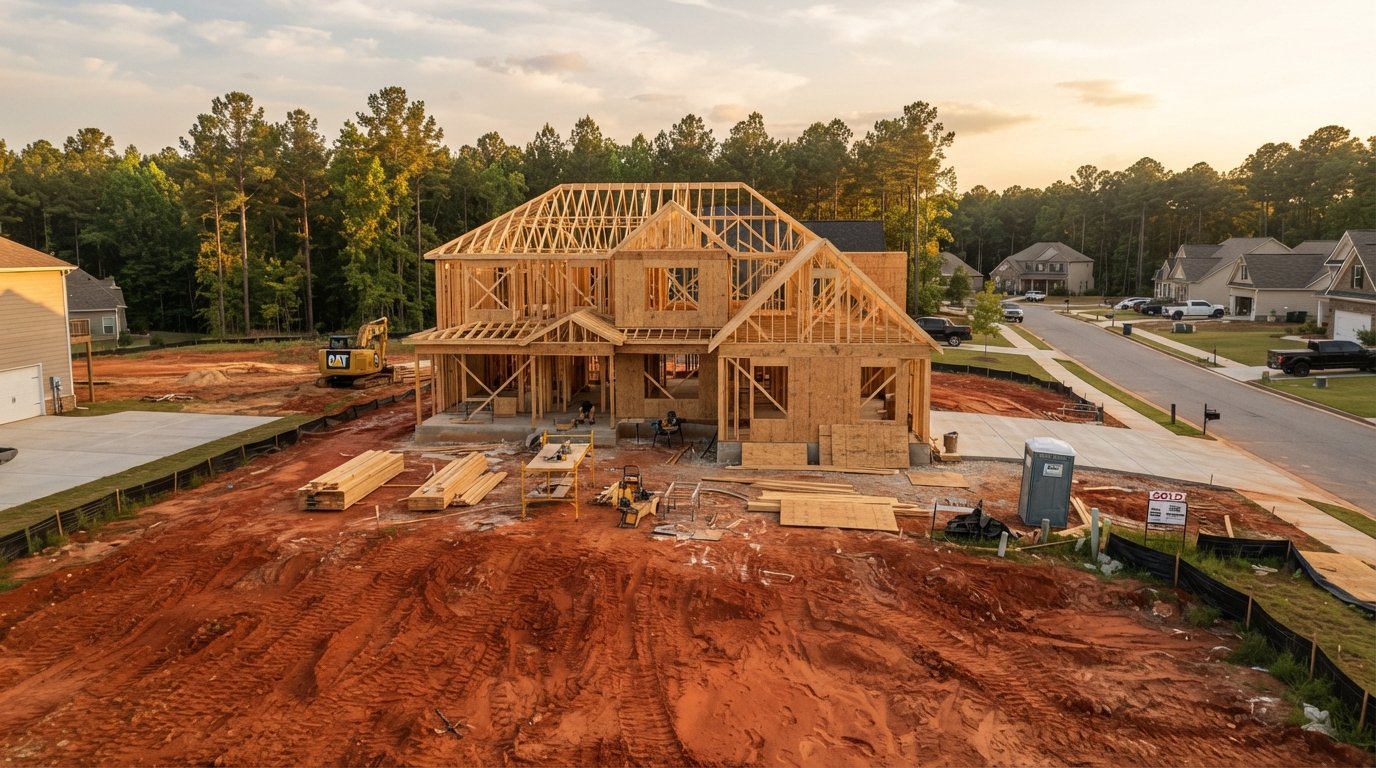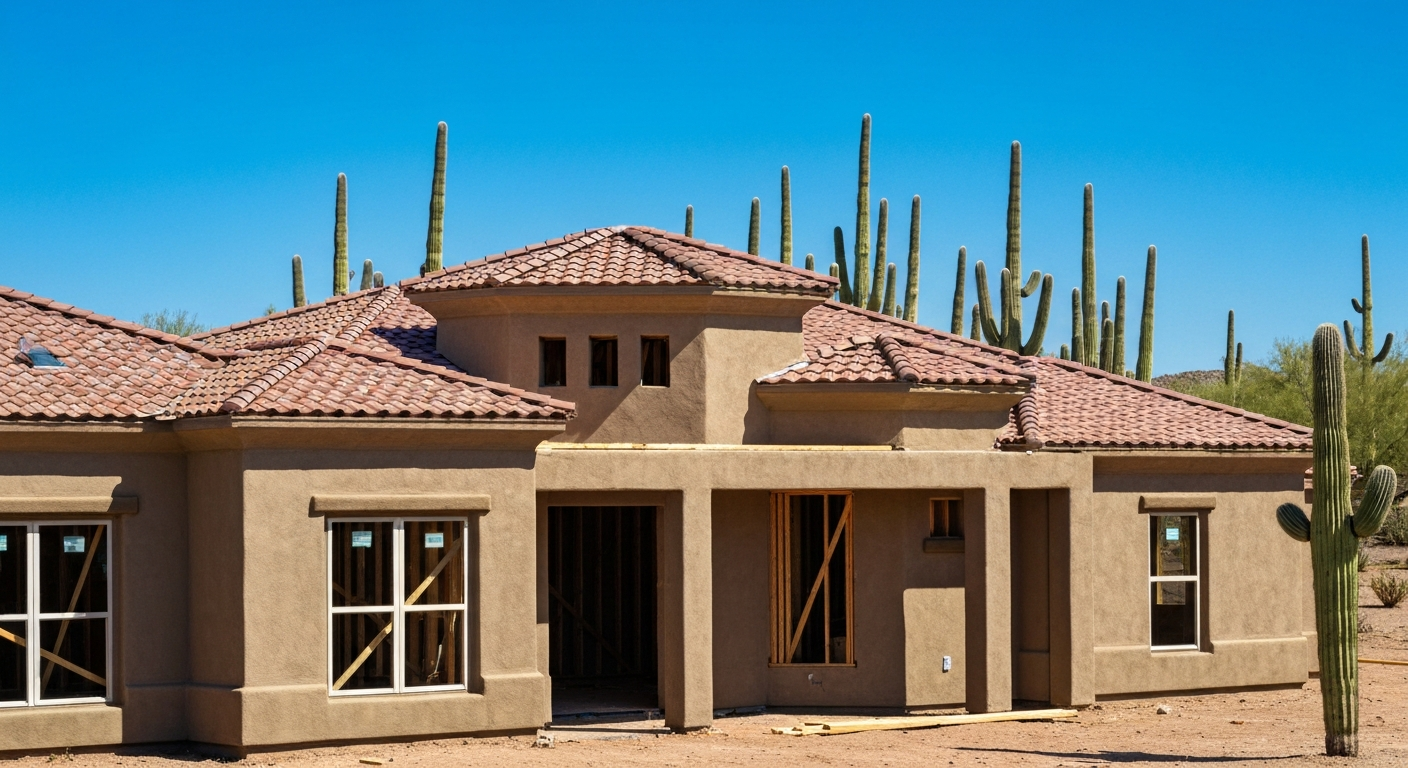
Building a house in California has never been simple. In the current market, it carries a unique distinction: it is simultaneously the most expensive state to build in on the mainland and one of the most justified financially, given that median home prices reached $914,810 in April 2026 according to the California Association of Realtors, making land and existing homes just as costly as building new.
The state's construction costs are high for real reasons, not arbitrary ones. Seismic engineering requirements, some of the most stringent energy codes in the world, mandatory solar installation, wildfire-hardening requirements in fire-hazard zones, union labor markets in coastal cities, impact fees that can exceed $100,000 in some Bay Area jurisdictions, and CSLB contractor licensing standards more rigorous than any other state all contribute to a cost structure that is fundamentally different from what you will encounter in Texas, Florida, or the Midwest.
What has changed recently is not the price, but the predictability. After years of pandemic-era volatility in materials, labor, and supply chains, the California construction market has reached a period of relative stability. Lumber prices have normalized. Contractor availability has improved. Permitting timelines in several cities have shortened. And the 2025 California Building Energy Efficiency Standards, effective January 1, 2026, are now fully integrated into builder workflows rather than being a moving target.
This guide covers everything you need to budget a California new home build accurately: per-square-foot costs by region, by finish tier, and by city, along with the regulatory stack that makes California construction uniquely complex.
California Construction Cost Snapshot
| Metric | Range |
|---|---|
| Average cost per square foot (basic/tract) | $200 to $375 |
| Average cost per square foot (mid-range/semi-custom) | $400 to $550 |
| Average cost per square foot (high-end/luxury) | $600 to $900+ |
| Average total build cost, 2,000 sq. ft. (standard) | $420,000 to $700,000 |
| Average total build cost, Bay Area custom | $1,000,000 to $1,600,000+ |
| State construction cost index vs. national average | 1.45x (45% above national) |
| Land cost range (statewide) | $3,000/acre (desert) to $1M+/acre (coastal) |
| Impact fees (Bay Area) | Up to $157,000 in highest-cost jurisdictions |
| Impact fees (Los Angeles) | $30,000 to $50,000 typical range |
| Impact fees (Sacramento) | $20,000 to $35,000 typical range |
| School impact fees (Level 1, 2026) | $4.79 per sq. ft. (state maximum) |
| Permit package (new residential) | $10,000 to $50,000 depending on city |
| Construction timeline (standard) | 8 to 14 months after permits |
| Pre-construction phase | 6 to 18 additional months |
| Median existing home sale price (May 2026) | $782,221 (Redfin) |
| Statewide median home price (April 2026, CAR) | $914,810 |
| Only 18% of California households can afford the median home | California LAO, Q1 2026 |
What Does It Actually Cost to Build a House in California?
The direct answer is that building in California costs between $400 and $800 per square foot for most primary residences. Most mid-range builds land in the $450 to $600 range depending on location, lot conditions, and finish level. A 2,000 square foot home at that range costs between $800,000 and $1,200,000 before land. A 2,500 square foot home runs $1,000,000 to $1,600,000 or more in complex sites or premium markets.
These numbers are real and are driven by real inputs. Labor in California's coastal markets runs $50 to $100 per hour for skilled trades, compared to $30 to $60 in most of the rest of the country. The state construction cost index sits at 1.45x the national average, meaning a project that costs $200,000 to build nationally costs approximately $290,000 in California before any premium is added for urban markets, seismic engineering, or coastal permitting.
The most important framing for anyone approaching a California build is this: the state's construction premium is not a penalty. It reflects real requirements that produce homes with higher seismic resilience, lower long-term energy costs, wildfire resistance where required, and all-electric systems that insulate owners from gas price volatility. The homes cost more to build. They also cost significantly more to buy on the resale market, and they cost less to operate over their lifespan than comparable homes in states with less rigorous codes.
California Construction Cost by Region and City
California's construction market is not one market. It is a collection of distinct regional economies with cost structures that can differ by 2x to 3x within the same state. Location is the single largest variable in any California build budget.
San Francisco Bay Area and Silicon Valley
The most expensive construction market in the continental United States for residential building. New home construction in the Bay Area costs between $450 and $950 per square foot, with most custom homes in Silicon Valley landing between $550 and $750 once design, permitting, sitework, and finishes are factored in. A 2,000 square foot custom home costs between $1,000,000 and $1,600,000 or more, excluding land. Land in desirable neighborhoods costs $500,000 to over $1,000,000 per acre.
What drives these numbers: union labor rates 30% to 50% above the state average, the highest permit fees in California, seismic engineering requirements for Zone 4 (the most active seismic zone in the state), a permitting timeline in San Francisco that can stretch from 6 to 18 months for complex projects, and a competitive labor market driven by tech industry wealth that keeps contractor demand perpetually high.
| Cost Category | Estimated Cost (2,000 sq. ft. standard home) | Per Sq. Ft. |
|---|---|---|
| Labor | $400,000 to $500,000 | $200 to $250 |
| Materials | $500,000 to $800,000 | $250 to $400 |
| Site prep and permits | $15,000 to $50,000+ | $8 to $25 |
| Total (excl. land) | $1,000,000 to $1,600,000+ | $500 to $800+ |
Los Angeles and Southern California (Los Angeles County)
Los Angeles is the second-most expensive major California market for construction. Standard builds run $400 to $475 per square foot, with a 2,000 square foot home costing between $800,000 and $950,000 before land. Custom and luxury builds in neighborhoods like Bel Air, Pacific Palisades, Malibu, and the Hollywood Hills push to $600 to $900 per square foot.
Based on current RSMeans construction data, the Los Angeles cost index sits at 1.14x the California state average. Labor rates of $35 to $50 per hour, complex permitting procedures, strict zoning regulations, and significant urban site logistics contribute to costs consistently above the state baseline. The city of Los Angeles charges $8,000 to $25,000 or more in combined permitting, plan check, and impact fees for new residential construction.
| Cost Category | Estimated Cost (2,000 sq. ft.) | Per Sq. Ft. |
|---|---|---|
| Labor | $300,000 to $400,000 | $150 to $200 |
| Materials | $400,000 to $500,000 | $200 to $250 |
| Site prep and permits | $10,000 to $50,000 | $5 to $25 |
| Total (excl. land) | $800,000 to $950,000 | $400 to $475 |
Land in Los Angeles varies from $100,000 per acre in the outermost suburbs to over $1,000,000 per acre in established coastal and hillside neighborhoods.
San Diego
San Diego offers a moderate cost position relative to Los Angeles and the Bay Area. Standard construction runs $350 to $500 per square foot, with custom builds reaching $500 to $700 in premium locations like La Jolla, Del Mar, and Rancho Santa Fe. A standard 2,000 square foot home costs between $700,000 and $1,000,000 before land.
San Diego has been proactive in streamlining its ADU approval process and is one of the more predictable permitting environments in Southern California. The California Construction Cost Index (CCCI) has increased significantly over the last 5 years, meaning accurate local data is essential for budgeting.
Orange County and San Jose
Orange County sits in the mid-to-upper tier of the California market. Standard construction runs $400 to $550 per square foot. San Jose, driven by Silicon Valley labor markets, runs $450 to $650 per square foot for standard builds, with a 2,000 square foot home typically costing $600,000 to $1,200,000 before land.
Sacramento and the Central Valley
Sacramento is one of the most affordable major markets in California for residential construction, running $275 to $400 per square foot for standard builds. The Central Valley, including Fresno, Bakersfield, and Modesto, offers some of the lowest costs in the state at $200 to $350 per square foot. A standard 2,000 square foot home in Sacramento typically costs $550,000 to $800,000, and comparable builds in Fresno or Bakersfield can be completed for $400,000 to $700,000 before land.
Inland Empire (Riverside and San Bernardino Counties)
The Inland Empire represents the most affordable market in Southern California. Standard construction runs $200 to $400 per square foot, with a 2,000 square foot home costing $400,000 to $800,000 before land. The region has seen sustained population growth as buyers migrate from coastal markets, and the construction market reflects that demand with increasing contractor activity and moderately rising labor rates.
| Region | Standard Cost per Sq. Ft. | 2,000 sq. ft. Total (excl. land) |
|---|---|---|
| Bay Area / Silicon Valley | $500 to $800+ | $1,000,000 to $1,600,000+ |
| Los Angeles | $400 to $475 | $800,000 to $950,000 |
| Orange County | $400 to $550 | $800,000 to $1,100,000 |
| San Diego | $350 to $500 | $700,000 to $1,000,000 |
| San Jose | $450 to $650 | $900,000 to $1,300,000 |
| Sacramento | $275 to $400 | $550,000 to $800,000 |
| Inland Empire | $200 to $400 | $400,000 to $800,000 |
| Central Valley | $200 to $350 | $400,000 to $700,000 |
Cost Per Square Foot by Finish Level
Basic / Tract ($200 to $375 per sq. ft.)
Production homes in inland markets and outer suburbs built by volume developers. Standard materials, limited plan options, builder-grade finishes throughout. Common in Sacramento, Fresno, Inland Empire, and the Antelope Valley. A 2,000 square foot home at this tier runs $400,000 to $750,000 before land.
Mid-Level / Semi-Custom ($400 to $550 per sq. ft.)
The most active tier for homeowners in San Diego, San Jose, Orange County, and the Los Angeles suburbs. Engineered hardwood or tile flooring, upgraded cabinetry, granite or quartz countertops, modern kitchen package, and meaningful architectural detail in the exterior. A 2,000 square foot home at this tier costs $800,000 to $1,100,000 before land.
High-End / Luxury ($600 to $900+ per sq. ft.)
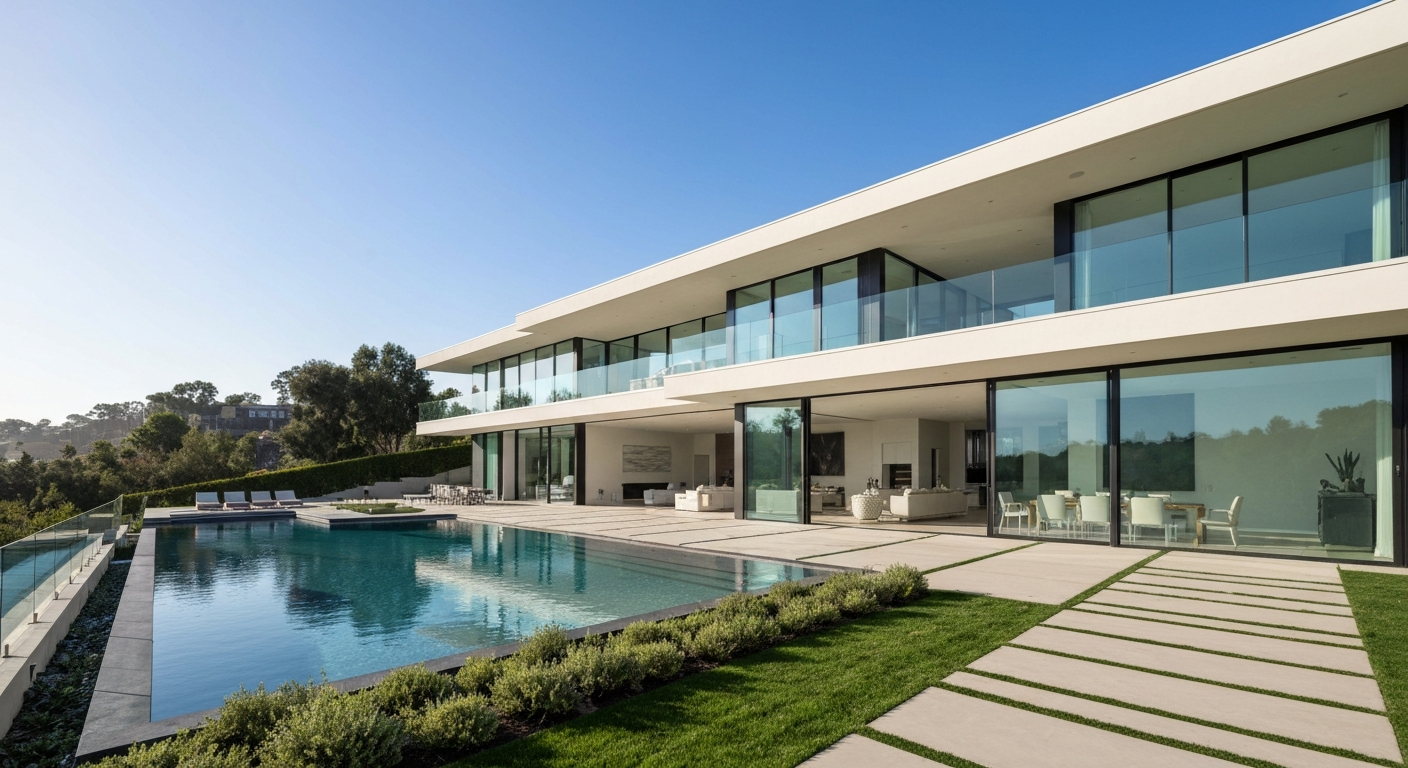
Architect-designed custom homes with premium finishes, complex geometry, and fully integrated systems. Floor-to-ceiling glass, custom steel window systems, high-performance mechanical systems including zoned heat pump HVAC, premium tile and stone throughout, smart home infrastructure, and resort-style outdoor living. Common in San Francisco, Malibu, Beverly Hills, La Jolla, and Atherton. Homes at this tier routinely exceed $1,500,000 for 2,000 square foot builds.
How a California Custom Home Budget Is Typically Distributed
| Category | Share of Total Budget |
|---|---|
| Materials | 45% to 50% |
| Labor | 30% to 40% |
| Permits, design, and soft costs | 5% to 20% |
| Site preparation | 5% to 15% |
Materials account for approximately half the cost of building in California, a higher share than in most states, due to the premium material specifications required by energy codes, seismic standards, and wildfire ordinances.
Cost By Home Size: California Reference Table
| Home Size | Basic Build | Mid-Range Build | Luxury Build |
|---|---|---|---|
| 1,500 sq. ft. | $300,000 to $562,500 | $600,000 to $825,000 | $900,000 to $1,350,000 |
| 2,000 sq. ft. | $400,000 to $750,000 | $800,000 to $1,100,000 | $1,200,000 to $1,800,000 |
| 2,500 sq. ft. | $500,000 to $937,500 | $1,000,000 to $1,375,000 | $1,500,000 to $2,250,000 |
| 3,000 sq. ft. | $600,000 to $1,125,000 | $1,200,000 to $1,650,000 | $1,800,000 to $2,700,000 |
All figures exclude land, which represents an additional and often dominant cost in California markets.
What Drives Construction Costs in California: The Full Regulatory Stack
No other state imposes as many overlapping regulatory requirements on residential construction as California. Understanding each layer explains why California costs 45% more than the national average and why that gap is unlikely to narrow.
Title 24: The California Energy Code
California's Building Energy Efficiency Standards, Title 24, Part 6, operate on a triennial update cycle. The 2025 edition took effect January 1, 2026 and applies to all permit applications submitted on or after that date.
The 2025 Energy Code's key requirements for new residential construction include mandatory heat pump systems for space and water heating (the state's push toward full electrification), expanded EV-ready and EV-capable infrastructure, strengthened ventilation standards for indoor air quality, solar PV system requirements on virtually all new residential builds, and battery storage incentives.
California operates 16 distinct climate zones, each with specific Title 24 compliance requirements. A new home in San Francisco (Zone 3) faces different envelope, mechanical, and window performance criteria than one in Sacramento (Zone 12) or Palm Springs (Zone 15). Title 24 compliance adds 5% to 15% to construction cost versus a comparable home built to the International Energy Conservation Code (IECC) used by most other states.
Seismic Engineering Requirements
California sits across several major fault systems, and the state's seismic building codes are among the most rigorous in the world. The Seismic Design Category for most California locations is D or E, the highest classifications in the IBC system.
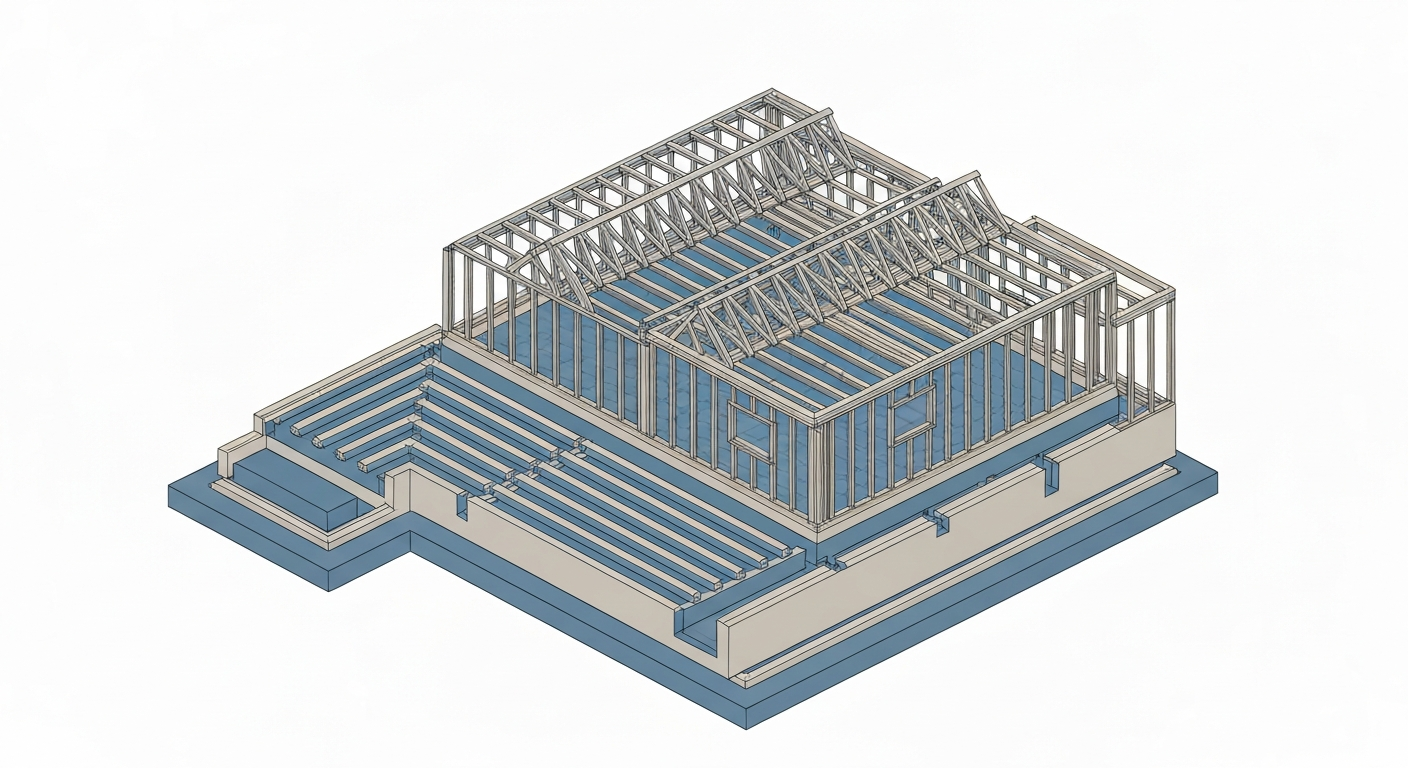
For residential construction, seismic requirements mandate engineered shear walls, specific hold-down hardware at corners and openings, continuous load paths from roof to foundation, and in many cases, special inspections during framing. In the Bay Area, seismic engineering adds $3,000 to $8,000 to a standard residential build. For homes on soft soils, hillsides, or in liquefaction zones, the foundation engineering alone can add $15,000 to $50,000.
Wildfire Hardening Requirements (WUI Code)
The California Building Standards apply to all new construction in areas designated as High or Very High Fire Hazard Severity Zones.
Requirements in WUI zones include Class A fire-rated roofing, ember-resistant vents, a Zone Zero non-combustible buffer of five feet surrounding the building, ignition-resistant construction assemblies for exterior walls, decks, and fences, and multi-pane windows with tempered glass.
These requirements add 8% to 18% to construction cost in affected zones compared to building outside fire-hazard designation areas.
Impact Fees: California's Largest Hidden Build Cost
Impact fees are development charges levied by local governments to offset the burden of new construction on existing infrastructure: schools, roads, parks, utilities, and affordable housing programs. California has no statewide cap on these fees, and the variation between jurisdictions is enormous.
Research has found impact fees as high as $157,000 in the Bay Area city of Fremont, over $140,000 in Irvine, approximately $30,000 in Los Angeles, and approximately $20,000 in Sacramento. School impact fees are levied separately by school districts at a state-maximum Level 1 rate of $4.79 per square foot as of 2026. For a 2,500 square foot home, the school fee alone adds approximately $12,000.
Total soft costs in California, including all impact fees, permit fees, plan check fees, school fees, utility connection fees, architectural and engineering fees, and environmental compliance, commonly add $50,000 to $150,000 to a project before a single wall is framed.
CSLB Licensing and Contractor Requirements
Every contractor performing work valued at $1,000 or more in California must hold an active Contractors State License Board (CSLB) license. This applies to general contractors (Class B) and all specialty trades.
California's licensing process is the most rigorous in the country, requiring four years of documented journeyman-level experience, passing scores on exams, a $25,000 contractor's bond, and workers' compensation insurance. This high bar is one reason California labor costs run 30% to 50% above comparable trades in less-regulated states.
Permit Costs and Timelines in California by City
Permitting is one of the most significant variables in California project budgeting, both for cost and for schedule.
| City | Permit Package (new residential) | Typical Timeline | Notes |
|---|---|---|---|
| San Francisco | $20,000 to $50,000+ | 6 to 18 months | Most complex in CA; multiple review agencies |
| Los Angeles | $8,000 to $25,000+ | 3 to 9 months | Plan check backlog in many districts |
| San Diego | $8,000 to $20,000 | 3 to 7 months | More streamlined; ADU focus |
| San Jose | $10,000 to $25,000 | 4 to 8 months | High demand, improving timelines |
| Sacramento | $5,000 to $15,000 | 2 to 5 months | Most affordable major CA city |
| Riverside | $3,000 to $10,000 | 2 to 4 months | Inland Empire; faster process |
| Fresno | $2,000 to $8,000 | 1 to 3 months | Central Valley; lowest fees |
Note: These figures cover base permit and plan check fees. Impact fees, school fees, and utility connection charges are separate and often substantially exceed the base permit cost.
ADU Construction in California: A Growing Strategy
Accessory Dwelling Units have become one of California's most significant residential construction trends. For homeowners who already own a lot or primary residence, building a detached ADU is a way to add livable space and rental income without incurring the full cost of a new primary residence build.
ADU construction in California costs $150,000 to $400,000 depending on type and location. Garage conversions are the most affordable option at $100,000 to $175,000. Attached ADUs run $175,000 to $300,000. Detached ADUs built from scratch cost $200,000 to $400,000 or more in the Bay Area.
State law waives all impact fees for ADUs under 750 square feet, which exempts most studio and one-bedroom units from the $5,000 to $15,000 in fees that would otherwise apply.
Soft Costs: The Full Pre-Construction Budget Picture
Every California build budget must account for a substantial soft cost package before construction begins.
Architectural and engineering fees: Full architectural services for a California custom home typically run 8% to 15% of total construction cost, translating to $60,000 to $150,000 for most Bay Area builds and $40,000 to $80,000 in Los Angeles and San Diego.
Geotechnical investigation: California's seismic environment requires soil and geotechnical testing before foundation design. A standard geotechnical report costs $3,000 to $8,000 for a single-family residential lot.
Site preparation: Grading, demolition of existing structures if present, utility connections, and tree removal. On a flat suburban lot, site prep may cost $10,000 to $25,000. On a sloped lot, this number can reach $50,000 to $200,000.
Utility connections: Connecting a new build to city water, sewer, and electric service costs $5,000 to $30,000 depending on proximity to existing infrastructure.
Builder's risk insurance: Required by most construction lenders. Typical cost is $3,000 to $8,000 for a California residential build.
Contingency reserve: 10% to 15% of total project cost. Not optional in California, where permit revisions, inspections, and material or labor availability can shift timelines unpredictably.
Build vs. Buy in California
California's housing market creates a distinctive set of conditions for the build-versus-buy calculation. The statewide median existing home price reached $782,221 in May 2026 per Redfin.
Against these existing home prices, building new in California is rarely the cheaper option in absolute upfront cost terms. A custom build that produces a 2,000 square foot home in Los Angeles for $900,000 in construction cost then requires land on top of that, bringing total investment to $1,200,000 to $1,800,000 or more.
The calculation shifts substantially when you incorporate what building new delivers versus what existing homes typically carry in California's aging housing stock: full structural warranty coverage, all-electric modern energy systems with dramatically lower utility costs, fire-hardened construction where required, and a home designed to your exact specifications.
| Factor | Building New | Buying Existing |
|---|---|---|
| Upfront cost | Higher: construction + land + soft costs | Lower in most markets |
| Customization | Complete | Requires costly renovation |
| Warranty | Full structural and systems | None on existing systems |
| Energy performance | Modern Title 24 standards (top tier) | Variable, often 1970s to 2000s standard |
| Seismic compliance | Current California code | Dependent on original build date |
| Timeline | 18 to 30 months total | 30 to 60 days to close |
How to Finance a California Home Build
Building in California requires a construction loan, typically offered in one of two structures.
A Construction-to-Permanent (C2P) loan, the most common structure, converts from a short-term construction facility to a permanent mortgage upon the issuance of the certificate of occupancy. The borrower closes once, pays interest-only during construction, and shifts to standard monthly payments on completion.
A standalone construction loan is a short-term facility requiring a permanent mortgage refinance upon project completion. It offers more flexibility in lender selection but carries rate and qualification risk if market conditions shift during the build period.
California construction loans require a detailed line-item budget, architectural plans, a signed contract with a CSLB-licensed general contractor, and typically a 20% to 25% equity or down payment position.
For a full breakdown of construction loan types, qualification requirements, and draw schedule mechanics, see the Home Construction Loan Guide. To model your specific loan scenario, use the Construction Loan Calculator.
Strategies to Control Your California Build Budget
Choose simpler geometry and do not deviate. Every additional roofline valley, cantilever, or irregular plan shape adds engineering cost, framing labor cost, and inspection risk. A clean rectangular or L-shaped plan with a simple hip or gable roof costs dramatically less per square foot.
Understand your total soft cost package before committing to a lot. The permit fees, impact fees, school fees, and utility connections should be fully estimated before a lot purchase is final. In some jurisdictions, these costs exceed $150,000.
Lock in all design decisions before permit submission. California's permitting process is time-consuming. Any mid-stream change to a project that has already been submitted for plan check restarts the clock.
Budget a 15% contingency minimum. Site surprises on hillside lots, permit revision requirements, and subcontractor availability in premium coastal markets all create legitimate contingency draws. Underfunding the contingency in California is one of the most common reasons residential builds stall.
Get three bids minimum from CSLB-licensed contractors. Verify every contractor's license, bond status, and workers' compensation status before signing any contract. Bids on identical scope routinely vary by 20% to 30% in the California market.
For a national comparison of construction costs, see How Much Does It Cost to Build a House? Complete State-by-State Guide.
Frequently Asked Questions
How much does it cost to build a 2,000 square foot house in California? A 2,000 square foot home in California costs between $800,000 and $1,200,000 for a mid-range finish package before land, depending on location. In the Bay Area, the same home costs $1,000,000 to $1,600,000. In Sacramento or the Inland Empire, the range drops to $400,000 to $800,000.
Does California require solar panels on new homes? Yes. Under Title 24, virtually all new residential construction in California must include a solar PV system. The 2025 Energy Code further incentivizes battery storage integration alongside the solar installation.
What is Title 24 and how does it affect my build cost? Title 24 is the California Building Standards Code. The energy portion, Part 6, sets requirements for insulation, windows, HVAC systems, solar, and lighting. Compliance with Title 24 adds 5% to 15% to construction cost versus a home built to national model codes, but delivers measurably lower long-term energy costs.
How long does it take to build a house in California? From groundbreaking to certificate of occupancy, most California residential builds take 8 to 14 months. Pre-construction, including design, permitting, financing, and investigation, adds another 6 to 18 months.
What are impact fees and how much do they cost in California? Impact fees are charges levied by local governments to offset the cost of new construction on public infrastructure. They vary enormously by jurisdiction: from $20,000 in Sacramento to over $157,000 in some Bay Area cities.
Do I need a licensed contractor to build in California? Yes. Every contractor performing work valued at $1,000 or more must hold an active CSLB license. Most California construction lenders require a CSLB-licensed general contractor as a condition of the loan.
Building in California is expensive, but the state's regulatory requirements produce homes that are more resilient, more efficient, and more durable than the existing inventory. The long-term cost of ownership in a modern code-compliant California home is meaningfully lower than in an older build.
Use the Construction Cost Calculator for a localized estimate on your specific project. For a full national context, see How Much Does It Cost to Build a House? Complete State-by-State Guide.