Florida has one of the most active new home construction markets in the United States. Sustained population growth, a business-friendly tax environment, retiree migration, and remote worker relocation demand have kept builders busy even as the broader housing market has softened from its pandemic peak. But building in Florida is not the straightforward, low-cost proposition it might appear from a national cost index perspective.
The state's construction market carries a unique layer of costs that most national guides undercount: hurricane-resistant building requirements that are mandatory statewide, flood zone regulations that affect a significant portion of developable land, one of the country's most challenged homeowner insurance markets, and coastal area permit processes that can add months and tens of thousands of dollars to a project before a single wall goes up.
Understanding those costs, what drives them, how they vary between Florida's dramatically different regional markets, and how to budget around them accurately is what this guide is built to deliver. Whether you are planning to build in Miami-Dade's High Velocity Hurricane Zone, on the Gulf Coast in the Naples or Tampa market, in the growth corridors of Central Florida around Orlando, or in the more affordable Northeast Florida market around Jacksonville, this breakdown gives you the real numbers.
Florida Construction Cost Snapshot
| Metric | Range |
|---|---|
| Average cost per sq. ft. (basic / builder-grade) | $150 to $200 |
| Average cost per sq. ft. (mid-range / semi-custom) | $200 to $295 |
| Average cost per sq. ft. (premium / custom) | $300 to $475 |
| Average cost per sq. ft. (HVHZ coastal / luxury) | $475 to $800+ |
| Average total build cost, 2,000 sq. ft. (standard) | $300,000 to $590,000 |
| State construction cost index vs. national average | 1.02x (roughly equal to national) |
| Hurricane code premium vs. non-hurricane state | 5% to 15% added to base construction cost |
| HVHZ premium vs. inland Florida | Additional 10% to 15% |
| Flood zone premium (Zone AE) | $15,000 to $35,000 additional site cost |
| Flood zone premium (Zone VE coastal) | $50,000 to $150,000 additional site cost |
| Permit package (new residential) | $3,000 to $25,000 depending on county |
| Impact fees (by county) | $7,000 to $30,000+ |
| Builder's risk insurance (during construction) | 1% to 5% of completed value |
| Average homeowners insurance (statewide) | $8,458/year (3x national average) |
| Median existing home sale price (May 2026, Redfin) | $395,595 |
| Florida average home value (Zillow) | $384,811 |
| Construction timeline (groundbreaking to CO) | 8 to 14 months |
| Pre-construction phase | 3 to 6 additional months |
What Does It Actually Cost to Build a House in Florida?
The direct answer for most Florida buyers: building a standard 2,000 square foot home costs between $300,000 and $590,000 before land, depending on location, finish level, and whether your lot is in a coastal or flood zone jurisdiction. Most mid-range custom builds land between $400,000 and $520,000.
Per square foot, Florida's construction costs run $150 to $295 for standard to mid-range finishes across most of the state. The outlier is South Florida's coastal market, where the combination of HVHZ hurricane code requirements, elevated land costs, high labor demand, and premium finish expectations pushes custom builds to $350 to $800 per square foot.
Florida's state cost index sits at approximately 1.02x the national average, meaning the raw construction cost is nearly identical to the national median. What elevates Florida builds above comparable projects in non-hurricane states is not general material or labor cost but the hurricane-resistant construction requirements that the Florida Building Code imposes statewide. For most builds, those requirements add 5% to 15% to the base construction cost and represent the single most important Florida-specific factor for any builder or homeowner to understand before establishing a budget.
The market has also introduced a compelling argument for building new over buying existing: Florida's homeowner insurance market heavily favors homes built after 2002, when significantly stricter hurricane codes took effect, and especially homes built after 2010 with full wind mitigation features. A home built to current Florida Building Code standards will insure at substantially lower premiums than comparable homes built before those code thresholds, a long-term ownership cost advantage that does not appear in the purchase price comparison but compounds meaningfully over time.
Florida Construction Cost by Metro Area
Florida's regional cost variation is driven primarily by coastal versus inland location, proximity to the HVHZ designation in Miami-Dade and Broward counties, labor market conditions, and the specific flood zone mapping of individual lots.
Miami-Dade and South Florida (HVHZ)
South Florida is the most expensive construction market in Florida by a significant margin, driven by the High Velocity Hurricane Zone designation that covers all of Miami-Dade County and all of Broward County. Standard residential construction in Miami runs $400 to $475 per square foot. Custom and luxury builds in Coral Gables, Coconut Grove, Miami Beach, and Brickell area neighborhoods range from $500 to $800 or more per square foot.
A standard 2,000 square foot home in Miami-Dade costs between $800,000 and $950,000 before land based on current market data from active South Florida contractors. Labor rates of $35 to $50 per hour, HVHZ compliance costs, and the most complex permitting process in Florida all contribute. Miami uses the iBuild portal for permit applications with a 10 business-day window to respond to correction requests after review.
The defining construction cost driver in Miami-Dade is the HVHZ itself: every exterior building product, including windows, doors, garage doors, roof systems, and shutters, must carry a Miami-Dade Notice of Acceptance (NOA), the most rigorous product approval certification in the country. NOA-certified products cost 30% to 50% more than standard Florida Product Approved equivalents used in other counties. The added cost of HVHZ-compliant construction versus the same home built to inland Florida standards is approximately 10% to 15% of total construction cost.
| Cost Category | Estimated Cost (2,000 sq. ft.) | Per Sq. Ft. |
|---|---|---|
| Labor | $300,000 to $400,000 | $150 to $200 |
| Materials (incl. HVHZ-compliant products) | $400,000 to $500,000 | $200 to $250 |
| Site prep, permits, and HVHZ fees | $15,000 to $50,000+ | $8 to $25 |
| Total (excluding land) | $800,000 to $950,000+ | $400 to $475+ |
Tampa Bay and Southwest Florida
Tampa and the broader Southwest Florida market, including Naples, Sarasota, Fort Myers, and Cape Coral, sit in a mid-range cost tier. Standard construction runs $200 to $300 per square foot, with a 2,000 square foot home typically costing $400,000 to $600,000 before land.
The Tampa Bay metro carries a design wind speed of approximately 140 mph (ultimate), placing it in the Wind-Borne Debris Region where impact-rated windows or approved shutters are required on every opening. This is a meaningful cost add over inland markets but does not reach HVHZ standards.
Southwest Florida's coastal markets, particularly Naples and Marco Island, have seen the highest appreciation of any Florida market over the past decade and carry construction premiums to match. Custom builds in Naples run $350 to $600 per square foot. The regional median home price in Naples runs $600,000 to $700,000, and land costs in desirable coastal locations rival those of major metropolitan markets.
A critical planning consideration for Southwest Florida: the region took catastrophic direct hits from Hurricane Ian (2022) and subsequent storms. Flood zone mapping has been updated in several Lee County areas, and Base Flood Elevation (BFE) requirements have been revised upward in some zones. Any lot purchased in Lee, Charlotte, or Collier counties should have its current flood zone status and applicable BFE confirmed through the local building department before any design or construction budget is finalized.
Orlando and Central Florida
Orlando and the I-4 corridor represent the broadest definition of an "average" Florida construction market. Standard construction runs $180 to $250 per square foot, and a standard 2,000 square foot home typically costs $360,000 to $500,000 before land. Design wind speed in Orlando is approximately 130 mph (ultimate), lower than coastal markets, which reduces the mandatory hurricane package cost.
Central Florida has been one of the fastest-growing construction markets in the state, driven by tech industry relocation, theme park and tourism employment growth, and sustained domestic migration. Labor markets are tighter than in Northeast Florida but less constrained than in South Florida.
Permitting in the Orlando metro runs 4 to 7 weeks for straightforward residential applications, and impact fees vary by municipality. Osceola County in the Kissimmee area charges $12,000 to $20,000 in impact fees. Orange County and the City of Orlando have their own separate schedules.
Jacksonville and Northeast Florida
Jacksonville and the broader Northeast Florida market, including St. Johns, Clay, and Nassau counties, offer some of the most affordable new construction pricing in the state. Standard construction runs $160 to $230 per square foot, with a 2,000 square foot standard home typically costing $320,000 to $460,000 before land.
Design wind speed in Jacksonville is approximately 130 mph (ultimate), with flood zone exposure concentrated along the St. Johns River and coastal areas. The permitting process in Jacksonville generally runs 3 to 6 weeks and is among the faster and less expensive processes in the state. St. Johns County in particular has been one of the fastest-growing counties in the United States for new residential construction, and the combination of affordable land, reasonable permitting, and lower labor costs than South Florida makes it an attractive market for first-time custom builders.
Florida Panhandle
The Panhandle, including Pensacola, Panama City Beach, Destin, and the Emerald Coast, sits in a wind zone similar to the Tampa Bay area. Standard construction runs $175 to $260 per square foot. The region has attracted significant construction activity from buyers who experienced storm damage in prior years and are rebuilding or relocating to newer, code-compliant homes.
| Region | Standard Cost/Sq. Ft. | 2,000 sq. ft. Total (excl. land) | Wind Speed |
|---|---|---|---|
| Miami-Dade (HVHZ) | $400 to $475+ | $800,000 to $950,000+ | 175+ mph |
| Fort Lauderdale / Broward (HVHZ) | $350 to $450 | $700,000 to $900,000 | 170 mph |
| Naples / Southwest Florida Coast | $300 to $475 | $600,000 to $950,000 | 150 to 170 mph |
| Tampa Bay | $200 to $300 | $400,000 to $600,000 | 140 mph |
| Sarasota / Manatee | $220 to $320 | $440,000 to $640,000 | 145 mph |
| Orlando / Central Florida | $180 to $250 | $360,000 to $500,000 | 130 mph |
| Jacksonville / NE Florida | $160 to $230 | $320,000 to $460,000 | 130 mph |
| Panhandle | $175 to $260 | $350,000 to $520,000 | 130 to 150 mph |
Cost Per Square Foot in Florida by Finish Level
Basic / Builder-Grade ($150 to $200 per sq. ft.)
Production homes from volume builders in inland and suburban markets. Vinyl or tile flooring, builder-grade cabinetry, laminate countertops, standard appliances, minimum hurricane code compliance, and limited customization options. Common in Polk County, Ocala, and outer suburbs of Jacksonville and Orlando. A 2,000 square foot home at this tier costs $300,000 to $400,000 before land.
Standard / Mid-Range ($200 to $295 per sq. ft.)
The most active tier in most Florida markets outside South Florida. Tile or engineered hardwood flooring, granite or quartz countertops, upgraded kitchen package, stainless appliances, impact windows or shutters (where required), and meaningful exterior design. A 2,000 square foot home at this tier costs $400,000 to $590,000 before land.
Premium / Upper-Mid ($295 to $400 per sq. ft.)
Full custom layout and interior selections. Large-format tile, premium cabinetry with custom built-ins, high-end appliances, whole-home audio and smart home pre-wire, metal or premium tile roofing, resort-style pool and outdoor kitchen. A 2,500 square foot home at this tier typically costs $737,500 to $1,000,000 before land.
Luxury / Custom ($400 to $800+ per sq. ft.)
Architect-designed homes in premium coastal and urban markets. Full HVHZ compliance package, zero-corner sliding glass doors, custom stone and tile throughout, home automation, resort pool and outdoor living compound, private dock integration where waterfront. Common in Miami Beach, Coral Gables, Palm Beach Island, Naples, and Fisher Island.
How a Florida Home Build Budget Is Typically Distributed
| Category | Share of Total Budget |
|---|---|
| Materials (incl. hurricane package) | 35% to 45% |
| Labor | 30% to 40% |
| Foundation and site work | 8% to 18% (higher in flood zones) |
| Mechanical systems (HVAC, plumbing, electrical) | 10% to 15% |
| Permits, design, and soft costs | 5% to 12% |
Cost By Home Size: Florida Reference Table
| Home Size | Basic Build | Mid-Range Build | Premium / Luxury Build |
|---|---|---|---|
| 1,500 sq. ft. | $225,000 to $300,000 | $300,000 to $442,500 | $450,000 to $1,200,000 |
| 2,000 sq. ft. | $300,000 to $400,000 | $400,000 to $590,000 | $600,000 to $1,600,000 |
| 2,500 sq. ft. | $375,000 to $500,000 | $500,000 to $737,500 | $750,000 to $2,000,000 |
| 3,000 sq. ft. | $450,000 to $600,000 | $600,000 to $885,000 | $900,000 to $2,400,000 |
All figures exclude land, which ranges from $25,000 in rural inland markets to $1,000,000 or more per acre in prime coastal locations.
What Drives Construction Costs in Florida: The Key Factors
The Florida Building Code and Hurricane Requirements
Florida's residential building code is the strictest in the United States for wind resistance. It traces directly to Hurricane Andrew's devastation of South Florida in 1992, which caused $27 billion in damage (1992 dollars) and exposed catastrophic failures in the construction standards of the time. Every major update cycle since has tightened requirements further.
The current 8th Edition Florida Building Code, based on ASCE 7-22 wind loads, requires new construction to be designed for specific ultimate design wind speeds that vary by location: approximately 130 mph inland, 140 to 150 mph in the Tampa Bay and Space Coast areas, 160 to 170 mph along the Southwest Atlantic and Gulf coasts, and 170 to 175 mph in the HVHZ counties of Miami-Dade and Broward.
The 9th Edition Florida Building Code is in development and enforcement is expected to begin December 31, 2026. Proposed changes under HB 911 include mandating full building envelope impact resistance and wind-resistant construction to withstand at least 160 mph for high-risk structures including multistory residential, coastal buildings within 5 miles of shore, and all HVHZ structures. Builders and buyers planning projects permitted in late 2026 should confirm which code edition applies to their permit application date.
The hurricane code requirements that add cost to every Florida build include:
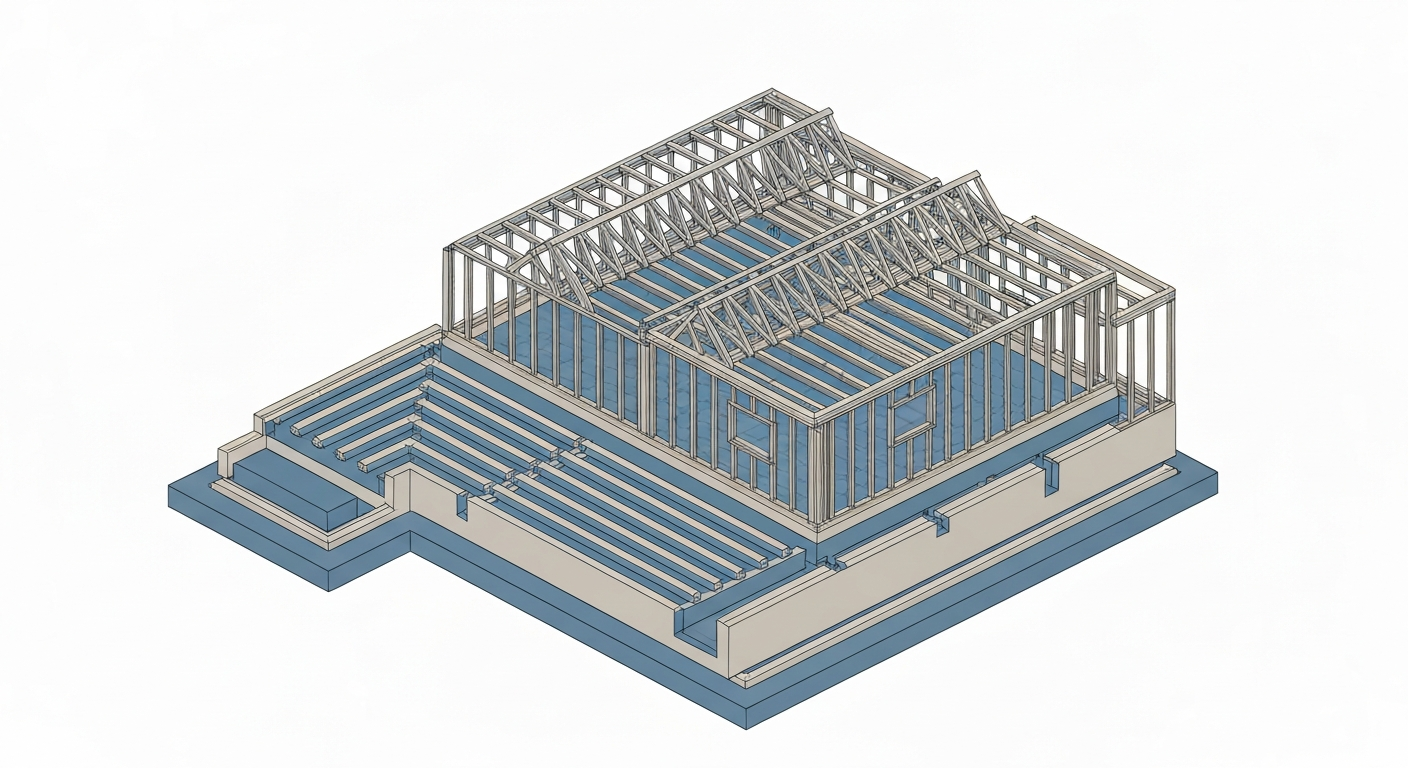
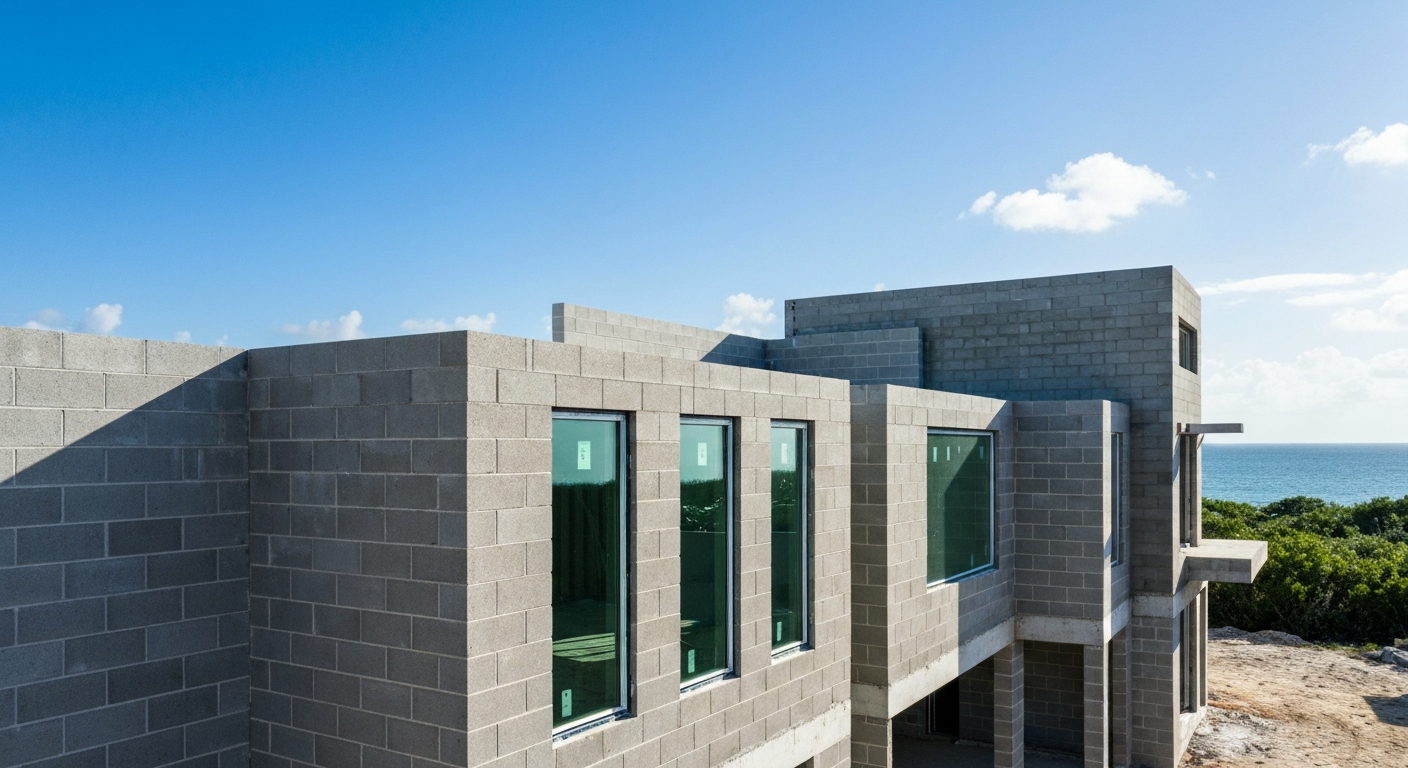
Impact-rated windows and doors in coastal and HVHZ jurisdictions (or hurricane shutters protecting every opening in non-HVHZ coastal areas). Enhanced roof attachment: ring-shank nails for sheathing, 6-nail minimum per shingle instead of the 4-nail standard in non-hurricane states, hurricane straps connecting every rafter to the wall plates. Continuous load path engineering from the roof ridge to the foundation, requiring structural engineering review and specific connector hardware throughout. Concrete block (CBS) exterior wall construction, which is standard in South Florida and increasingly common statewide, adds cost over wood framing but provides superior hurricane and fire resistance.
For a typical 3,000 square foot home in inland Florida, hurricane code compliance adds approximately $23,000 to $45,000 to construction cost versus an equivalent home in a non-hurricane state. In the HVHZ, that premium runs $40,000 to $70,000 or more for the same home.
The High Velocity Hurricane Zone (HVHZ)
The HVHZ is a regulatory designation under Florida Building Code Sections 1616 through 1626 that applies exclusively to Miami-Dade County and Broward County. It is the most stringent residential building standard in the country.
HVHZ design wind speeds are 175 mph in Miami-Dade and 170 mph in Broward for standard residential structures. Every exterior building envelope product including all windows, doors, garage doors, roof systems, exterior fasteners, and glazed products must carry a Miami-Dade Notice of Acceptance (NOA), which requires testing under the TAS 201/202/203 missile impact and cyclic wind pressure protocols. Florida Product Approval, which is accepted everywhere else in the state, is not sufficient in the HVHZ. Only Miami-Dade NOA products qualify.
The NOA testing and certification process is more demanding than ASTM standards, and the products that earn NOA certification carry a corresponding price premium of 30% to 50% over non-HVHZ-compliant alternatives. This premium applies to every window, every door, and every exterior opening in a HVHZ build. For a 2,000 square foot home with 20 to 30 windows and multiple door assemblies, the HVHZ window and door package alone adds $15,000 to $35,000 over what the same openings would cost in Central Florida.
HVHZ also requires enhanced inspection protocols at multiple build stages and third-party testing verification for structural components, adding inspection cost and time to the permitting process that is not required in other Florida counties.
Flood Zones and the Base Flood Elevation Requirement
Florida's flat topography, high water table, and 1,350 miles of coastline mean that a substantial proportion of developable land falls within FEMA-designated Special Flood Hazard Areas (SFHAs). For any lot in an SFHA, the Florida Building Code requires compliance with ASCE 24 flood-resistant design standards, including finished floor elevation at or above Base Flood Elevation (BFE) plus a required freeboard (typically one additional foot above BFE).
The practical cost impact of flood zone classification falls into two primary categories:
Zone AE, which is the most common inland SFHA designation, adds $15,000 to $35,000 to site preparation and foundation costs to achieve required elevation. Stem wall or monolithic slab foundations with fill dirt bringing the finished floor elevation to the required level are the most common solution.
Zone VE, the coastal high-hazard zone, is significantly more expensive. VE zones require open foundation construction with the lowest horizontal structural member at or above BFE plus freeboard. This typically means elevated pier, pile, or column foundations that elevate the living area 8 to 14 feet above grade. Foundation construction in Zone VE adds $50,000 to $150,000 to base construction cost and fundamentally changes the architecture of the structure.
Flood zone status has changed meaningfully in Southwest Florida following Hurricane Ian's 2022 storm surge impacts. FEMA Flood Insurance Rate Map updates have reclassified some previously non-flood-zone parcels into AE or VE designation in Lee and Charlotte counties. Any lot under consideration in the post-Ian Southwest Florida market should have its current flood zone and BFE confirmed before purchase, not after.
Florida's Homeowner Insurance Market
Florida's property insurance market carries one of the most significant hidden costs in the state's housing market, with an average homeowners premium of $8,458, approximately three times the national average. This cost does not appear in construction budgets but represents a major component of total annual housing cost that every Florida builder and buyer must account for.
The good news for new construction: the insurance market explicitly rewards homes built to post-2002 Florida Building Code standards, and especially homes built to current standards with full wind mitigation features. Citizens Property Insurance, Florida's state-run insurer of last resort, received approval for an average rate decrease of 8.7%, the first such decrease in years and a signal that legislative reforms are beginning to produce results. More than 30 private carriers are now actively writing homeowner policies in Florida, up from the diminished pool of prior years.
Homes built in 2026 to current FBC standards with impact windows, hurricane straps, hip roofs (the most wind-resistant roof shape), and concrete block construction can qualify for the strongest possible wind mitigation credits under the Uniform Mitigation Verification Inspection form. Those credits can reduce annual insurance premiums by 20% to 45% relative to a home without documented mitigation features. Over a 30-year period, that differential represents $50,000 to $120,000 or more in cumulative insurance savings, depending on location and coverage level.
Builder's risk insurance, required by most Florida construction lenders during the build period, runs 1% to 5% of the completed project value, with the wide range driven primarily by wind exposure zone and the project's distance from the coast.
Soil Conditions and Foundation Engineering
Florida's sandy soils and uniformly high water table create foundation engineering requirements that differ from much of the rest of the country. The standard residential foundation in most of Florida is a monolithic concrete slab-on-grade, which is appropriate for many sites but requires careful soil testing and engineering review on lots with poor load-bearing soil, fill history, or proximity to water.
In coastal and flood zone areas, stem wall foundations that elevate the finished floor above grade are common. In Zone VE and some Zone AE areas with high BFE requirements, pile or column foundations elevate the structure significantly above grade. Foundation costs in Florida range from $8,000 to $15,000 for a standard inland slab to $50,000 to $150,000 for elevated coastal foundations.
In Miami and the urban parts of South Florida, site preparation often includes soil stabilization or additional fill dirt to meet Base Flood Elevation requirements. In some South Florida lots, particularly near Biscayne Bay or in the Miami Shores and Little Haiti areas, the combination of fill requirements, soil conditions, and proximity to drainage infrastructure can add $20,000 to $60,000 to site preparation before any vertical construction begins.
Labor Market Conditions
Florida's construction labor market has been tight for years and remained so, particularly for licensed specialty trades: electricians, plumbers, HVAC technicians, and framers. The combination of construction volume from storm recovery projects, ongoing new home construction in growth markets, and commercial development competing for the same labor pool keeps skilled trade availability constrained in most Florida metros.
Florida licenses residential contractors through the Department of Business and Professional Regulation (DBPR). General contractors holding a State Certified license can operate statewide. Contractors with only a County Certified license are limited to their county of certification. For homeowners hiring a GC, verifying DBPR state certification, license status, and active workers' compensation coverage before signing any contract is essential.
Labor rates in Florida vary by market: South Florida commands the highest rates ($35 to $50 per hour for licensed trades, higher for HVHZ-experienced specialists), while Central Florida and Northeast Florida run $25 to $40 per hour depending on trade and project complexity.
Building in Florida: Material-by-Material Breakdown
Foundation and Concrete ($8,000 to $150,000)
Inland slab: $8,000 to $15,000 for a standard monolithic slab. Stem wall foundation for mild flood zone compliance: $15,000 to $30,000. Elevated pile or column foundation in Zone VE: $50,000 to $150,000. Concrete block (CBS) exterior walls, which are standard in South Florida, add $8 to $18 per square foot above wood framing cost but provide superior hurricane and fire resistance.
Roofing ($8,000 to $50,000)
Roofing in Florida is among the most consequential material decisions in the budget. Asphalt shingles are the minimum standard, but homes in coastal areas must use enhanced attachment (6-nail or 8-nail per shingle) and ring-shank nails in sheathing. Metal roofing at $12 to $25 per square foot provides significantly better wind resistance and earns larger insurance discounts. Concrete tile roofing at $10 to $18 per square foot is the dominant choice in South Florida for its combination of wind resistance, durability in the humid Florida climate, and insurance performance. Standing seam metal has become the premium standard in high-end coastal builds.
Windows and Doors ($20,000 to $80,000+)
Windows are the most consequential material investment in any Florida coastal build. In the HVHZ, impact-rated glass with Miami-Dade NOA certification is mandatory. In other coastal counties within the Wind-Borne Debris Region, impact windows or approved shutters covering every opening are required. Non-HVHZ impact windows cost $400 to $1,200 per unit installed. HVHZ NOA-certified windows cost 30% to 50% more. In a typical 2,500 square foot home with 25 to 35 window units and multiple sliding glass door assemblies, the full window and door package runs $20,000 to $60,000 for non-HVHZ coastal builds and $35,000 to $80,000+ for HVHZ-compliant installations.
HVAC Systems ($8,000 to $25,000)
Florida's climate requires high-capacity, efficient systems. A standard 2,000 square foot home requires a 3 to 4 ton system with SEER ratings of 16 or higher to manage the combination of heat and humidity that Florida summers deliver. High-performance multi-zone systems for larger homes run $18,000 to $25,000. All HVAC equipment must be elevated above BFE in flood zones.
Exterior Finishes ($6 to $25 per sq. ft.)
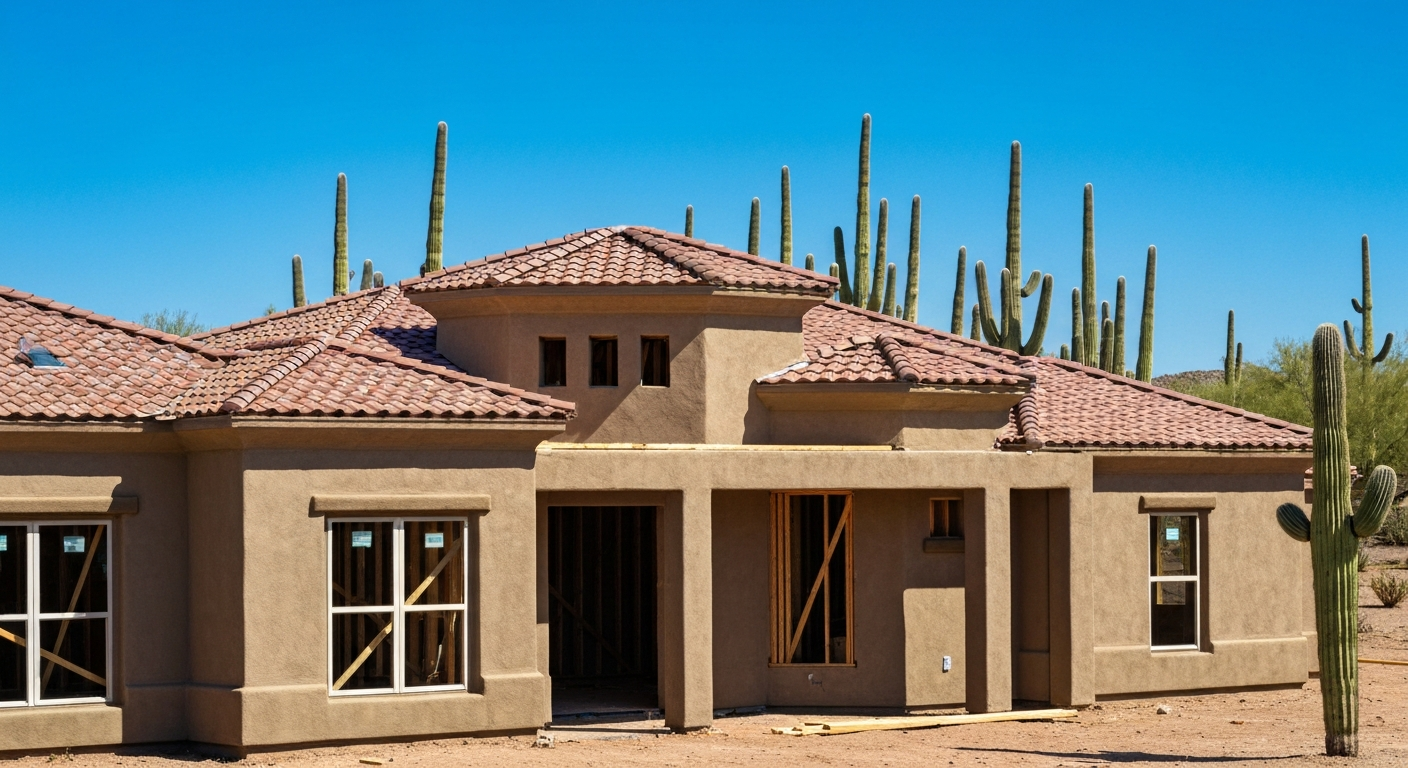
Stucco is the dominant exterior finish in Florida, accounting for the majority of new construction statewide. Properly applied stucco costs $7 to $17 per square foot and performs well in the Florida climate when correctly sealed and maintained. Fiber cement siding costs $12 to $20 per square foot and provides excellent moisture and impact resistance. Natural stone and brick add premium cost but are not commonly specified as primary exterior finishes in Florida due to the humidity environment.
HVAC and Plumbing Elevation Requirements
In flood zone lots, all mechanical equipment including HVAC condensing units, air handlers, electrical panels, and water heaters must be elevated above the Base Flood Elevation. This requirement adds installation complexity and often requires custom mounting platforms or elevated mechanical rooms, adding $3,000 to $8,000 in mechanical-specific flood compliance costs beyond the base system price.
Permit Costs and Timelines in Florida by City
Florida has made significant investments in permitting technology, and most jurisdictions now operate online portal systems. Timelines vary by market and plan complexity.
| City/County | Permit Package (new residential) | Timeline | Notes |
|---|---|---|---|
| Miami-Dade | $10,000 to $25,000+ | 6 to 12 weeks | HVHZ compliance review adds complexity; uses iBuild portal |
| Broward County | $8,000 to $18,000 | 4 to 8 weeks | HVHZ designation; separate NOA review requirement |
| Palm Beach County | $7,000 to $15,000 | 4 to 7 weeks | Wind zone 150+ mph along coast |
| Tampa | $5,000 to $12,000 | 4 to 7 weeks | Uses Accela citizen access portal; FEMA SFHA review |
| Orlando / Orange County | $5,000 to $12,000 | 4 to 7 weeks | Requires concrete patio permit; impact fee schedule varies |
| Sarasota | $5,000 to $12,000 | 3 to 6 weeks | Growing market; permit volume high |
| Jacksonville | $3,000 to $8,000 | 3 to 6 weeks | Most streamlined major metro; lower fees |
| Panhandle counties | $2,500 to $7,000 | 2 to 5 weeks | Lowest fees and fastest timelines in FL |
Impact fees by county: Osceola County (Kissimmee): $12,000 to $20,000. Pasco County (Tampa suburbs): $8,000 to $15,000. Most coastal counties: $5,000 to $12,000. Impact fees are among the most frequently overlooked line items in Florida build budgets and should be confirmed with the specific county before finalizing any project budget.
Under existing state law, local building departments must approve or deny complete residential permit applications for single-family structures under 7,500 square feet within 30 business days, with applications not processed within that window potentially deemed approved by default.
Build vs. Buy in Florida
Florida's housing market is one of the most buyer-favorable in recent history. The statewide median closed home price was approximately $394,000, down 1.3% year over year. Redfin recorded a median sale price of $395,595 in May 2026. Inventory has climbed to 7.47 months of supply, homes are sitting on the market an average of 69 days statewide, and sellers are increasingly accepting concessions.
That market context creates a legitimate question: does it make more financial sense to build, or to buy from a rising inventory of existing homes at softening prices?
The case for buying existing is strongest for buyers who need to occupy quickly, are price-sensitive, and are buying in markets where inventory is well supplied. Homes that need no immediate work can be acquired at or below their listed price in most Florida metros, and the 79-day average days-on-market gives buyers time to evaluate options without urgency.
The case for building new is most compelling on two fronts: insurance cost and build quality. Homes built to current FBC standards with full wind mitigation features (hip roof, impact windows, hurricane straps, CBS construction) insure significantly cheaper than pre-2002 homes, which are increasingly being declined by private carriers or accepted only at ACV (actual cash value) rather than replacement cost. In a market where the average Florida homeowner premium is $8,458 per year, a new construction discount of 20% to 45% represents $1,700 to $3,800 in annual savings. Over 30 years, that is $50,000 to $114,000 in cumulative insurance savings before accounting for the time value of money.
New builds also carry full structural and systems warranty coverage, modern energy-efficient HVAC and insulation packages, no deferred maintenance, and zero exposure to the pre-2002 code vulnerabilities that make so many older Florida homes more expensive to insure and more vulnerable in major storms.
| Factor | Building New | Buying Existing |
|---|---|---|
| Upfront cost | Higher (construction + land + soft costs) | Lower in current buyer's market |
| Hurricane code compliance | Full current FBC compliance | Depends on original build year |
| Insurance premium | Lowest available (new build discounts) | Often 20% to 45% higher |
| Wind mitigation credits | Maximum credits from day one | Only if upgrades have been made |
| Flood zone compliance | Built to current BFE requirements | May require costly elevation retrofits |
| Customization | Complete | Renovation required |
| Timeline | 10 to 18 months total | 30 to 60 days to close |
| Warranty | Full structural and systems | None on existing systems |
How to Finance a Florida Home Build
Building in Florida requires a construction loan rather than a standard purchase mortgage. Florida construction lenders generally offer two primary structures.
A Construction-to-Permanent (C2P) loan converts from the construction facility to a permanent 30-year mortgage upon issuance of the certificate of occupancy. The borrower closes once, pays interest-only on disbursed draw amounts during construction, and shifts to standard monthly principal-and-interest payments on completion. This is the most common structure for individual homebuilders in Florida and eliminates the cost and interest rate risk of a second closing.
A standalone construction loan is a short-term facility that requires refinancing into a permanent mortgage upon project completion. It offers lender flexibility but requires two closings and exposes the borrower to rate movements during the construction period.
Florida construction loan qualification requires a detailed line-item budget, architectural plans, a signed contract with a DBPR-licensed general contractor, and documentation of sufficient equity or down payment (typically 20% to 25% of total project cost). Flood zone lots may require flood zone determination letters and elevation certificates as part of the underwriting package.
For a complete breakdown of construction loan structures, draw schedules, and how to approach Florida construction lenders, see the Home Construction Loan Guide. To model your specific financing scenario before speaking to lenders, use the Construction Loan Calculator. First-time builders should also review First-Time Home Builder Construction Loans: The Complete Financial Guide before engaging with lenders.
Strategies to Control Your Florida Build Budget
Understand your flood zone before choosing a lot. Flood zone classification is one of the largest variables in a Florida build budget and one of the easiest to research before commitment. FEMA's Flood Map Service Center (msc.fema.gov) allows any property address to be checked against current flood maps at no cost. The difference between a Zone X lot (outside the flood hazard area), a Zone AE lot (flood zone, no wave action), and a Zone VE lot (coastal high-hazard zone with wave action) can represent $50,000 to $150,000 in additional foundation and site cost. Do not make a lot purchase decision without this check.
Choose a hip roof over a gable roof. The hip roof, where all four sides slope downward from a central ridge, is both the most wind-resistant roof shape in Florida's hurricane environment and the roof form that qualifies for the maximum wind mitigation insurance discount. A gable roof's exposed triangular end walls are the most vulnerable element in hurricane wind loads. On a Florida build budget, the hip roof's construction premium is modest. The insurance savings it generates over the life of the home are not.
Install impact windows statewide, not just where required. Even in counties outside the mandatory HVHZ or Wind-Borne Debris Region designation, installing impact-rated windows earns the single largest available wind mitigation insurance credit. In Florida's current insurance market, the annual premium reduction from a full impact window installation typically pays back the upgrade cost within 5 to 8 years for coastal and near-coastal properties. It also eliminates the need for hurricane shutters, reducing labor cost and owner preparation time every storm season.
Build in concrete block in South Florida. CBS (Concrete Block Structure) construction is the standard in Miami-Dade and Broward and increasingly common statewide. It adds $8 to $18 per square foot over wood framing at the exterior wall line but provides materially superior hurricane resistance, fire resistance, and pest resistance. It also earns better insurance credits. In markets where the annual insurance premium differential is $1,500 to $3,000 per year between CBS and wood frame, the construction cost premium is recovered within a few years of ownership.
Get three competing bids from DBPR-licensed general contractors and verify each license. Contractor license status is verifiable in seconds at myfloridalicense.com. Verify the GC's DBPR state certified license (or county-certified license for your county), bond status, and workers' compensation coverage before signing any contract. In Florida's active construction market, bid spreads of 15% to 25% on identical scope are common. The lowest bid is not always the right choice, particularly in the HVHZ where HVHZ construction experience is a genuine qualification rather than a preference.
Budget a 10% to 15% contingency and do not deploy it early. Florida builds encounter legitimate unexpected costs: flood zone fill requirements discovered during engineering, soil conditions that require deeper footings, permitting revision cycles that extend timelines and carrying costs, and hurricane season delays if your build overlaps with June through November. A properly funded contingency protects the project without requiring emergency decisions under time pressure.
For guidance on how to plan a build that performs well from the design phase forward, see Home Construction Design: The Ultimate Planning Guide for Your New Build. For a broader view of how innovation and climate adaptation are reshaping construction across the country, see Innovating Modern Home Construction in the USA.
Frequently Asked Questions
How much does it cost to build a 2,000 square foot house in Florida? Building a 2,000 square foot home in Florida costs between $300,000 and $590,000 for a standard to mid-range finish package, excluding land. In coastal South Florida under HVHZ requirements, the same home costs $800,000 to $950,000 before land. In Central Florida and Northeast Florida, the lower end of that range ($360,000 to $500,000) is more representative for mid-range finishes.
What is the HVHZ and why does it cost more to build there? The High Velocity Hurricane Zone is a Florida Building Code designation covering all of Miami-Dade County and all of Broward County. It requires every exterior building product including windows, doors, garage doors, and roof systems to carry Miami-Dade NOA (Notice of Acceptance) certification, which is more stringent than the Florida Product Approval standard used elsewhere in the state. HVHZ adds approximately 10% to 15% to construction cost compared to the same home built to non-HVHZ Florida standards, primarily through the cost premium of NOA-certified products.
How much do hurricane code requirements add to a Florida build? For a typical 3,000 square foot home in inland Florida, hurricane code compliance adds approximately $23,000 to $45,000 versus a comparable home in a non-hurricane state. In coastal Wind-Borne Debris Region counties (outside HVHZ), the premium runs $30,000 to $55,000. In the HVHZ, the combined code compliance premium reaches $40,000 to $70,000 or more.
Do I need to build on elevated foundations in Florida? Only if your lot falls in a FEMA Special Flood Hazard Area, specifically Zone AE or Zone VE. Lots in Zone AE typically require stem wall or filled slab construction to achieve the required Base Flood Elevation, adding $15,000 to $35,000. Lots in Zone VE require elevated open-foundation construction (pile, pier, or column), adding $50,000 to $150,000. Lots in Zone X (outside the flood hazard area) have no elevation requirement beyond standard local grading practices.
How much does Florida homeowners insurance cost for a new build? Florida's average homeowners premium in 2026 is $8,458, approximately three times the national average. However, homes built to current FBC standards with full wind mitigation documentation (hip roof, impact windows, hurricane straps, CBS construction) qualify for the maximum available wind mitigation credits and can insure at premiums 20% to 45% below the state average in many markets. The specific premium for a new build depends on location, coverage amount, deductible choices, and carrier selection. Get insurance quotes before finalizing your build budget, not after.
How long does it take to build a house in Florida? From groundbreaking to certificate of occupancy, most Florida residential builds take 8 to 14 months. HVHZ builds commonly run 10 to 16 months due to the more extensive review and inspection requirements. Pre-construction, including design, engineering, permitting, and construction loan origination, adds another 3 to 6 months for most markets, with Miami-Dade at the longer end of that range.
Can I act as my own general contractor in Florida? Yes. Florida provides an owner-builder exemption that allows homeowners to construct a home on property they own for their personal use without holding a DBPR contractor license. The exemption requires proof of personal occupancy, limits frequency of construction (no more than one home every two years), and the homeowner takes on full responsibility for code compliance, subcontractor coordination, and inspection scheduling. Most Florida construction lenders require a DBPR-licensed GC as a loan condition regardless of the statutory exemption, and HVHZ projects in Miami-Dade and Broward have additional code complexity that makes the owner-builder approach significantly more challenging than in other counties.
Is it cheaper to build or buy in Florida? Buying existing is generally cheaper upfront in the current buyer-favorable market. Florida's median existing home price is below the full cost of most mid-range custom builds including land. However, building new delivers superior insurance economics, full code compliance, no deferred maintenance, and complete customization. For buyers in South Florida especially, the insurance cost differential between a code-compliant new build and a pre-2002 home is large enough to change the long-term cost of ownership comparison materially in favor of new construction.
Florida rewards builders who do their homework. The state's construction market in 2026 offers genuine value for buyers willing to navigate its regulatory requirements intelligently: the most wind-resilient building code in the country, a softening existing home market that makes land acquisition more accessible in many markets, and an insurance environment that is finally beginning to reward new construction with meaningful premium reductions after years of market turmoil.
Use the Construction Cost Calculator to get a localized estimate for your specific county and finish level. For a national comparison of how Florida compares to other states, see How Much Does It Cost to Build a House? Complete State-by-State Guide.