Powered by Google TranslateTranslate
    Buildority Times Logo
    Market Pulse30-Yr Mortgage: 6.78% -0.04%15-Yr Mortgage: 6.11% -0.04%Lumber: $495 +1.0%Housing Starts: 1.42M Remodeling Index: 70.1
    Advertisement728x90 Leaderboard
    New Construction

    Texas Home Construction Costs: What to Budget for Your Build

    Complete breakdown of home construction costs in Texas. Per square foot averages by city, materials, labor rates, permit costs, MUD taxes, barndominium pricing, and financing options.

    E
    Elvson WallacySenior Construction Analyst • 10+ yrs experience
    2026-06-19 2026-06-19 16 min read
    Texas Home Construction Costs: What to Budget for Your Build
    Source: Unsplash / Buildority Times Industry Intelligence

    Texas remains one of the most active home construction markets in the country. No income tax, business friendly regulations, relatively affordable land outside the core metros, and 30 million people creating sustained housing demand have made the Lone Star State a destination for homebuilders, investors, and individual families looking to break ground.

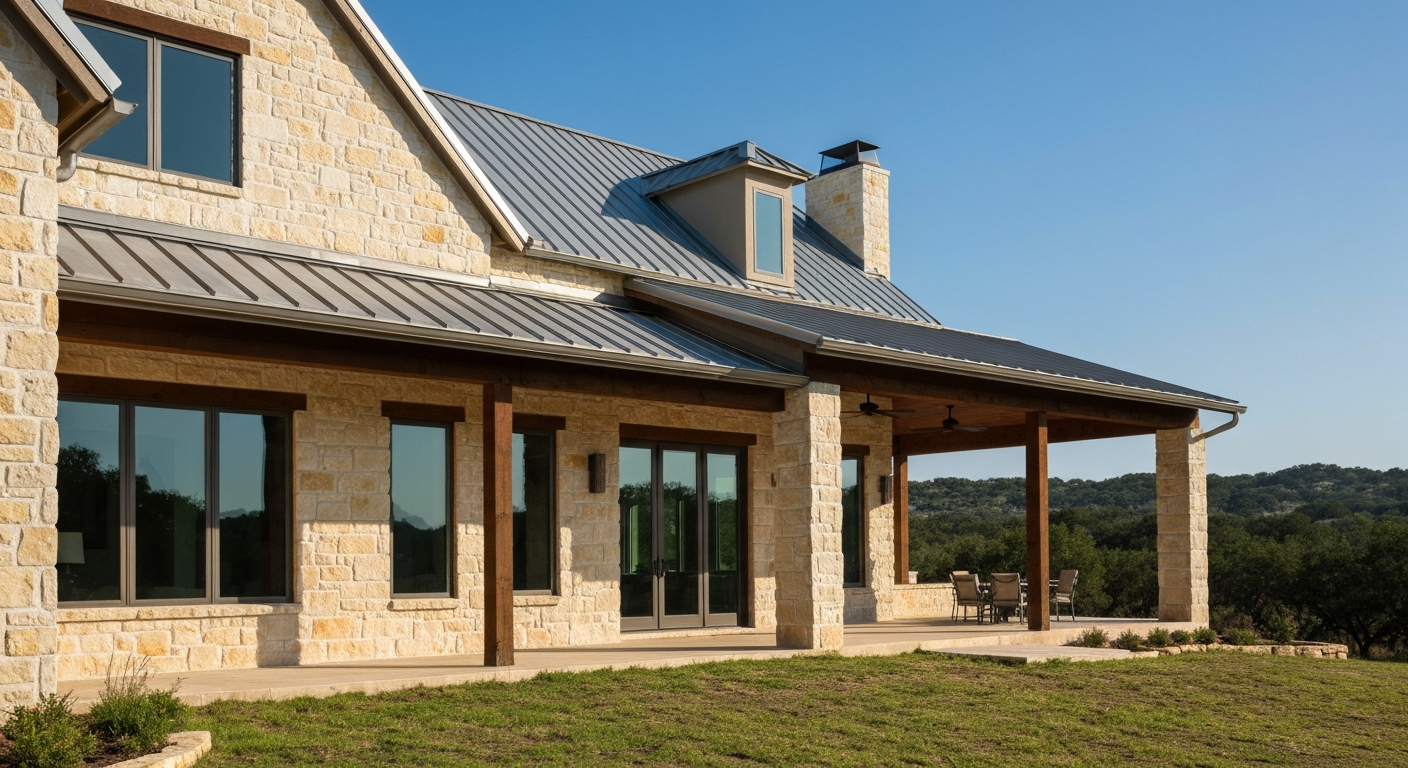
    Texas Hill Country Home

    But "affordable" is relative, and it is particularly relative in Texas. The state encompasses nearly 269,000 square miles, four major metro economies, and a construction market that ranges from $75 per square foot for a basic barndominium in West Texas to $500 or more for a custom contemporary home in West Austin. Understanding where you fall in that range, and why, is the entire purpose of this guide.

    This is the most complete breakdown of Texas home construction costs available for 2026: per square foot by finish tier, by metro, by home type, by material category, and by every line item that separates a realistic budget from a dangerous guess.


    2026 Texas Construction Cost Snapshot

    MetricRange
    Average cost per square foot (standard)$140 to $260
    Average cost per square foot (custom/luxury)$275 to $500+
    Average total build cost (2,000 sq. ft., standard)$280,000 to $520,000
    Average total build cost (2,500 sq. ft., mid-range)$430,000 to $650,000
    Land cost (statewide range)$10,000 to $500,000+
    Permit package for new residential construction$2,000 to $10,000
    MUD/PID tax rate (suburban new builds)$0.25 to $1.50 per $100 assessed value/year
    Construction timeline (groundbreaking to CO)8 to 14 months
    Pre-construction phase (design, permits, financing)3 to 6 additional months
    Median new construction sale price (Q1 2026)$341,500 (TRERC)
    Median existing home sale price (May 2026)$343,779 (Redfin)
    State construction cost index vs. national average0.95x (5% below national)

    Texas ranks 29th out of 50 states in total construction cost. An economy build (1,800 sq. ft.) totals approximately $300,000 to $400,000; a standard build (2,500 sq. ft.) runs $430,000 to $540,000; and a luxury build (3,500 sq. ft.) ranges from $755,000 to over $1,000,000, all excluding land.


    What Does It Actually Cost to Build a House in Texas?

    The direct answer: building a standard 2,000 square foot home in Texas costs between $280,000 and $440,000 before land. Most buyers with a mid-range finish package land between $340,000 and $420,000.

    Per square foot, the cost range for standard residential construction sits between $140 and $220 for the vast majority of Texas markets. Custom builds with architect-designed features, premium materials, and complex geometry push into the $280 to $400 range. True luxury builds in desirable urban submarkets like West Austin, Southlake, or the Heights in Houston regularly exceed $450 to $500 per square foot.

    The 2026 Texas market has narrowed the price gap between new construction and existing homes to near-record lows. According to the Texas Real Estate Research Center, the median new construction sale price stood at $341,500 in March 2026, compared to $326,200 for existing homes, a gap of just $15,500. One year earlier, that gap was $19,900.

    This compression makes building new more competitively priced relative to the resale market than at any recent point. Buyers are weighing the full warranty coverage, energy efficiency, and zero deferred maintenance that come with new construction against the immediate availability of older homes that often require extensive remodeling.


    Cost Per Square Foot in Texas by Finish Level

    The quality and complexity of finishes is typically the largest single variable in Texas construction costs. The same square footage can cost 50% more or less depending purely on what goes inside the walls and on the floors.

    Basic / Builder-Grade ($75 to $150 per sq. ft.)

    Production homes from volume builders such as D.R. Horton, LGI Homes, and Beazer. Standard materials throughout include vinyl or laminate flooring, builder-grade cabinetry, laminate countertops, standard appliances, and minimal architectural detail. Floor plan options are limited to what the builder offers.

    This tier is common in outer suburban communities in DFW, the Houston exurbs, and San Antonio suburbs. A 2,000 square foot home at this tier runs approximately $150,000 to $300,000, not including land.

    Standard / Mid-Range ($150 to $220 per sq. ft.)

    Semi-custom or custom homes with meaningful upgrade opportunities. Engineered hardwood or tile flooring, granite or quartz countertops, upgraded cabinetry with soft-close hardware, tankless water heater, programmable thermostat, and stone or brick exterior accent elements.

    This tier represents the most active segment of the Texas custom home market. A 2,000 square foot home at this tier runs approximately $300,000 to $440,000 before land.

    Premium / Upper-Mid ($220 to $300 per sq. ft.)

    Full custom layout with owner-selected specifications. Stone tile or solid hardwood flooring, custom millwork and built-ins, high-end kitchen package with professional-grade appliances, metal roofing or standing seam, and outdoor living area with covered patio and outdoor kitchen.

    A 2,500 square foot home at this tier typically costs $550,000 to $750,000 before land.

    Luxury / Full Custom ($300 to $500+ per sq. ft.)

    Architect-designed homes with no standard restrictions. Imported stone and tile, smart home integration (Lutron lighting, Crestron AV, automated shading), custom pool and resort-style outdoor living, floor-to-ceiling windows, and premium mechanical systems with zoned HVAC.

    In markets like West Austin, Westlake, or Highland Park in Dallas, these builds often exceed $1,000,000 for 2,500 to 3,500 square foot homes.

    How a Texas Custom Home Budget Is Typically Distributed

    CategoryShare of Total BudgetExample (2,000 sq. ft., $380,000 build)
    Interior finishes25% to 30%$95,000 to $114,000
    Framing and exterior work20% to 25%$76,000 to $95,000
    Labor costs20% to 25%$76,000 to $95,000
    Foundation and site work10% to 15%$38,000 to $57,000
    Mechanical systems (HVAC, plumbing, electrical)12% to 15%$45,600 to $57,000
    Permits, design, and soft costs10% to 15%$38,000 to $57,000

    Texas Construction Costs by Metro Area

    Texas is a geographically vast state and the labor market, material logistics, and regulatory environment vary sharply between regions. A standard spec home that costs $170 per square foot in East Texas can cost $260 per square foot for identical specifications in central Austin.

    Austin and Central Texas

    Austin is consistently the most expensive major Texas market for residential construction. High labor demand from the tech sector, stricter municipal permitting requirements, land scarcity in established submarkets, and premium costs in Hill Country terrain all drive per-square-foot costs above any other Texas metro.

    Standard construction runs $230 to $280 per square foot. Custom and premium builds range from $300 to $500 per square foot. Luxury estates in Westlake, West Lake Hills, and Barton Creek commonly exceed $500.

    The surrounding Hill Country, including Dripping Springs, Wimberley, Spring Branch, and Marble Falls, carries its own cost premium. Hillside foundations on rocky limestone terrain, well and septic systems for rural lots, cedar clearing, and site grading frequently add $30,000 to $80,000 above what equivalent site prep would cost on flat suburban land.

    Austin's permitting office is the most backlogged in Texas. A single plan revision can add 8 to 12 weeks to the timeline. Pre-construction planning in Austin should include a buffer of 4 to 6 months for permitting alone.

    Dallas-Fort Worth Metroplex

    DFW is the highest-volume construction market in Texas by total units. Standard construction runs $180 to $260 per square foot, with premium builds in submarkets like Frisco, Prosper, Southlake, Colleyville, and Westover Hills reaching $300 to $450.

    The DFW market carries a Texas-specific hidden cost that consistently surprises buyers who focus only on per-square-foot pricing: Municipal Utility District (MUD) and Public Improvement District (PID) taxes. New construction communities throughout Collin, Denton, and Tarrant counties frequently carry total effective tax rates of 2.5% to 3.5% per year when MUD and PID assessments are included on top of base city, county, and school district taxes.

    On a $450,000 home, the MUD/PID component alone can represent $4,000 to $6,000 in additional annual cost, or $330 to $500 per month. For a detailed breakdown of the DFW new construction market, pricing incentives, MUD taxes, and builder negotiation strategies, see our Dallas-Fort Worth New Construction Homes guide.

    Greater Houston

    Houston offers the most affordable new construction pricing among the four major Texas metros at scale. Standard builds typically run $150 to $250 per square foot, with mid-grade custom homes from established Houston-area builders averaging approximately $210 per square foot across 2026 active projects.

    Houston's absence of formal citywide zoning creates a faster and less expensive permitting path in many cases, but it does not eliminate regulatory complexity. Deed restrictions, which are private legal agreements governing land use, govern development in most established Houston neighborhoods and master-planned communities. Builders must comply with deed restrictions independently of city permits, as the two systems operate in parallel.

    Houston's MUD exposure is significant. Harris County alone contains more than 500 active MUD districts with varying tax rates. New construction homes in Houston's suburban growth corridors, particularly the Katy, Sugar Land, and The Woodlands areas, routinely carry MUD rates of $0.80 to $1.50 per $100 of assessed value.

    For a detailed look at how deed restrictions, innovative materials, and compliance requirements shape Houston and Austin construction, read Texas Construction Boom: Compliance and Innovative Materials.

    San Antonio

    San Antonio remains one of the most cost-competitive major markets in the state. Standard construction runs $140 to $210 per square foot, and the city's permitting process is generally faster and less expensive than Austin or Dallas.

    Population growth driven by both internal migration and sustained military-adjacent housing demand around Joint Base San Antonio continues to fuel construction activity in Bexar County. The expansion of the I-35 corridor towards New Braunfels has created a booming suburban market with highly competitive builder pricing.

    Rio Grande Valley and East Texas

    The Rio Grande Valley, including McAllen, Laredo, and Brownsville, and rural East Texas markets such as Beaumont, Tyler, and Nacogdoches, offer some of the lowest construction costs in the state, typically ranging from $100 to $160 per square foot for standard builds.

    The tradeoff is labor availability. Skilled subcontractors for specialty work including electrical, HVAC, tile, and custom cabinetry may have longer lead times in smaller markets, and material delivery logistics from regional distribution centers add both cost and time to remote builds.


    Texas Home Construction Costs by Home Type

    Standard Single-Family (2,000 to 3,000 sq. ft.)

    The most common home type in the Texas market. Costs range from $150 to $280 per square foot depending on metro, finish level, and complexity. The 2,000 to 2,500 square foot range is the most active segment in the suburban DFW and Houston markets.

    Barndominium ($100 to $200 per sq. ft.)

    Texas Barndominium

    The barndominium, a Texas-specific hybrid structure combining a metal barn shell with residential living quarters, has become one of the fastest-growing home types in the state, particularly in rural and exurban markets. Standard barndominium construction runs $100 to $200 per square foot, with a 2,000 square foot structure typically costing $200,000 to $400,000.

    Barndominiums offer several cost advantages: steel shell construction is faster to erect than wood framing, the open-span design eliminates interior load-bearing walls, and foundation requirements are often simpler. The tradeoff is insulation cost, as metal structures require more aggressive thermal and moisture management, particularly in the extreme Texas heat, and resale appeal in conventional residential markets is still developing.

    Texas Hill Country Style ($250 to $400 per sq. ft.)

    Characterized by natural limestone or native stone exteriors, metal roofing, and extensive covered outdoor living spaces that respond to the Hill Country climate. Custom woodwork and regionally sourced materials contribute to the distinctive character and to the cost.

    Challenging topography in many Hill Country lots requires engineered foundations on rocky limestone shelves, adding significant site work cost above what standard flat-lot construction would require.

    Modern Farmhouse ($250 to $350 per sq. ft.)

    Modern Farmhouse Interior

    The most popular architectural style in Texas in 2026 by buyer preference. Open floor plans, shiplap accent walls, high ceilings with exposed beams, large black-framed windows, and farmhouse hardware. Costs are driven primarily by ceiling height (volume adds HVAC load and framing cost), window count, and the quality of interior finish selections.

    Contemporary Modern ($300 to $500 per sq. ft.)

    Flat or low-slope rooflines, floor-to-ceiling glass, clean geometric massing, and integrated smart home systems. The most complex and most expensive home type to build in Texas. Specialty structural elements, custom steel or aluminum window systems, and high-performance mechanical systems all contribute to the higher cost per square foot.


    Material Costs: What Drives the Budget in Texas

    Foundation and Concrete ($5 to $12 per sq. ft.)

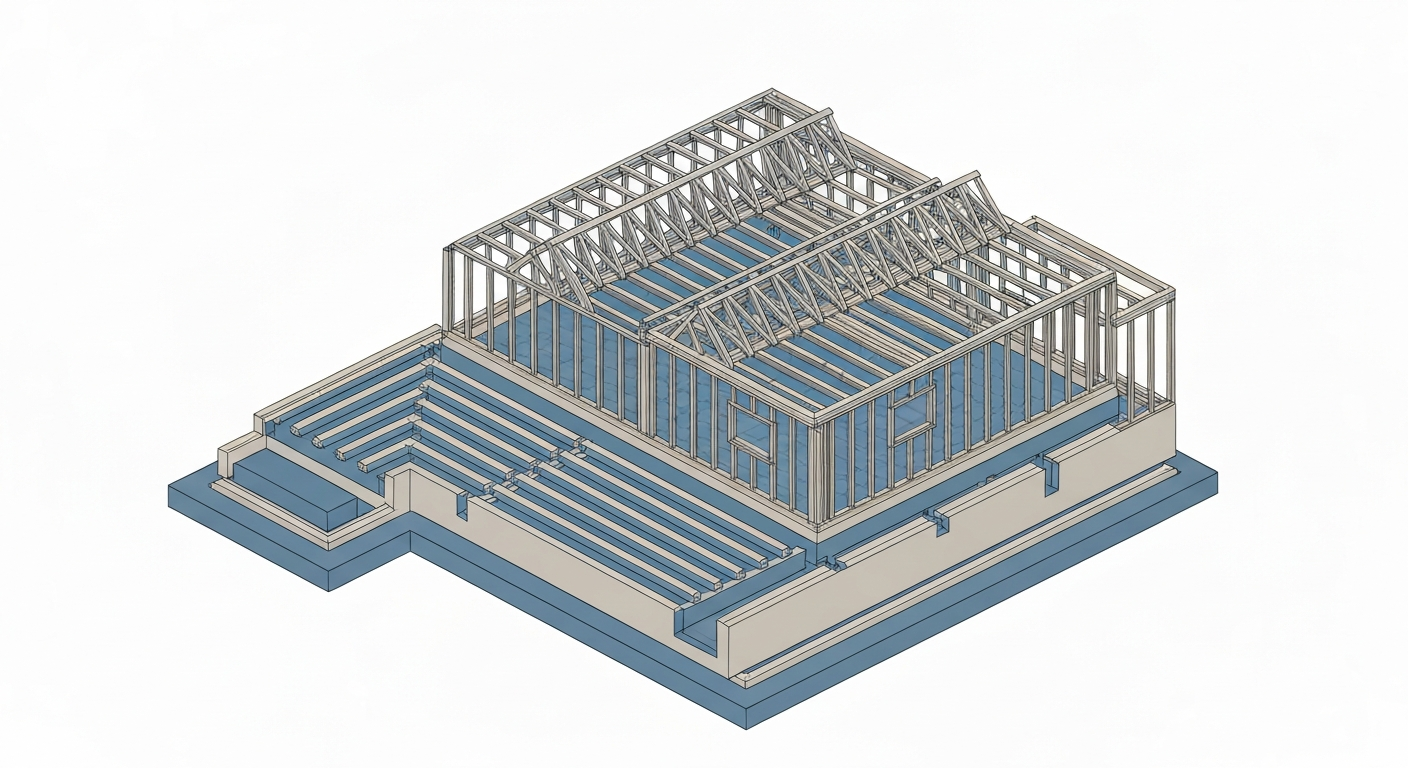
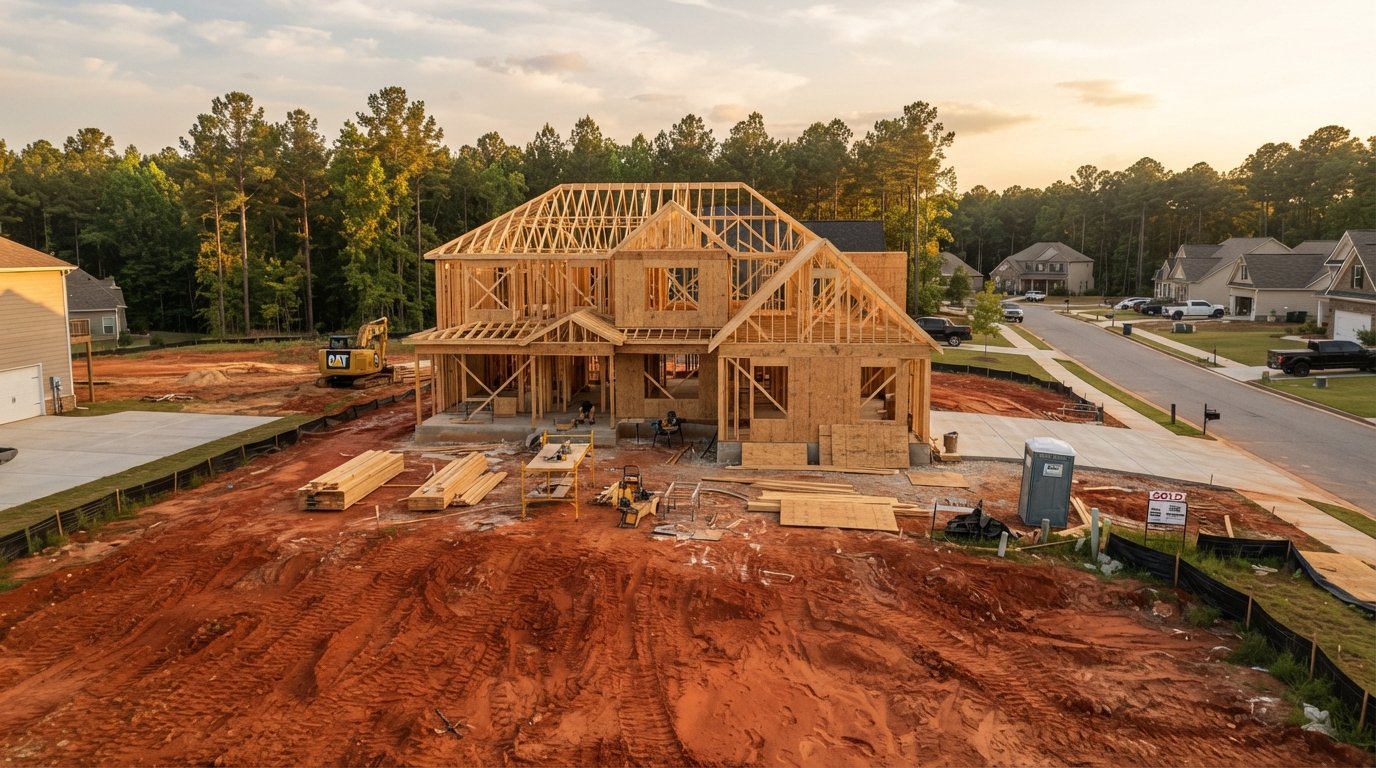
    Texas Construction Site

    Texas soil is one of the most significant hidden construction cost drivers in the state. Expansive clay soil, dominant throughout DFW, Austin, and San Antonio, shrinks and swells seasonally with moisture changes. Standard poured slab foundations are inadequate in these conditions.

    Post-tension cable slabs or pier-and-beam systems are required, adding engineering and construction cost of $8,000 to $25,000 above what a basic slab would cost in states with more stable soil. In Houston, flood zone proximity and low topography frequently require elevated slab designs with additional fill dirt, adding another $15,000 to $40,000 in site preparation cost in susceptible areas.

    Lumber and Framing ($8 to $15 per sq. ft.)

    Lumber accounts for a significant share of Texas hard costs and has remained elevated since supply chain disruptions that began in 2020 to 2021. Lumber prices stabilized in 2023 through 2024 but have resumed a gradual upward trend in 2025 through 2026, rising approximately 1% per month per some market analyses. Wood framing is standard in the Texas residential market; steel framing is used primarily in barndominiums and some commercial crossover applications.

    Roofing ($3 to $25 per sq. ft.)

    Texas roofing decisions involve a genuine durability calculus. Standard asphalt shingles cost $3 to $6 per square foot but are vulnerable to the severe hailstorms that annually affect DFW, San Antonio, and Central Texas. Impact-resistant shingles at $5 to $10 per square foot qualify for insurance discounts in many Texas markets.

    Metal roofing at $10 to $20 per square foot offers superior hail and wind resistance and is increasingly standard in Hill Country and rural Texas. Premium clay tile and slate cost $15 to $25 per square foot and are common in luxury builds.

    Exterior Materials ($4 to $45 per sq. ft.)

    • Natural limestone or native stone: $25 to $45 per square foot. The signature material of Texas Hill Country architecture. Excellent thermal mass and extreme durability.
    • Traditional brick: $8 to $15 per square foot. Dominant in DFW and established Houston neighborhoods. Solid long-term performance in Texas heat.
    • Premium fiber cement siding: $12 to $20 per square foot. Increasingly popular alternative to brick in suburban markets. Lower maintenance than wood, strong hail resistance.
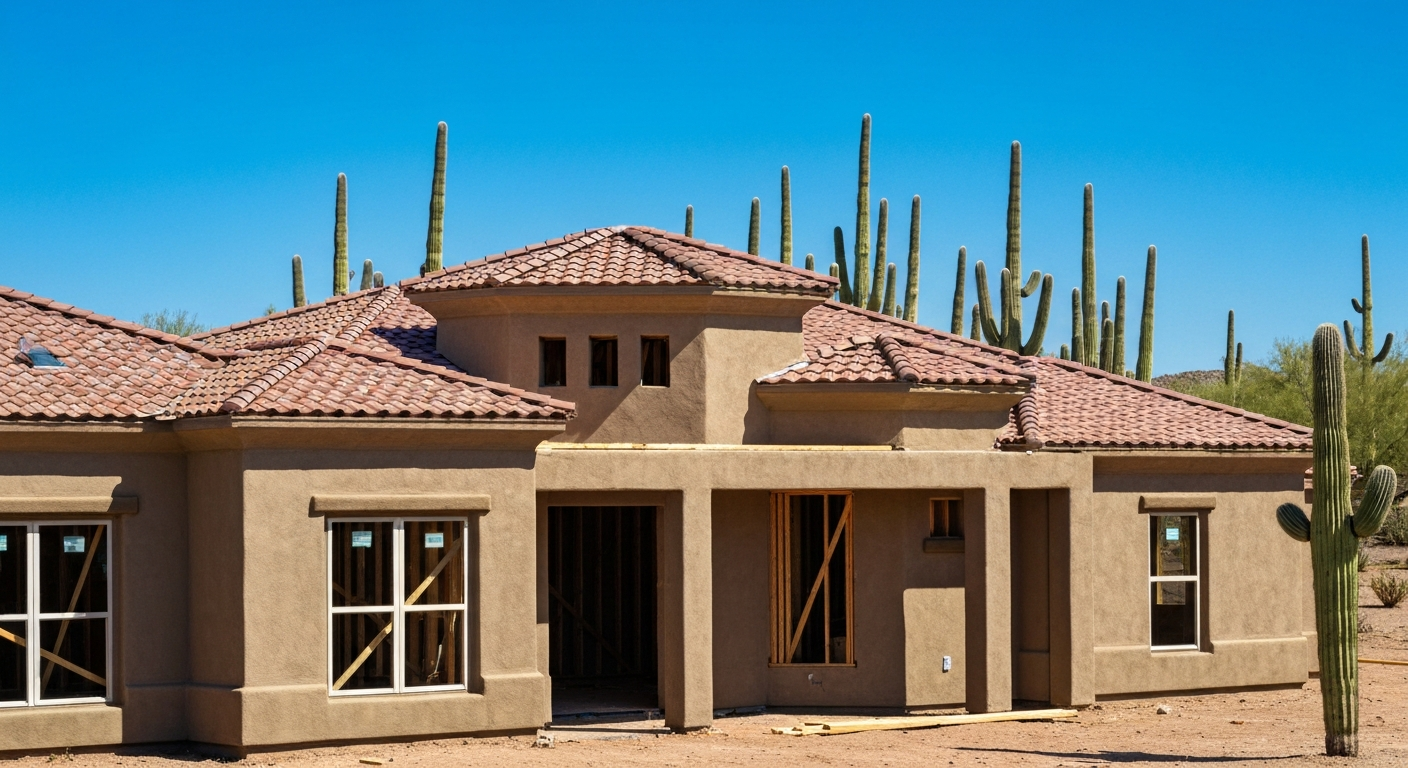
    • Stucco: $8 to $17 per square foot. Common in San Antonio and South Texas. Requires careful execution in humid coastal markets.
    • Vinyl siding: $4 to $8 per square foot. Entry-level option, common in basic production home builds. Can warp in extreme Texas summer heat if not properly specified.

    Windows and Doors ($4,000 to $50,000 total per home)

    Energy-efficient windows are required by the 2021 IECC energy code, now adopted statewide. In coastal counties subject to windstorm codes, impact-rated glass assemblies are mandatory, adding 15% to 25% to window costs. A standard home requires approximately 20 to 35 windows, with per-window costs ranging from $200 for a basic double-pane unit to $1,500 or more for a large custom unit.

    HVAC Systems ($6,000 to $20,000)

    Texas's climate demands are among the most severe in the country. A standard 2,000 square foot home in Dallas or Houston may require a 3 to 4 ton system with a high-SEER rating (16+) to meet both energy code and practical comfort expectations through summer months where temperatures regularly exceed 100°F. Zoned systems for larger or two-story homes add cost. Budget $6,000 to $12,000 for a standard residential installation and $12,000 to $20,000 for a premium multi-zone system.

    Plumbing ($5,000 to $15,000)

    Standard rough-in and fixture installation for a 2,000 to 2,500 square foot home. PEX piping has largely replaced copper in Texas new construction, reducing cost and improving freeze resilience (relevant after Winter Storm Uri in 2021). Fixture quality is where the range expands: basic fixtures run $100 to $300 each, while luxury plumbing packages can add $20,000 to $40,000 to a build.

    Electrical ($4,000 to $15,000)

    Standard wiring, outlets, panel, and fixtures for a residential build. EV charging rough-in has become a standard budget item in 2026, adding $500 to $1,500. Smart home integration packages, including structured wiring, whole-home audio, security pre-wire, and home automation, add another $5,000 to $30,000 depending on complexity.

    Cabinetry and Countertops ($10,000 to $60,000+)

    Custom cabinetry ranges from $5,000 to $30,000 per room depending on materials and complexity. In the kitchen alone, stock cabinetry runs $4,000 to $8,000; semi-custom runs $8,000 to $18,000; and full custom with premium hardware can exceed $30,000. Countertops range from $30 per square foot for standard granite to $150 to $200 per square foot for premium quartzite, marble, or exotic stone.

    Flooring ($3 to $20 per sq. ft.)

    Tile is the dominant flooring choice in Texas, particularly in entry areas, bathrooms, and kitchens, due to its durability in humid conditions and ease of maintenance in the Texas dust environment. Engineered hardwood runs $5 to $12 per square foot installed. Large-format porcelain tile (24x24 or larger), increasingly popular in Texas homes, runs $6 to $15 per square foot installed. Solid hardwood runs $8 to $18 per square foot but requires careful moisture management in humid coastal markets.


    Labor Costs in Texas by Trade

    Labor accounts for 35% to 45% of total hard costs in most Texas residential builds. The market is tight, particularly in Austin and DFW, where skilled trade availability does not meet current demand.

    TradeTypical Hourly Rate (Texas, 2026)
    General laborer$15 to $40 per hour
    Framer$25 to $55 per hour
    Electrician (licensed)$40 to $80 per hour
    Plumber (licensed)$45 to $85 per hour
    HVAC technician$40 to $75 per hour
    Tile setter$25 to $55 per hour
    Cabinet installer$30 to $60 per hour
    General contractor overhead15% to 25% of total project cost

    Urban areas, particularly Austin and Houston, sit at the higher end of these ranges due to demand concentration. Rural markets generally have lower hourly rates but may have lower skilled labor availability for specialty trades, which can increase lead times.


    What Drives Construction Costs in Texas: Key Factors

    Expansive Clay Soil and Foundation Engineering

    Expansive clay is present throughout the DFW Metroplex, Austin, San Antonio, and much of central Texas. This soil type shrinks during dry periods and expands when wet, placing cyclical stress on any foundation that does not account for movement. Engineered post-tension cable slabs, the standard solution, require a licensed structural engineer's signed plans and add meaningful cost above a simple poured slab.

    MUD and PID Taxes

    Municipal Utility Districts and Public Improvement Districts finance the infrastructure of newer Texas suburban communities. New construction homes in MUD districts typically carry rates of $0.80 to $1.50 per $100 of assessed value, in addition to base taxes. For a $400,000 home, this means $3,200 to $6,000 per year in additional carrying cost that does not appear in the construction price but absolutely belongs in the total cost of ownership calculation.

    MUD taxes are structured to decline over 20 to 30 years as infrastructure bonds are retired. Buyers should always obtain the total effective tax rate from the title company or county appraisal district, not just the city and county base rate, before choosing a lot in any Texas suburban master-planned community.

    Deed Restrictions

    Texas allows private deed restrictions that operate entirely independently of municipal zoning. These legal agreements, recorded in property titles, can control minimum square footage, exterior materials, setback requirements, roofline styles, and architectural standards. Compliance with a city permit does not constitute compliance with deed restrictions, and violations can result in legal action by the homeowners' association or neighboring landowners. Builders must review both the permit requirements and the deed restriction documents before finalizing plans.

    The 2021 IECC Energy Code

    Texas adopted the 2021 International Energy Conservation Code statewide, raising baseline requirements for insulation R-values, window performance (U-factor and SHGC), and HVAC efficiency. The code now requires blower door and duct leakage testing at completion, adding inspection cost but producing homes that perform measurably better in the Texas heat. For builders and buyers, this means higher upfront material and system cost but lower long-term utility bills.

    No Statewide Impact Fee System

    Unlike California, Washington, or Florida, Texas does not impose statewide impact fees, school impact fees, or environmental surcharges at the state level. Each city sets its own fee schedule independently, which keeps base costs lower and more predictable than in states with layered fee structures.


    Building Permit Costs in Texas by City (2026)

    Texas building permit costs are lower than most peer states, but vary meaningfully between municipalities. The following reflects 2026 fee schedules for new single-family residential construction.

    CityPermit Package (New Residential)Expedited ReviewNotes
    Austin$5,000 to $10,000Not availableMost backlogged office in TX; single revision can add 8 to 12 weeks
    Dallas$4,000 to $9,000Yes, +$200 to $1,00065% plan review surcharge applies; CO fee $375
    Houston$3,000 to $7,000Yes, +$200 to $1,000Most affordable major metro; expedited cuts timeline to 1 to 2 weeks
    Fort Worth$2,500 to $6,000Yes, +$200 to $1,000Lower fee structure than Dallas; separate plan review fee
    San Antonio$2,000 to $5,000LimitedFastest permitting of the four major metros
    Rural counties$500 or lessN/ASome unincorporated counties have no code requirements

    Tips for managing the permit process in Texas:

    • Submit plans early and without errors. Incomplete submissions trigger revision cycles that add weeks per round in every major Texas city.
    • In Houston, Dallas, and Fort Worth, the expedited review fee is almost always worth it on any project where timeline matters.
    • In Austin, hire a local architect or permit expeditor who knows the Development Services Department's current review standards. This is the single most effective step to avoid Austin's notorious permitting delays.
    • Request the total permit fee schedule from the specific city before budgeting, as fee schedules are updated periodically.

    Additional Site Costs Texas Builders Frequently Underestimate

    Beyond the permit fees and construction line items, several Texas-specific costs catch first-time builders off-guard:

    • Site preparation and clearing: Clearing native cedar and scrub brush on a Hill Country lot costs $5,000 to $20,000. Rocky limestone terrain may require blasting or milling, adding $20,000 to $60,000 in extreme cases.
    • Well and aerobic septic systems: Lots outside municipal utility service areas require private well and septic systems. In Texas, an aerobic septic system typically costs $10,000 to $18,000, and a water well adds another $8,000 to $20,000 depending on depth. Combined, rural utility infrastructure can add $25,000 to $40,000 before construction starts.
    • Utility hookups (urban/suburban): Connecting to city water, sewer, gas, and electric service in an urban or suburban lot typically costs $3,000 to $20,000 depending on the distance from existing infrastructure and the city's connection fees.
    • Landscaping and driveway: Often not included in GC bids. Budget $10,000 to $40,000 for a standard residential landscape package including sod, irrigation, driveway, and basic perimeter planting.
    • Builder's risk insurance: Required by most construction lenders. Typical cost is $1,500 to $4,000 for a standard residential build.
    • Architectural and engineering fees: Full architectural services for a custom home typically run 5% to 15% of the construction cost, or $15,000 to $50,000 for most Texas builds. Engineering for foundation design, structural review, and energy code compliance adds another $3,000 to $10,000.

    Build vs. Buy in Texas (2026)

    The 2026 Texas market presents an unusual data point for prospective builders. According to the Texas Real Estate Research Center, the median new construction sale price in March 2026 stood at $341,500, compared to $326,200 for existing homes. The gap of $15,500 is the lowest in recent history, and it has narrowed from $19,900 just one year prior.

    Redfin data from May 2026 puts the statewide median existing home sale price at $343,779. Zillow shows an average home value of $306,682. The spread across data sources reflects both methodological differences and significant variation between Texas metros. Austin is correcting from pandemic-era overvaluation, Dallas is posting notable year-over-year price declines, Houston is holding steady, and San Antonio is softening.

    FactorBuilding NewBuying Existing
    Upfront costHigher (land + construction + carrying costs)Lower in most markets
    CustomizationComplete control over layout and finishesLimited without costly renovation
    WarrantyFull structural and systems warranty (typically 1/2/10)No warranty on existing systems
    Maintenance (years 1 to 10)MinimalModerate to high
    Energy efficiencyModern code-compliant systemsVariable, often outdated
    Time to occupancy12 to 20 months total30 to 60 days after closing
    Negotiating powerLimited with custom builders; more with volume buildersSellers reducing prices in most TX metros
    MUD/PID exposureHigh in new suburban communitiesLower in established neighborhoods

    The practical conclusion for 2026: in most Texas markets, building new and buying existing are within range of each other at the median level. The decision turns primarily on schedule flexibility and customization priority. Buyers who can accommodate the 12 to 20 month total timeline and have a clear vision of what they want get measurable long-term value from building new. Buyers who need to occupy within 60 days or who are indifferent on finishes and layout will find the resale market increasingly competitive.


    How to Finance a Home Build in Texas

    Standard purchase mortgages cannot be used to finance a home that does not yet exist. Building in Texas requires a construction loan, a specialized short-term facility that releases funds in stages tied to construction milestones rather than at a single closing.

    Construction-to-Permanent (C2P) Loans

    The most common structure for individual homebuilders. A single loan that converts from a construction facility to a permanent 30-year mortgage upon issuance of the certificate of occupancy. The borrower closes once, pays interest-only on disbursed draw amounts during the construction phase, and transitions to standard principal-and-interest payments on conversion. This structure eliminates the cost and rate risk of a second closing.

    Standalone Construction Loans

    A short-term facility (typically 12 months) that must be refinanced into a permanent mortgage upon completion. Requires two closings. More flexible in lender selection and can be appropriate for borrowers who expect their credit profile or income situation to improve between origination and conversion, but carries rate risk if the market moves during construction.

    Qualification Requirements

    Construction loan qualification is more rigorous than for standard purchase mortgages. Lenders require a detailed line-item project budget, architectural plans, a signed contract with a licensed general contractor, proof of sufficient equity or down payment (typically 20% to 25% of total project cost), and credit and income documentation standards that exceed what a standard mortgage requires.

    For a complete breakdown of construction loan types, draw schedules, LTV versus LTC calculations, and how to avoid the most common financing mistakes, see our Home Construction Loan Guide. To model your own loan scenarios before speaking to lenders, use our free Construction Loan Calculator.

    First-time builders who are new to the construction financing process should also review First-Time Home Builder Construction Loans: The Complete Financial Guide before engaging with lenders.


    What's Trending in Texas Custom Home Construction in 2026

    • Outdoor living as a primary investment. Texas's climate creates strong demand for covered outdoor living spaces that function as genuine additional rooms. Outdoor kitchens with built-in grills and refrigeration, fire features, resort-style pools with tanning ledges, and motorized screens or louvers that allow outdoor spaces to function year-round. These features add $30,000 to $150,000+ to a build budget but consistently rank as among the highest-ROI investments in Texas residential construction.
    • Energy resilience over pure efficiency. Winter Storm Uri in 2021 permanently changed how Texas builders and buyers think about energy systems. Battery backup systems, whole-home generators, solar-ready roof structures, and grid-independent water heating have moved from luxury options to standard buyer requests in many markets. These features add $10,000 to $40,000 to a build but address a genuine structural vulnerability in the Texas grid.
    • Innovative materials gaining market share. Insulated Concrete Forms (ICF) and advanced fiber cement systems are gaining traction in Texas markets due to their superior performance in the state's extreme thermal environment. ICF construction adds 5% to 10% to structure costs but delivers dramatically better energy performance and storm resilience. For a deeper analysis of innovative materials and how they interact with Texas's compliance environment, see Texas Construction Boom: Compliance and Innovative Materials.
    • Smart home integration as standard. Structured wiring, whole-home WiFi infrastructure, smart thermostat systems, video doorbell and security pre-wire, and EV charging rough-in have become standard line items in mid-range and premium Texas builds. Buyers increasingly expect these to be included rather than optional.

    For a broader perspective on how technology and sustainability are shaping residential construction across the US, see Innovating Modern Home Construction in the USA.


    Strategies to Control Your Texas Build Budget

    • Lock in all design decisions before construction begins. Change orders issued after groundbreaking are among the most expensive outcomes in any build. Altering a floor plan after framing, switching a material after it has been ordered, or adding a window after the exterior is sheathed can cost two to five times what the same decision would have cost in the pre-construction phase. Spend time on design. The construction phase rewards decisiveness.
    • Understand your total effective tax rate before choosing a lot. The advertised price of a lot in a master-planned community in Prosper, Katy, or Cedar Park does not reflect the total carrying cost. Always obtain the total effective tax rate from the county appraisal district or title company before committing. MUD and PID taxes can add $300 to $500 per month to a mortgage payment that will not appear in any builder advertising.
    • Get minimum three competing bids. Bids on identical scope from licensed Texas general contractors routinely vary by 15% to 25%. The lowest bid is not always the right choice, particularly in a tight labor market where a GC who underbids may be cutting labor quality rather than overhead, but competitive bidding gives you market clarity on what your project should cost.
    • Simplify the geometry. Every additional corner on the foundation perimeter adds concrete, forming, and labor. Every roofline valley or dormer adds framing complexity, roofing material waste, and leak risk. A rectangular or L-shaped plan with a simple gable or hip roof costs significantly less to build than a plan with the same square footage distributed across a complex, multi-angled layout.
    • Carry a 10% to 15% contingency and do not spend it. Texas builds encounter unexpected costs with regularity: rock during excavation, an engineered soil finding that requires deeper piers, a lumber price movement mid-project, a subcontractor delay that pushes a phase into a weather window. Budget for these events before they happen. A project with no contingency is a project that stops when the first surprise arrives.
    • Research permits before buying the lot. In Austin, the permitting timeline can add 6 to 12 months to a project. If your lot is in Austin's jurisdiction, plan accordingly, or evaluate whether an adjacent municipality with faster review timelines might offer a comparable location.

    For design-phase guidance on how to plan a new build that performs well and stays within budget, see Home Construction Design: The Ultimate Planning Guide for Your New Build.


    Frequently Asked Questions

    How much does it cost to build a 2,000 square foot house in Texas? A 2,000 square foot home in Texas in 2026 costs between $280,000 and $440,000 for a standard to mid-range finish package, excluding land. The lower end of that range reflects builder-grade production homes in outer suburban markets. The upper end reflects mid-range custom builds in Austin, DFW, or Houston proper. Custom finishes in premium submarkets can push a 2,000 square foot home to $560,000 or more.

    How much does it cost to build a 3,000 square foot house in Texas? A 3,000 square foot home with a mid-range finish package runs approximately $420,000 to $660,000 before land in 2026. Larger homes benefit from some economies of scale on fixed costs (foundation, roof, mechanical systems), which is why the cost-per-square-foot often decreases slightly as size increases.

    Is it cheaper to build or buy a house in Texas in 2026? At the median, the two options are close in 2026. New construction median sale prices ($341,500 per TRERC) and existing home median prices ($343,779 per Redfin) are nearly equal statewide. Building offers full customization, complete warranty coverage, and modern energy efficiency. Buying existing offers faster occupancy and avoids construction carrying costs. For most buyers, the decision comes down to schedule flexibility and how important a custom layout is.

    How much does it cost to build a barndominium in Texas? A standard barndominium in Texas costs $100 to $200 per square foot in 2026, or $200,000 to $400,000 for a 2,000 square foot structure. Barndominiums are most cost-competitive in rural Texas markets where land is affordable and local contractors are familiar with metal building construction. Urban and suburban markets may carry a premium for barndominium-style builds.

    What are MUD taxes and how do they affect my build budget? Municipal Utility Districts are special taxing entities created by the State of Texas to fund water, sewer, drainage, and road infrastructure in newer suburban communities. They levy an additional property tax rate on top of standard city, county, and school district taxes. New construction homes in MUD districts commonly carry MUD rates of $0.80 to $1.50 per $100 of assessed value. On a $400,000 home, that can mean an additional $3,200 to $6,000 per year in carrying cost. Always ask for the total effective tax rate before committing to a lot.

    Do I need a permit to build a house in Texas? All incorporated Texas cities require building permits for new residential construction, along with separate trade permits for electrical, plumbing, and mechanical work. Some rural, unincorporated counties have minimal requirements, but most require at minimum a septic permit and TCEQ compliance for aerobic septic systems. Confirm requirements with the local building authority before breaking ground.

    How long does it take to build a house in Texas? From groundbreaking to certificate of occupancy, most Texas residential builds take 8 to 14 months. Basic homes and barndominiums can be completed in 6 to 9 months. Luxury or complex custom homes may take 12 to 18 months. Pre-construction, including design, permitting, and financing origination, typically adds another 3 to 6 months, with Austin builds requiring up to 12 months of pre-construction time.

    Can I act as my own general contractor in Texas? Yes. Texas allows owner-builders to serve as their own GC on a homestead property, bypassing the standard 15% to 25% GC markup. This requires significant time, construction sequencing knowledge, and a reliable subcontractor network. It also complicates construction loan qualification, as most lenders treat owner-builder arrangements as higher-risk and require additional documentation or collateral. Texas does require state-licensed electricians, plumbers, and HVAC technicians for those trades regardless of owner-builder status.

    What is the most expensive part of building a house in Texas? Interior finishes collectively represent the largest cost category, typically 25% to 30% of total build cost. However, foundation and site work is the most variable line item in Texas, as soil conditions can add anywhere from $0 to $60,000 above a standard slab depending on the specific lot. In custom builds, kitchen and master bath finishes are where budgets most commonly exceed initial projections.


    Building in Texas in 2026 rewards preparation more than it rewards speed. The state's construction market offers genuine advantages in regulatory flexibility and land availability relative to coastal peers, but the local variables, including soil conditions, MUD and PID tax exposure, metro-specific permitting timelines, and labor market tightness in key metros, require homebuilders to do detailed homework before committing to a lot or a contractor.

    Use our free Construction Cost Calculator for a localized estimate on your specific project type and location. For a broader national context on how Texas compares to other states, see How Much Does It Cost to Build a House? Complete State-by-State Guide.

    Data sources: Texas Real Estate Research Center Housing Insight (May 2026), Redfin Texas Housing Market (May 2026), RSMeans 2026 Construction Cost Data, TrackingPermits Texas Building Permit Fee Database (March 2026), KC Custom Homes Texas Market Analysis (April 2026), 247Pro Texas Construction Cost Guide (2026), Dunn & Stone Builders Houston Portfolio Data (2026), ManageCasa Texas Housing Market Report (May 2026).

    Have a Story or Project to Share?

    Our editorial team is always looking for groundbreaking projects, data-driven insights, and industry trends. Connect with our editors to feature your next big build.

    E

    Elvson Wallacy

    Senior Construction Analyst

    Elvson Wallacy brings over a decade of experience analyzing US housing markets, construction costs, and real estate trends. Their work has been cited in major industry publications and federal economic reports.

    In This Article

    • 2026 Texas Construction Cost Snapshot
    • What Does It Actually Cost to Build a House in Texas?
    • Cost Per Square Foot in Texas by Finish Level
    • Texas Construction Costs by Metro Area
    • Texas Home Construction Costs by Home Type
    • Material Costs: What Drives the Budget in Texas
    • Labor Costs in Texas by Trade
    • What Drives Construction Costs in Texas: Key Factors
    • Building Permit Costs in Texas by City (2026)
    • Additional Site Costs Texas Builders Frequently Underestimate
    • Build vs. Buy in Texas (2026)
    • How to Finance a Home Build in Texas
    • What's Trending in Texas Custom Home Construction in 2026
    • Strategies to Control Your Texas Build Budget
    • Frequently Asked Questions

    Estimate Your Project Cost

    Get an instant, AI-powered construction cost estimate for your specific project.

    Advertisement300x250 Medium Rectangle
    Advertisement728x90 Leaderboard
    The True Cost of Building a House in California: A Complete Guide
    New Construction

    The True Cost of Building a House in California: A Complete Guide

    Complete breakdown of home construction costs in California. Per square foot by city, Title 24 energy code, seismic requirements, impact fees, ADU costs, and regional comparisons from the Bay Area to the Inland Empire.

    E
    Elvson Wallacy2026-06-19
    15 min read
    How to Use the Construction Loan Calculator to Plan Your Build
    New Construction

    How to Use the Construction Loan Calculator to Plan Your Build

    A comprehensive guide to modeling your custom home financing. Learn how to calculate LTV, LTC, interest-only draw payments, and avoid the most common cash-flow traps during construction.

    E
    Elvson WallacyJune 9
    12 min read
    Home Construction Design: The Ultimate Planning Guide for Your New Build
    New Construction

    Home Construction Design: The Ultimate Planning Guide for Your New Build

    A comprehensive guide to home construction design, covering site analysis, floor plans, structural engineering, and how design decisions impact your final building costs.

    E
    Elvson WallacyJune 25, 2026
    18 min read
    Buildority Times Logo

    Your definitive source for US home construction, remodeling, and painting news. Educating the public and connecting professionals.

    Platform

    © Buildority Times. All rights reserved.

    Original text
    Rate this translation
    Your feedback will be used to help improve Google Translate