Building a house in Georgia typically takes 7 to 12 months from breaking ground to move-in day. Custom homes usually land at the longer end of that range, while production homes in planned communities can be finished in as little as 6 months. Add another 1 to 3 months before construction starts for permits, financing, and site preparation, and the full journey from signed plans to front-door keys usually spans 9 to 15 months.
That is the short answer. The real timeline depends on where in Georgia you are building, what type of home you choose, how the money flows, and how well you avoid the delays that catch most first-time builders off guard. This guide breaks down every phase, compares Atlanta metro with rural Georgia, shows a realistic month-by-month schedule, and explains exactly what makes some builds finish in 6 months while others drag past a year.
Georgia home construction timeline at a glance
| Phase | What happens | Typical duration |
|---|---|---|
| Pre-construction | Plans, permits, financing, site survey | 8 to 12 weeks |
| Site work and foundation | Clearing, grading, footings, slab or crawl space | 4 to 6 weeks |
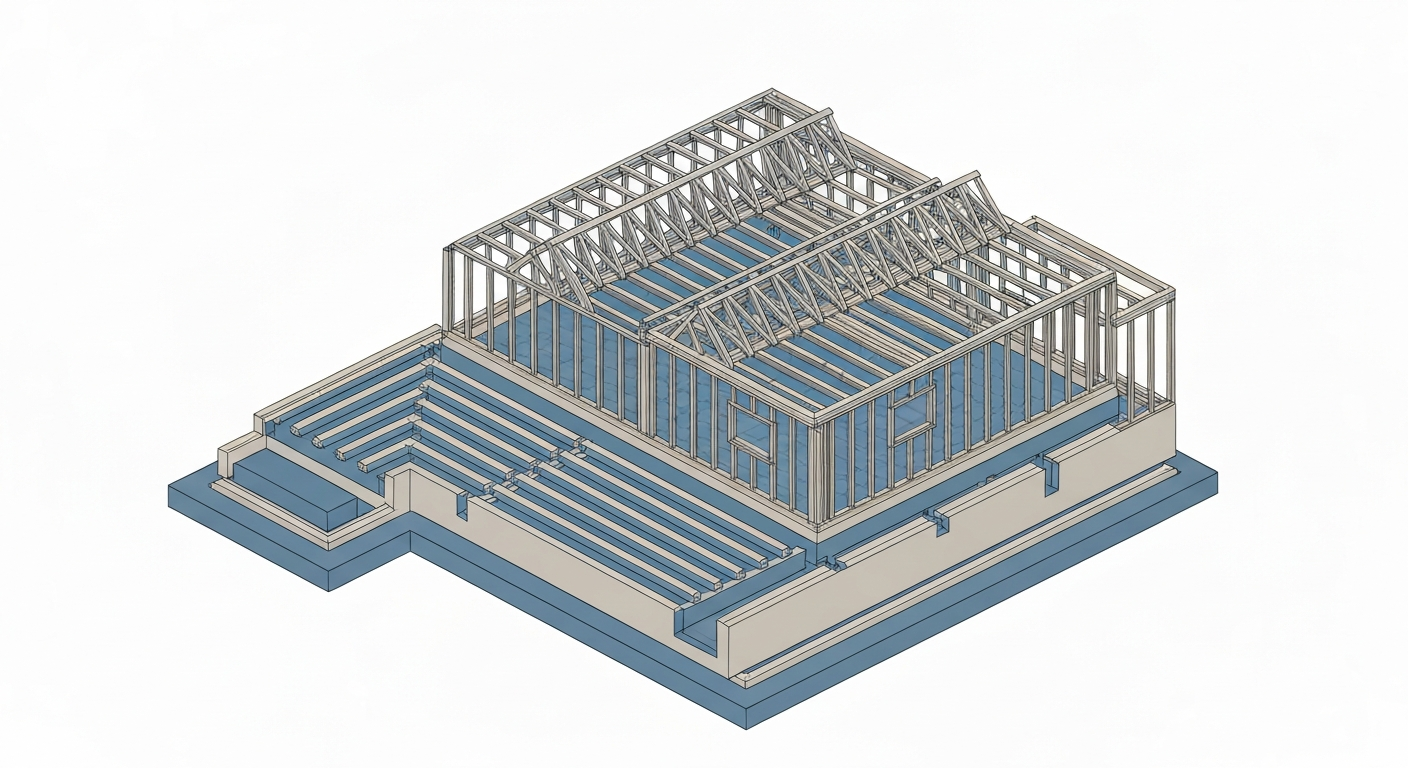
| Framing | Floors, walls, roof structure, windows, exterior doors | 5 to 7 weeks |
| Rough-ins | Plumbing, electrical, HVAC, insulation, inspections | 4 to 6 weeks |
| Interior finishes | Drywall, flooring, cabinets, paint, fixtures | 7 to 10 weeks |
| Final inspections and closing | Punch list, certificate of occupancy, walkthrough | 2 to 4 weeks |
Total construction time (after permits): roughly 26 to 40 weeks, or 6 to 10 months for most single-family homes.
Average weeks per construction phase in Georgia
Total duration usually spans 26 to 40 weeks once construction starts
How home type changes the timeline
Before diving into the phases, it helps to know which lane you are in, because the type of home you choose sets the baseline for everything else.
| Home type | Typical Georgia timeline | Why |
|---|---|---|
| Production home (planned community) | 5 to 7 months | Pre-approved plans, repeat crews, bulk materials |
| Semi-custom home | 7 to 10 months | Builder's plans with modifications, some custom orders |
| Full custom home | 10 to 14 months | Unique plans, individual engineering, custom finishes |
| Modular home | 3 to 5 months on site | Modules built in a factory while site work runs in parallel |
| Barndominium or post-frame home | 6 to 9 months | Faster shell, but interior finish takes similar time |
Production builders in Georgia's planned communities move fast because nothing is being decided for the first time. The floor plan has been built dozens of times, the county has seen the engineering before, and the same crews rotate lot to lot. Full custom homes sit at the other extreme: every decision is new, every drawing is reviewed from scratch, and every finish is ordered individually.
Modular construction deserves a special mention for buyers in rural Georgia. Because the modules are built indoors while your foundation and utilities are being prepared on site, the two longest parts of the schedule happen at the same time instead of one after the other.
Phase 1: Pre-construction (8 to 12 weeks)
Before a single shovel hits the ground, you need approved plans, a building permit, and financing in place. In Georgia, this phase varies more than any other because permitting is handled at the county and city level, and the state's counties range from some of the fastest-growing in the country to some of the quietest.
Here is what actually happens during these weeks:
- Plan finalization (1 to 3 weeks). Architectural drawings, structural details, and site plan. Custom homes may also need engineered foundation plans for Georgia's clay soils.
- Permit submission and review (1 to 6 weeks). In fast-growing metro counties such as Fulton, Gwinnett, Cherokee, and Forsyth, permit review queues can stretch several weeks during busy seasons. Smaller rural counties often turn permits around in a week or two.
- Septic and well approvals, if applicable (2 to 4 weeks, parallel). If your lot needs a septic system instead of sewer, the county health department must approve a soil evaluation and septic permit. On rural lots, well drilling permits follow a similar path.
- Construction loan closing (2 to 4 weeks, parallel). Lenders order an appraisal based on your plans and budget, then set up the draw schedule that will release money as the build progresses.
- HOA or architectural review, if applicable (1 to 4 weeks). Planned communities in metro Atlanta often require design approval before the county will even accept your permit application.
The single best thing you can do for your entire timeline happens here: finalize every design decision before permits are submitted. Every change made after this point costs double, once in money and once in time.
This is also the phase where your budget takes shape. If you have not run the numbers yet, start with our guide to the cost to build a house in Georgia, then use our construction cost calculator to model your specific project.
Phase 2: Site work and foundation (4 to 6 weeks)
Georgia's famous red clay is beautiful in photos and tricky under a foundation. Clay soil expands when wet and shrinks when dry, so many builders in the state recommend a soil test before pouring. Depending on the result, your builder may need to over-excavate and compact engineered fill, which adds days to the schedule but prevents the cracked slabs and sticking doors that show up years later when this step is skipped.
The sequence looks like this:
- Clearing and grading (3 to 7 days). Trees come down, the pad is cut, and drainage is shaped. On heavily wooded north Georgia lots, clearing alone can take a full week.
- Footings and inspection (3 to 5 days). Trenches are dug, rebar is placed, and the county inspects before any concrete is poured.
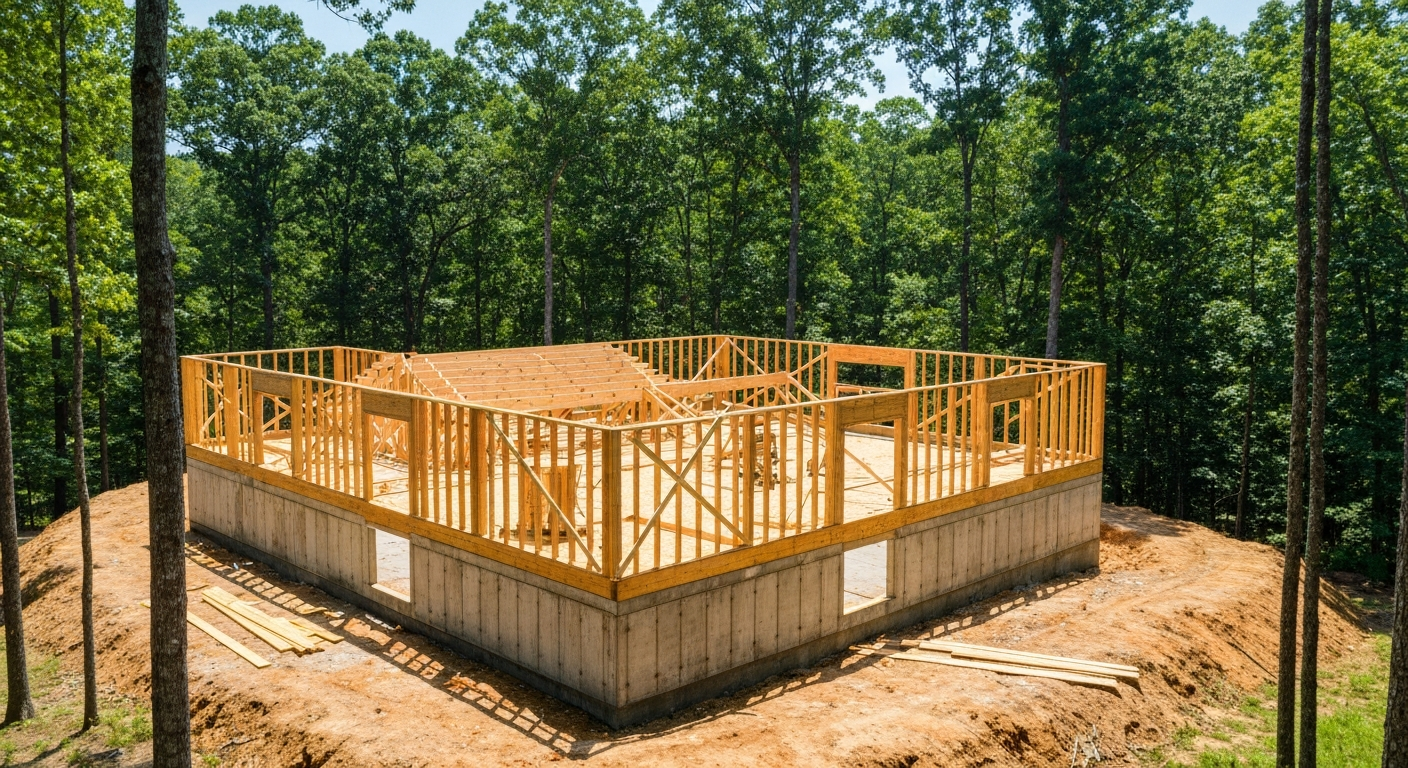
- Foundation (1 to 3 weeks). Most Georgia homes sit on either a slab-on-grade foundation (faster, common in metro Atlanta and south Georgia) or a crawl space (common in north Georgia's hillier terrain). Basements, popular in the northern counties where lots slope, take the longest.
- Curing and waterproofing (3 to 7 days). Concrete needs time to reach strength before framing loads land on it.
- Utility rough-ins under slab (2 to 4 days). Plumbing lines that will live under the concrete go in before the pour, which is why slab changes later are so expensive.
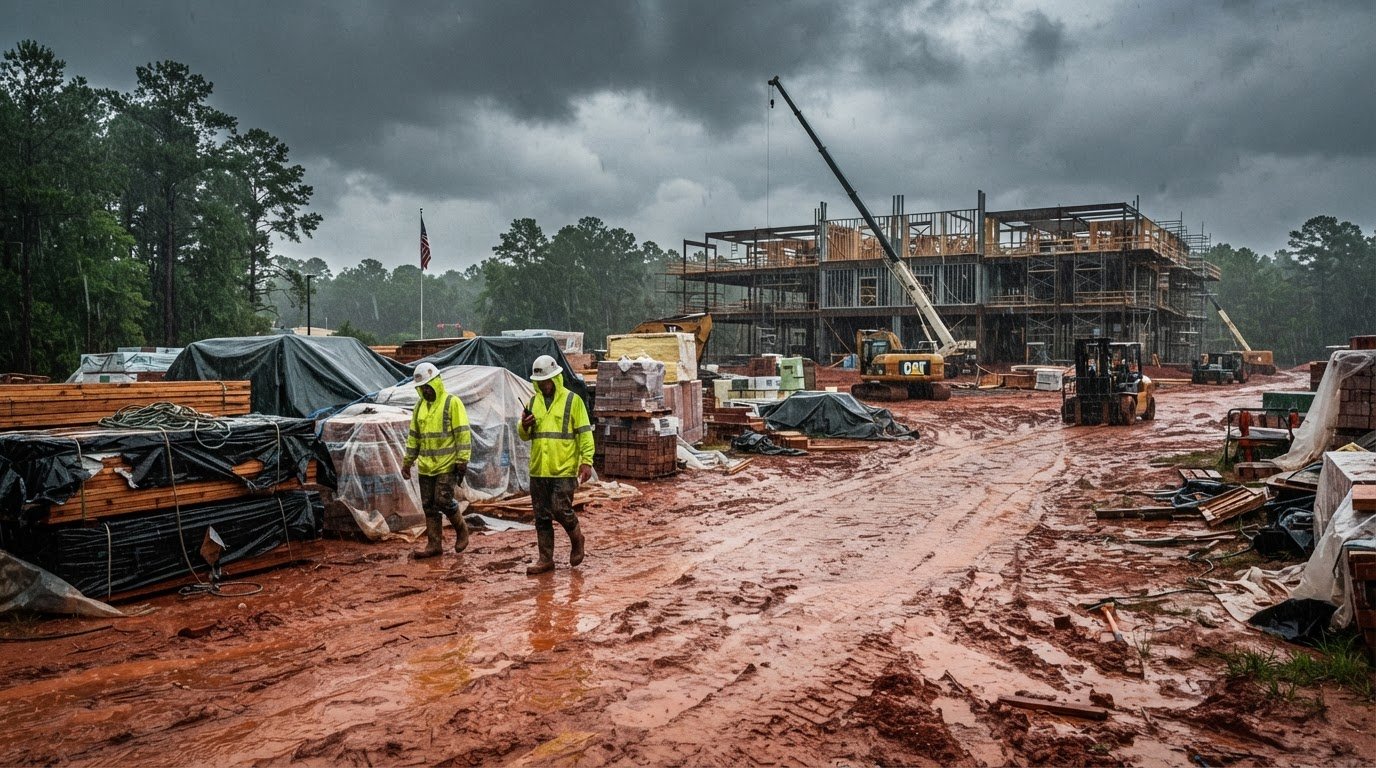
Weather matters most in this phase. Saturated clay cannot be graded or compacted properly, so a rainy week can pause earthwork even after the sky clears. Builders who work in Georgia year round build this buffer into their schedules; out-of-area builders often do not.
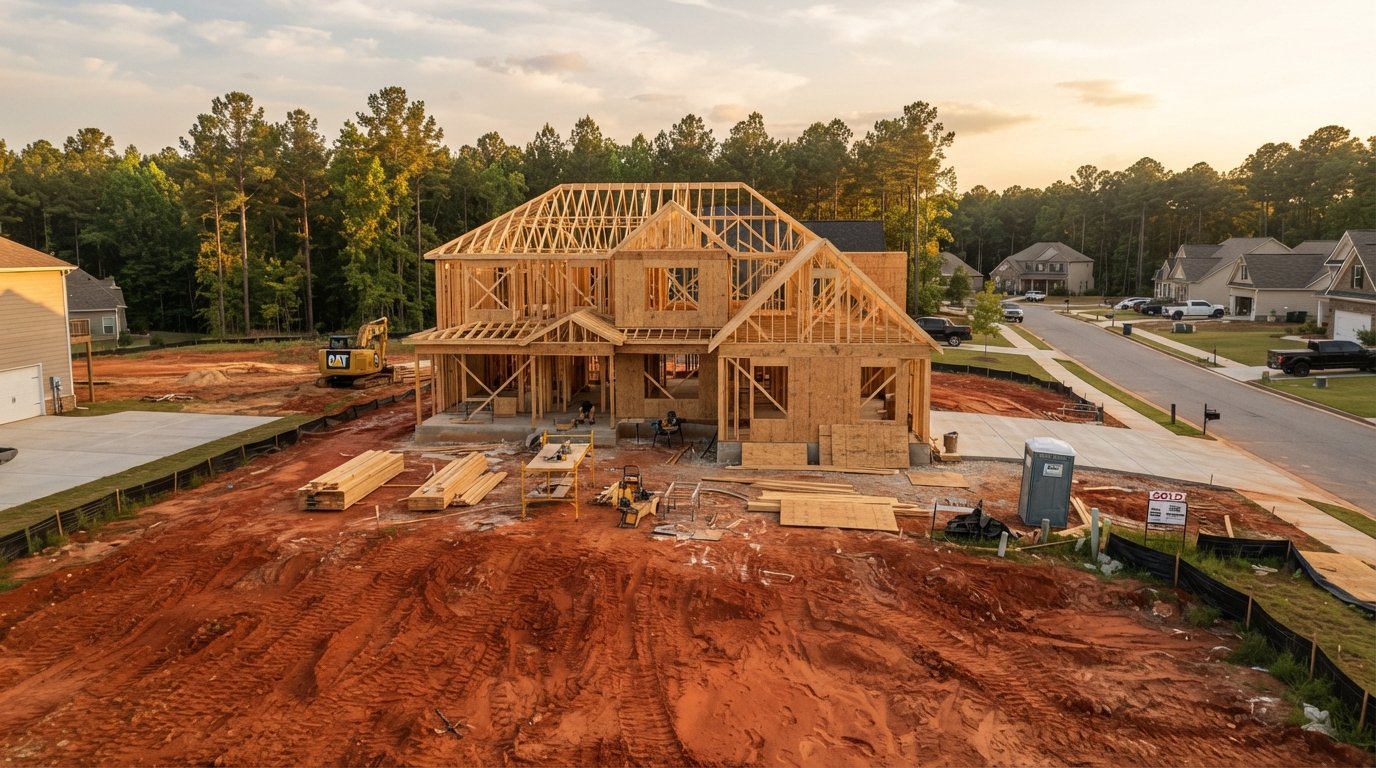
Phase 3: Framing (5 to 7 weeks)
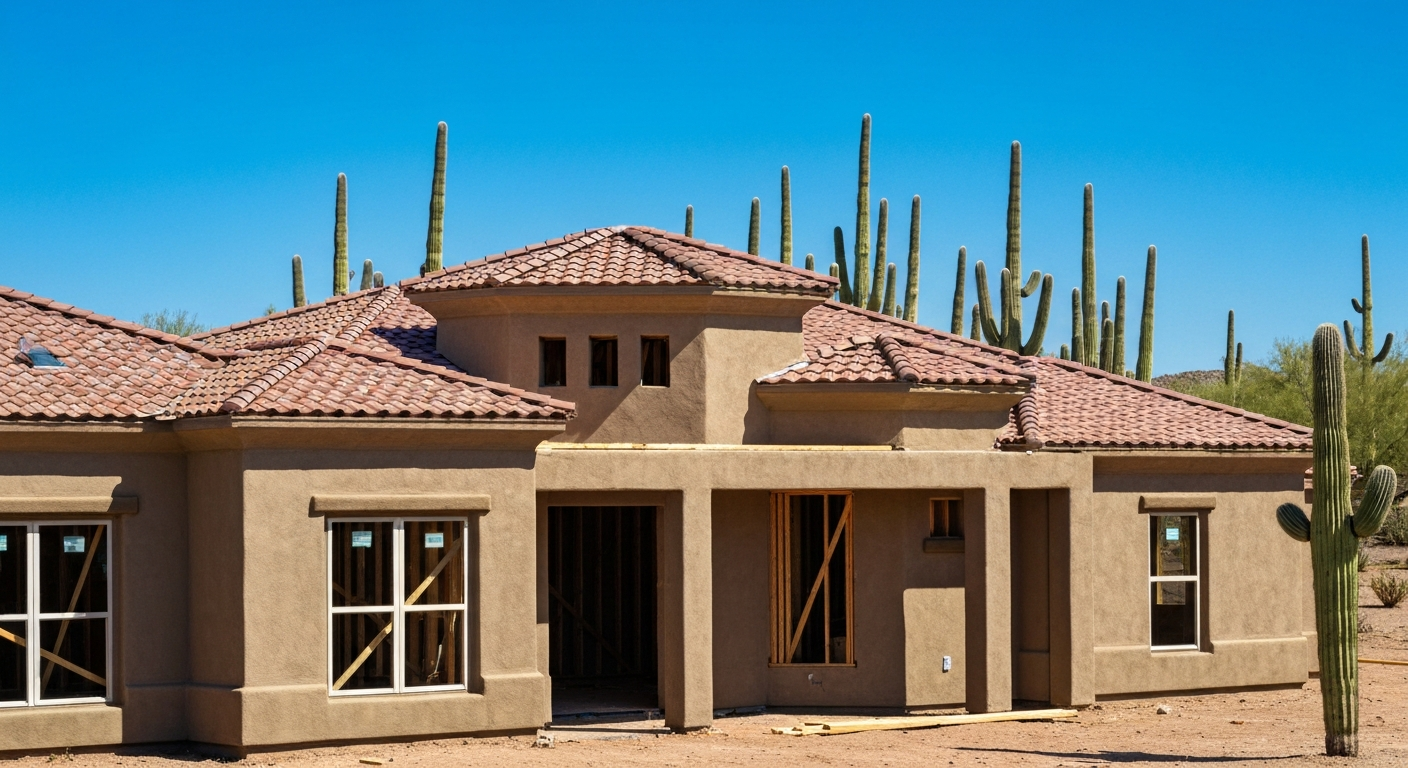
Framing is when the project finally looks like a house. Floors, walls, and roof trusses go up, followed by windows and exterior doors, a milestone builders call "dried in." Once the house is dried in, interior work can continue regardless of weather, which is why every experienced Georgia builder pushes hard to reach this point before the heart of summer storm season.
A typical framing sequence:
- Week 1: floor system and subfloor
- Weeks 2 to 3: exterior and interior walls
- Weeks 3 to 4: roof trusses or rafters, decking, and felt
- Weeks 4 to 5: windows, exterior doors, house wrap
- Weeks 5 to 7: roofing, framing inspection, corrections
Crew availability is the main variable here. In high-demand corridors north of Atlanta, framing crews are often booked weeks ahead, and a scheduling gap between foundation and framing is one of the most common silent delays in the state. When you interview builders, ask directly: is your framing crew in-house or subcontracted, and how far out are they booked?
Windows deserve early attention too. Standard sizes arrive quickly, but custom or oversized windows can carry lead times of a month or more, and a house cannot be dried in with holes where the windows should be.
Phase 4: Rough-ins and inspections (4 to 6 weeks)
Plumbing, electrical, and HVAC systems are installed inside the open walls, and each trade requires its own county inspection before insulation and drywall can close everything up. This is the most inspection-dense stretch of the entire build:
- HVAC rough-in and inspection
- Plumbing top-out and inspection
- Electrical rough-in and inspection
- Framing re-check where trades cut or drilled structure
- Insulation installation and inspection
Inspection scheduling is another point where metro and rural Georgia diverge: busy counties may take several business days per inspection slot, and a single failed inspection means a correction plus a re-inspection, which can add a week each time it happens.
A well-run project stacks these trades efficiently, with the next crew arriving as the previous inspection passes. A poorly coordinated one can lose two or three weeks in this phase alone, with the house sitting untouched between visits. When you walk a builder's active job sites, an empty site on a sunny weekday is worth asking about.
This is also when low-voltage decisions happen: ethernet runs, security wiring, speaker cable, and EV charger conduit. Adding them now costs little; adding them after drywall costs a remodel.
Phase 5: Interior finishes (7 to 10 weeks)
Drywall, trim, cabinets, countertops, flooring, paint, tile, and fixtures. This is the longest single stretch of visible progress, and it is also where material decisions come home to roost. Custom cabinets or special-order countertops can carry lead times of a month or more, so experienced builders order finishes during framing, not after drywall.
The usual order of operations:
- Drywall (2 to 3 weeks). Hanging, taping, mudding, sanding, and texture. Georgia humidity slows drying time in summer, and drywall crews are among the most heavily booked trades in the metro area.
- Trim and doors (1 to 2 weeks). Baseboards, casings, interior doors, stair rails.
- Cabinets and countertops (1 to 3 weeks). Cabinets install first; countertop templating happens only after cabinets are set, and fabrication of stone tops typically takes 1 to 2 weeks after templating.
- Paint (1 to 2 weeks). First finish coat, with a final touch-up pass at the very end.
- Flooring and tile (1 to 2 weeks). Hard surfaces first, carpet last, after the heavy trades are done walking through.
- Fixtures and final trim-out (1 to 2 weeks). Plumbing fixtures, light fixtures, appliances, hardware, mirrors.
Two practical tips that consistently save weeks in Georgia builds: choose in-stock finish packages where you can live with them, and resist mid-phase changes. Changing a tile selection after the original has shipped does not cost one week; it costs the return, the reorder, the new lead time, and the rescheduled installer.
Phase 6: Final inspections and closing (2 to 4 weeks)
The county performs a final inspection and issues a certificate of occupancy. You do a blue-tape walkthrough, marking every scratch, paint miss, and misaligned door for the builder's punch list. The builder clears the list, utilities transfer to your name, and closing is scheduled. If your lender requires a final appraisal, build a few extra days into this window.
Do not let move-in excitement rush the walkthrough. The blue-tape session is your maximum-leverage moment: items documented before closing get fixed on the builder's schedule and budget; items discovered after closing depend on warranty goodwill.
Atlanta metro vs rural Georgia: how location changes the timeline
| Factor | Atlanta metro | Rural Georgia |
|---|---|---|
| Permit approval | Longer queues, stricter reviews | Often 1 to 2 weeks |
| Inspection scheduling | Several days per slot in peak season | Usually faster |
| Crew availability | High demand, booked ahead | Fewer crews, travel time |
| Utility connections | Sewer and water usually available | Well and septic add steps |
| Material delivery | Same-week from local suppliers | Delivery windows, longer hauls |
| Typical total build | 8 to 12 months | 7 to 11 months |
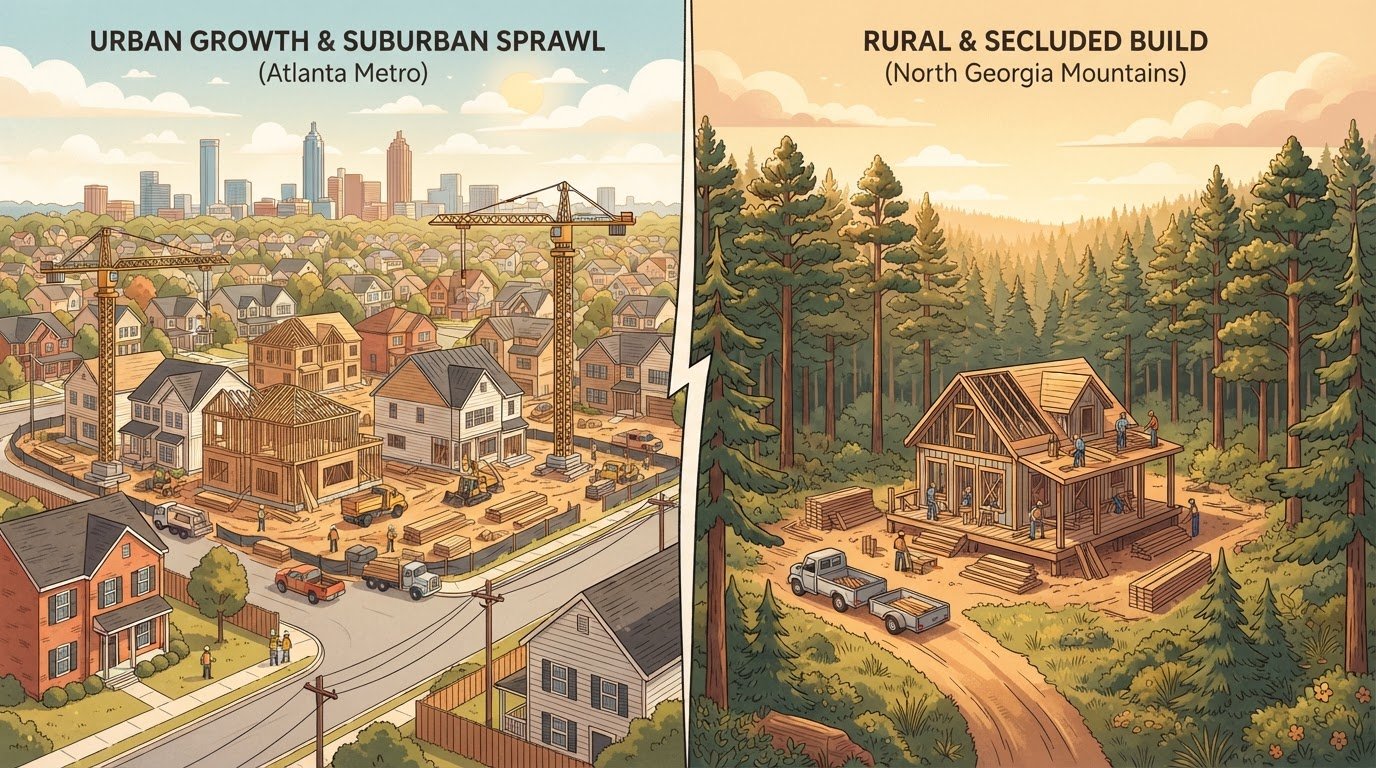
The trade-off is real: metro counties have more crews and suppliers but heavier bureaucracy and demand, while rural counties move paperwork fast but may have fewer available trades and extra steps for well and septic systems. The totals often end up closer than people expect.
Within the metro itself, timelines vary by county. The fast-growth counties north of the city process enormous permit volume, and their inspection departments run at capacity for much of the year. South metro and exurban counties often move noticeably faster on paperwork while drawing from the same regional labor pool.
A realistic month-by-month example
Here is how a typical semi-custom build in a metro-adjacent Georgia county actually unfolds, assuming financing and lot are already secured:
- Month 1: Final plans, permit submission, HOA approval, loan closing.
- Month 2: Permit issued late in the month. Site clearing and grading begin.
- Month 3: Footings, foundation pour, under-slab plumbing, curing.
- Month 4: Framing. House reaches dried-in status by month's end.
- Month 5: Roofing complete. HVAC, plumbing, and electrical rough-ins with inspections.
- Month 6: Insulation, drywall, exterior siding and brick running in parallel.
- Month 7: Trim, cabinets, countertop templating, interior paint.
- Month 8: Countertops, flooring, tile, fixtures, appliances.
- Month 9: Final inspections, certificate of occupancy, punch list, walkthrough, closing.
Nine months, with no major surprises. A production home compresses months 1 to 3; a full custom home stretches months 1, 7, and 8.
What causes construction delays in Georgia
- Summer thunderstorms and hurricane remnants. Georgia summers bring frequent afternoon storms, and tropical systems moving up from the Gulf or the Atlantic can shut down site work for days. Weather mostly affects the phases before dry-in: site work, foundation, and framing.
- Red clay after heavy rain. Saturated clay cannot be graded or compacted properly, so a rainy week can pause earthwork even after the sky clears.
- Permit and inspection backlogs. Concentrated in fast-growing metro counties, and worst during the spring and summer building rush.
- Change orders. Every design change after construction starts ripples through the schedule. Moving a wall during framing can cost a week; changing cabinets after ordering can cost a month.
- Material lead times. Windows, garage doors, custom cabinets, and special-order appliances are the usual suspects.
- Labor gaps between trades. The schedule risk is rarely the work itself; it is the wait between crews.
- Financing draw delays. Construction loans release money in stages, usually after a lender inspection confirms each milestone. A slow draw process means subcontractors wait to be paid, and unpaid subcontractors reschedule.
- Utility connection queues. Power meter sets and water taps run on the utility's schedule, not the builder's. In fast-growing areas, requesting them early matters.
When is the best time to start building in Georgia?
Georgia's mild winters give builders a real advantage over northern states: construction continues year round, and there is no true off-season shutdown. Still, the starting month shapes which phases meet which weather.
A fall start (September to November) is arguably the sweet spot. Site work and foundation happen in the driest months of the year, framing runs through the mild winter, and the house is dried in before the summer storm pattern begins. Interior finishes then happen in air-conditioned comfort while the busiest building season rages outside.
A spring start works too, but pushes your most weather-sensitive phases directly into summer thunderstorm season and puts you in the permit queue at its busiest. If you must start in spring, build a bigger weather buffer into your expectations.
How Georgia compares to neighboring states
Georgia's timelines are broadly similar to the rest of the Southeast, and generally faster than the national picture in high-regulation coastal and northern markets. If you are comparing options across state lines, see our breakdown of how long it takes to build a house in Florida, where coastal wind-zone requirements add engineering steps that most of Georgia does not face. Inland Georgia builds tend to move slightly faster than coastal builds anywhere in the region. The Carolinas and Tennessee run on comparable schedules, with the same pattern of fast rural permitting and slower metro queues around Charlotte and Nashville that Georgia shows around Atlanta.
How to keep your Georgia build on schedule
- Finalize every design decision before permits are submitted. The cheapest change order is the one made on paper.
- Order long-lead materials during framing at the latest. Windows, cabinets, garage doors, and special-order appliances should be in the pipeline before drywall.
- Ask your builder how they sequence inspections in your specific county. A builder who knows the local inspectors' rhythms loses days; one who does not loses weeks.
- Build a weather buffer of 2 to 4 weeks into your personal planning, especially for summer starts, and do not schedule your lease end or moving truck against the optimistic date.
- Prefer builders with active projects in your county. They know the local queues, the local soil, and the local crews.
- Align your lender's draw schedule with the builder's milestones before construction starts, so money never becomes the bottleneck.
- Visit the site weekly and keep a photo log. Owners who show up catch gaps early, and a dated photo record settles most schedule disputes before they become arguments.
Frequently asked questions
How long does it take to build a house in Georgia? Most single-family homes in Georgia take 7 to 12 months of construction time, plus 1 to 3 months of pre-construction for permits and financing. Production homes can finish in about 6 months; large custom homes can exceed a year.
How long do building permits take in Georgia? It depends on the county. Rural counties often approve residential permits in 1 to 2 weeks, while fast-growing metro Atlanta counties can take several weeks during peak season.
What is the fastest type of house to build in Georgia? Production homes in planned communities are the fastest conventional option, often finishing in about 6 months because plans are pre-approved and crews repeat the same designs. Modular construction can be faster still, since modules are built off-site while site work happens in parallel.
Does Georgia weather delay construction? Yes, mainly in summer. Frequent afternoon thunderstorms and occasional tropical systems pause site work, foundation, and framing. After the house is dried in, weather has little effect on the schedule.
Is it faster to build in Atlanta or in rural Georgia? The totals are usually similar. Atlanta metro offers more crews and suppliers but slower permits and inspections; rural Georgia moves paperwork quickly but may have fewer available trades and extra steps for well and septic systems.
What month should I start building a house in Georgia? A fall start is ideal for most projects: dry-season site work, winter framing under mild temperatures, and a dried-in house before summer storms. Georgia's climate allows construction to start in any month, so the difference is measured in weeks of buffer, not feasibility.
How long does a custom home take compared to a production home in Georgia? Plan on roughly double. Production homes commonly finish in 5 to 7 months of construction; full custom homes typically need 10 to 14 months once design, individual engineering, and custom material lead times are counted.
Can I speed up my build by acting as my own general contractor in Georgia? Georgia allows owner-builders on their own property, but it rarely saves time. Licensed builders get priority from busy subcontractors and know each county's inspection rhythm. Owner-builders typically save money at the cost of a longer schedule.