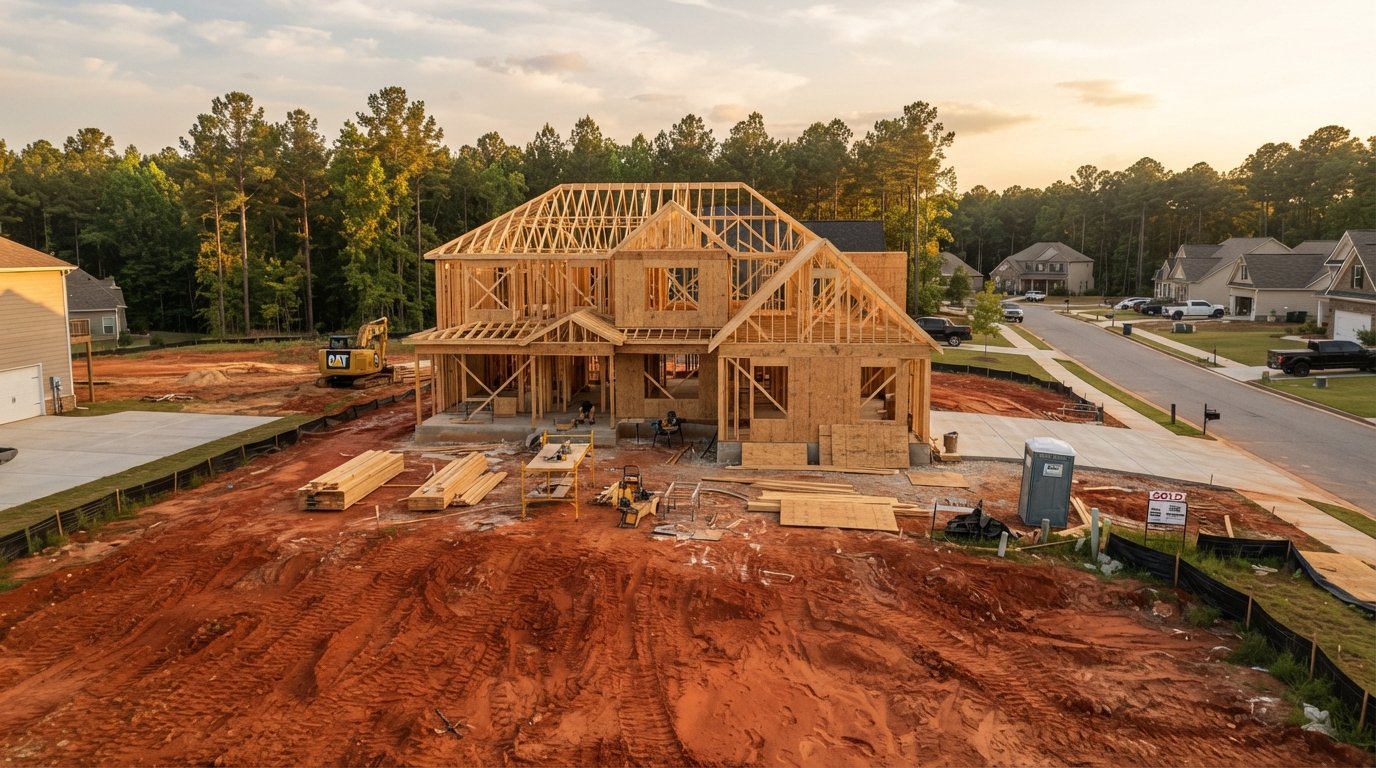
Building a house from the ground up is one of the most significant financial decisions most Americans will ever make. The national average cost sits between $150 and $400 per square foot, according to the National Association of Home Builders, and that range can shift dramatically depending on location, design complexity, materials chosen, and the decisions made in the earliest stages of planning.
Here is the reality that most first-time builders discover too late: the majority of cost savings in residential construction happen before a single shovel touches the ground. Once framing begins, your options narrow, your leverage shrinks, and every change order carries a premium. The homebuilders who finish on budget are not the ones who found the cheapest contractors. They are the ones who made smarter decisions earlier.
This guide covers every major lever available to a homebuilder looking to reduce construction costs without compromising structural integrity, energy performance, or long-term livability. Whether you are a first-time builder trying to understand where your money actually goes, a real estate investor evaluating build-versus-buy, or a contractor looking for a resource to share with clients, the strategies below are grounded in data, structured for clarity, and built around the decisions that actually move the needle.
(Read more: How Much Does It Cost to Build a House?)
Understanding Where Your Construction Budget Actually Goes
Before you can save money intelligently, you need to understand where it goes. Many first-time builders have a rough sense that framing and roofing are expensive, but they are often surprised by how much of the budget is absorbed by systems they never see once the walls close.
The breakdown below reflects national averages for a typical single-family custom home, based on data from the National Association of Home Builders and the U.S. Census Bureau:
| Cost Category | Percentage of Total Build Cost | Notes |
|---|---|---|
| Site work and foundation | 10-15% | Varies significantly by lot conditions |
| Framing and structural | 15-20% | Largest single labor cost |
| Exterior finishes (roof, siding, windows) | 14-17% | High impact on energy performance |
| Major systems (HVAC, electrical, plumbing) | 20-25% | Expensive to change post-construction |
| Interior finishes (flooring, cabinets, counters) | 20-30% | Most visible, most deferrable |
| Soft costs (permits, architect, inspections) | 5-10% | Often underestimated by first-time builders |
| Contingency | 10-15% | Non-negotiable buffer |
The interior finishes category is where most builders focus when trying to cut costs, and it is a reasonable place to look. But notice that major systems represent 20-25% of the budget and are largely invisible once drywall goes up. These systems, along with the structural work, are where decisions made today have financial consequences for decades.
The chart below illustrates how budget allocation shifts between a production home (a home built by a large builder in a planned development) and a custom home:
BUDGET DISTRIBUTION: Production Home vs Custom Home
(Approximate percentage of total construction cost)

Category              Production Home    Custom Home
---------------------------------------------------
Site + Foundation          10%               14%
Framing + Structure        17%               19%
Exterior + Roof            14%               16%
Mechanical Systems         22%               21%
Interior Finishes          25%               18%
Soft Costs + Permits        6%                8%
Contingency                 6%               (recommended 15%)
---------------------------------------------------
Key insight: Custom homes spend proportionally more
on structure and less on finishes, but contingency
is frequently underfunded, which is where overruns begin.
(Read more: Home Construction Loan Guide & Process)
Lock In Your Budget Before You Lock In Your Builder
The single most expensive mistake first-time homebuilders make is starting construction without a firm, itemized budget and a properly funded contingency. A ballpark number is not a budget. A per-square-foot estimate from a friend who built recently is not a budget. A budget is a line-item document that accounts for every phase of construction, every allowance, and every soft cost, with a minimum 10-15% contingency set aside before construction begins.
Cost overruns affect the majority of custom home builds, according to HomeAdvisor. The most common cause is not poor craftsmanship or bad contractors. It is scope changes made mid-construction, where every decision carries a cost premium because trades are already mobilized, materials have been ordered, and the schedule is running.
The table below shows how the cost of common mid-construction changes compares to the same decision made during planning:
| Change Made During Construction | Cost if Decided in Planning | Cost if Changed Mid-Build | Premium |
|---|---|---|---|
| Adding a bathroom rough-in | $1,500 - $3,000 | $6,000 - $15,000 | 3-5x |
| Upsizing electrical panel | $800 - $1,500 | $3,500 - $8,000 | 3-5x |
| Moving a load-bearing wall | Not applicable | $5,000 - $25,000+ | N/A |
| Changing window size or location | $200 - $600 per window | $1,500 - $4,000 per window | 4-6x |
| Adding exterior outlet locations | $50 - $150 each | $400 - $1,200 each | 5-8x |
| Upgrading insulation specification | $0.50 - $1.50 per sq ft | $3 - $8 per sq ft | 4-6x |
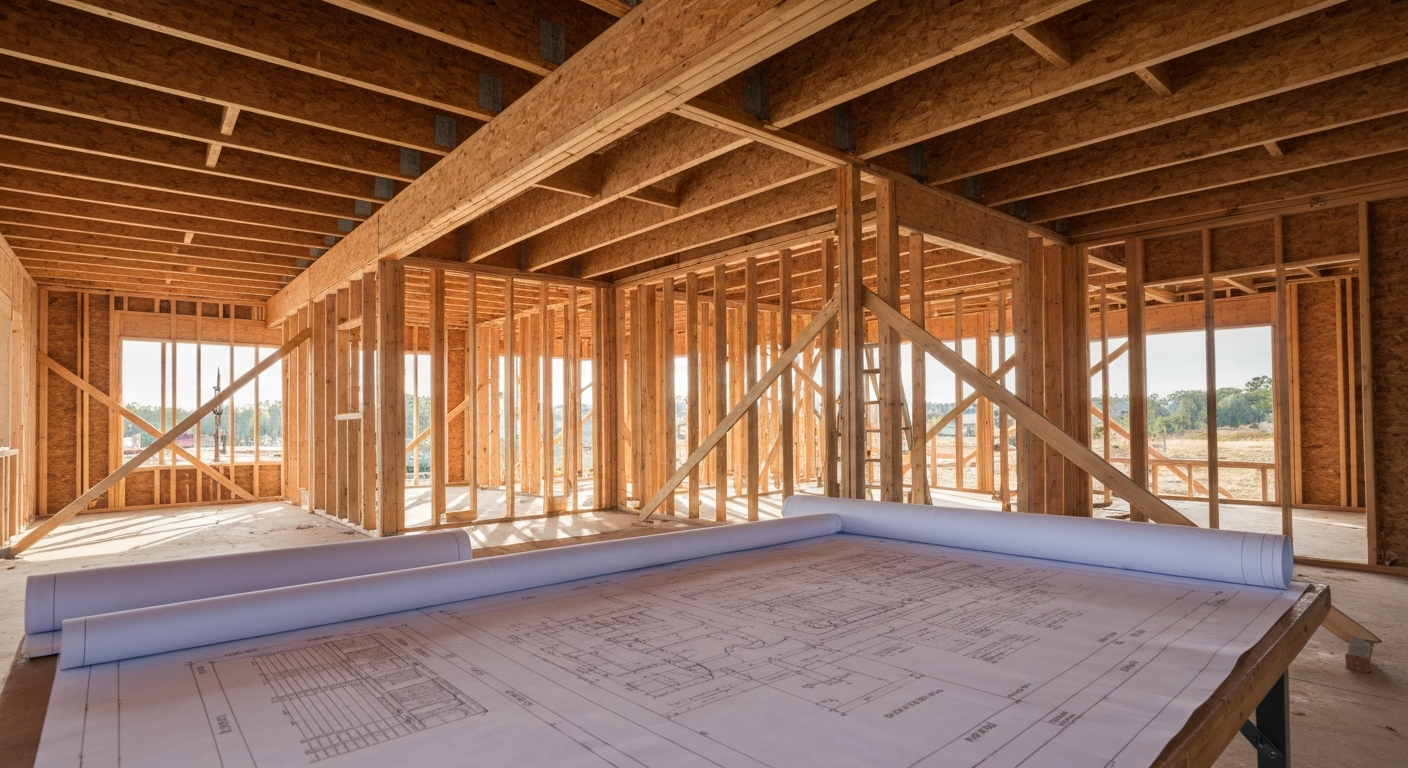
The pattern is consistent: decisions made on paper cost a fraction of decisions made in the field. The investment in a detailed pre-construction planning process, including hiring an architect or designer to produce construction documents before you solicit bids, pays for itself many times over.
What a real budget document includes:
A complete pre-construction budget should account for land cost (if not already owned), site preparation and grading, foundation type and specifications, framing labor and materials, roofing system, windows and exterior doors, exterior cladding, insulation specifications, HVAC system design and equipment, plumbing rough-in and fixtures, electrical rough-in and panel, drywall and interior finishes, flooring, cabinetry and countertops, interior doors and hardware, paint, appliances, landscaping, driveway and hardscape, permits and inspection fees, architectural and engineering fees, builder overhead and profit margin, and the contingency reserve.
If any of these line items are listed as a lump sum or a single allowance without specifics, that is a budget gap, and budget gaps become overruns.
Choose a Simpler Footprint and Save Before Breaking Ground
The geometry of your house is one of the most underappreciated cost drivers in residential construction. Every exterior corner adds framing labor. Every roofline transition adds complexity, flashing, and leak risk. Every bump-out and bay window adds cost while adding minimal livable space.
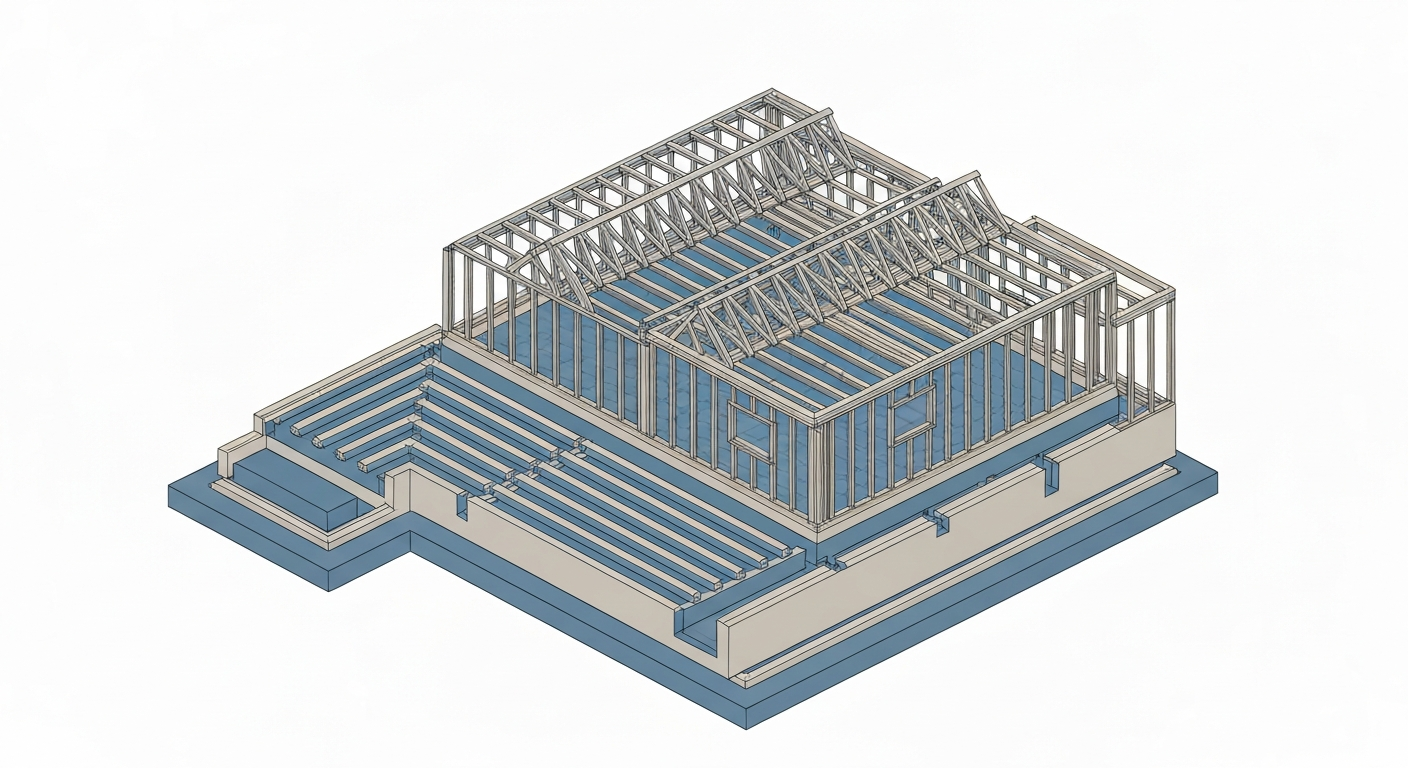
A simple rectangular or square footprint is consistently the least expensive to build. The reason is mechanical: fewer corners means less framing labor, less exterior cladding waste, less foundation complexity, and a simpler roofline. A gable roof over a rectangle is the lowest-cost roofing configuration available. A hip roof, a roof with multiple valleys, or a roof with dormers adds significant cost.
The U.S. Census Bureau reports that the average new single-family home has grown from approximately 1,500 square feet in the 1970s to over 2,300 square feet today. That growth has contributed meaningfully to rising construction costs, both in raw material and in the complexity that comes with larger, more articulated floor plans.
The table below illustrates the approximate cost impact of common design decisions:
| Design Decision | Cost Impact per Square Foot | Notes |
|---|---|---|
| Simple rectangle vs L-shape footprint | +$8 - $15/sq ft for L-shape | More corners, more foundation perimeter |
| Gable roof vs hip roof | +$3,000 - $8,000 for hip | More complex framing and flashing |
| Each additional roofline valley | +$1,500 - $4,000 per valley | Leak risk plus labor |
| Basement vs slab foundation | +$20,000 - $50,000 for basement | Varies greatly by region and soil |
| Vaulted ceilings vs standard 9-ft | +$10,000 - $25,000 for vaulted | Framing complexity plus HVAC impact |
| Open floor plan vs compartmentalized | Neutral to slight savings | Fewer interior walls offsets some HVAC complexity |
| Attached garage vs detached | Attached typically cheaper | Shared wall reduces material and foundation |
COST IMPACT OF FOOTPRINT COMPLEXITY
(Relative cost index, simple rectangle = 100)

Simple Rectangle        |||||||||||||||||||||  100
L-Shape Footprint       ||||||||||||||||||||||||  115
U-Shape Footprint       |||||||||||||||||||||||||||  128
Irregular/Custom        |||||||||||||||||||||||||||||||||  145+

Each step up in complexity adds framing labor,
foundation perimeter, exterior finish area,
and roofline transitions.
The practical implication is straightforward. Before finalizing your floor plan, ask your architect or designer to calculate the exterior perimeter-to-floor-area ratio. A more compact design with a lower ratio will cost less to build and less to heat and cool over its lifetime.
(Read more: Innovating Modern Home Construction)
Separate Structure From Finishes in Your Thinking
One of the most effective frameworks for managing construction costs is distinguishing between structural decisions, which are expensive or impossible to change after construction, and finish decisions, which can be upgraded over time as budget allows.
This distinction changes how you allocate your budget and how you think about tradeoffs.
Invest fully in structural and systems decisions:
Foundation quality and waterproofing, framing specification and quality, roof materials and underlayment, insulation and air sealing, window performance ratings, electrical panel capacity, plumbing rough-in locations, HVAC system design and equipment quality, and exterior moisture barrier all belong in this category. Cutting costs here creates problems that are expensive to fix later, or that quietly cost money every month through inefficiency.
Defer or downgrade finish decisions:
Flooring can be upgraded over time. Builder-grade laminate countertops perform adequately and can be replaced with stone when budget allows. Appliances can start at builder grade. Light fixtures are easy to swap. Interior doors and hardware can be upgraded. Landscaping beyond basic seeding can wait. Paint colors cost the same regardless of brand tier in most cases.
The table below organizes common construction decisions by this framework:
| Decision | Category | Strategy |
|---|---|---|
| Foundation type and waterproofing | Structural | Invest fully, never cut |
| Framing lumber grade | Structural | Do not downgrade |
| Roof shingles (30-year vs 50-year) | Structural | Worth the upgrade |
| Window U-factor and SHGC | Structural | Energy payback justifies cost |
| Insulation R-value | Structural | Invest beyond minimum code |
| Electrical panel size | Structural | Upsize now, costs nothing relative to later |
| Plumbing rough-in for future bath | Structural | Add it now if the plan might ever change |
| Kitchen countertops | Finish | Start with laminate, upgrade later |
| Flooring | Finish | Concrete slab or basic LVP now, upgrade later |
| Appliances | Finish | Builder grade now, upgrade at your timeline |
| Light fixtures | Finish | Basic and functional, easy to swap |
| Landscaping and hardscape | Finish | Seed the lawn, hardscape when budget allows |
| Interior door hardware | Finish | Basic now, upgrade as rooms get used |
This framework also applies to square footage. A smaller, well-built home with excellent structure and systems is a better long-term investment than a larger home with compromised structural or mechanical quality. The cost per square foot of a 1,600 sq ft home built to a high structural standard is almost always more sustainable than the cost per square foot of a 2,200 sq ft home where savings were found in insulation, windows, and mechanical systems.
(Read more: what a 1,500 sq ft house costs to build)
(Read more: How Much Does It Cost to Build or Renovate a Home)
Concrete Block Construction: The Case for CMU Homes
Concrete block construction, formally called CMU (Concrete Masonry Unit) construction, is a building method that uses solid or hollow concrete blocks as the primary wall system instead of wood framing. It is the dominant residential construction method in Florida and much of the Southeast, and it deserves serious consideration in any region where the conditions favor it.
The financial case for CMU construction rests on several factors:
Insurance savings: In hurricane-prone states, CMU homes often qualify for substantially lower homeowner insurance premiums compared to wood-frame construction. In Florida, this difference can amount to thousands of dollars per year, which over a 30-year mortgage adds up to a significant financial advantage.
Energy efficiency: Concrete has high thermal mass, meaning it absorbs heat slowly and releases it slowly. In climates with large day-to-night temperature swings, this characteristic reduces HVAC load and energy costs. According to the Portland Cement Association, concrete homes can reduce energy consumption for heating and cooling by 20-25% compared to wood-frame homes of the same size and insulation specification.
Durability and maintenance: CMU walls do not rot, are not susceptible to termite damage, and do not require the same exterior maintenance as wood-frame construction. Over a 30-year ownership period, these savings are meaningful.
Fire resistance: Concrete block construction provides significantly better fire resistance than wood frame, which can affect both insurance rates and resale value.
The table below compares the two construction methods across key financial dimensions:
| Factor | Wood Frame | Concrete Block (CMU) |
|---|---|---|
| Upfront construction cost | Lower in most markets | 5-15% higher on average |
| Annual insurance (hurricane zones) | Higher | Meaningfully lower |
| Energy costs (hot climates) | Baseline | 15-25% lower annually |
| Termite treatment and risk | Ongoing cost | Minimal to none |
| Exterior maintenance cycle | 5-10 years | 15-25 years |
| Fire resistance rating | Lower | Significantly higher |
| Resale value in hurricane zones | Market dependent | Premium in affected markets |
COST COMPARISON OVER 30 YEARS: Wood Frame vs CMU
(Hypothetical 2,000 sq ft home in Florida, approximate values)

                          Wood Frame    CMU Construction
-----------------------------------------------------------
Initial Build Cost         $320,000         $345,000
Insurance Savings (30yr)         $0          +$45,000
Energy Savings (30yr)            $0          +$28,000
Maintenance Savings (30yr)       $0          +$12,000
-----------------------------------------------------------
Effective 30-Year Cost     $320,000         $260,000

Note: Savings figures are estimates based on industry averages.
Individual results vary by location, insurer, and energy costs.
If you are building in Florida, coastal Georgia, South Carolina, or any hurricane-risk region, CMU construction should be on your comparison list before you commit to a construction method.
(Read more: Types of Residential Construction Methods)
Pole Construction Homes: A Genuine Cost-Saving Option for the Right Situation
Pole construction homes, also called post-frame homes or pole barn homes, use large vertical posts anchored into the ground as the primary structural system. This eliminates the need for a full perimeter foundation, which is one of the most expensive components of conventional residential construction.
Post-frame construction originated in agricultural buildings and has evolved significantly. Modern post-frame homes can be fully finished, well-insulated, architecturally attractive, and indistinguishable from stick-built homes on the interior.
The cost advantage is real. Industry data from the Frame Building News and the National Frame Building Association consistently shows that post-frame homes cost 20-40% less per square foot than comparable stick-built homes, primarily because:
- No full perimeter concrete foundation is required
- The structural system goes up faster, reducing labor costs
- The open-span capability reduces or eliminates interior load-bearing walls
- The construction schedule is typically shorter, reducing builder overhead
| Factor | Stick-Built (Conventional) | Post-Frame (Pole Construction) |
|---|---|---|
| Foundation requirement | Full perimeter or slab | Buried posts, no perimeter foundation |
| Average cost per sq ft | $150 - $300 | $90 - $180 |
| Construction timeline | 6-12 months | 3-6 months typically |
| Interior flexibility | Standard | High (open spans possible) |
| Financing availability | Standard conventional mortgages | More limited, may require specific lenders |
| Permitting | Standard residential | Varies by jurisdiction |
| Energy efficiency (well-built) | Standard | Comparable when properly insulated |
| Best use case | All climates, all sites | Rural land, sloped lots, cost-priority builds |
The tradeoffs are worth understanding clearly. Financing a post-frame home can be more complex because many conventional lenders are not familiar with the construction method. Some jurisdictions do not permit post-frame as a primary residence. And resale to a buyer using conventional financing can be more complicated in some markets.
For the right buyer in the right location, however, post-frame construction represents one of the most significant cost-saving opportunities available in residential construction today.
Who post-frame construction is right for:
Buyers building on rural land where foundation costs would be high due to soil conditions, buyers who prioritize cost per square foot above all other considerations, buyers in jurisdictions where post-frame residential is permitted and accepted, buyers who plan to stay long-term and are not prioritizing near-term resale, and buyers comfortable working with lenders experienced in non-conventional construction financing.
(Read more: How to Choose a Home Builder or Contractor)
Getting Competitive Bids and Understanding What You Are Comparing
Most homebuilders know to get multiple bids. Fewer know how to compare them accurately. This gap is where significant money is lost.
A low total bid number is not evidence of a better deal. It is frequently evidence of one of three things: lower quality specifications than the other bidders assumed, lower allowances that will generate overages during construction, or a contractor who has underestimated the scope and will request change orders once work begins.
The table below shows the most common ways bids are structured and what each means for the owner:
| Bid Type | How It Works | Owner Risk Level | Best Used When |
|---|---|---|---|
| Fixed-price (lump sum) | Contractor commits to a total price | Low (if scope is clear) | Complete construction documents exist |
| Cost-plus percentage | Owner pays costs plus contractor markup | High | Rarely advisable for first-time builders |
| Cost-plus fixed fee | Owner pays costs plus a fixed fee | Medium | When scope is partially defined |
| GMP (Guaranteed Maximum Price) | Cost-plus with a ceiling | Medium-Low | Larger projects with defined scope |
For most residential custom home builds, a fixed-price contract with a complete set of construction documents is the goal. The more detailed the construction documents, the more accurate and comparable the bids will be.
The allowance problem:
Allowances are budget placeholders for items the contractor cannot price specifically at bid time, typically because the owner has not yet selected them. Common allowances include flooring, countertops, fixtures, appliances, and lighting.
Low allowances are the most common source of sticker shock in residential construction. A builder who bids $8,000 for kitchen cabinet allowances while the next bidder allocates $18,000 is not giving you a better price. He is giving you an allowance that will require overages to reach any reasonable kitchen finish.
THE ALLOWANCE COMPARISON PROBLEM
(Why the lowest bid is not always the cheapest)

                      Bidder A     Bidder B     Bidder C
---------------------------------------------------------
Base Construction    $285,000     $310,000     $298,000
Flooring Allowance    $8,000      $16,000      $14,000
Cabinet Allowance     $9,000      $20,000      $17,000
Fixture Allowance     $4,000       $8,500       $7,000
Appliance Allowance   $6,000      $12,000       $9,500
---------------------------------------------------------
Total as Bid        $312,000     $366,500     $345,500

If actual selections cost:
Flooring             $15,000      $15,000      $15,000
Cabinets             $18,000      $18,000      $18,000
Fixtures              $8,000       $8,000       $8,000
Appliances           $11,000      $11,000      $11,000

Realistic Total     $361,000     $366,500     $363,000

Bidder A was not cheaper. The gap closed entirely.
When soliciting bids, ask every contractor to provide their standard allowances in writing for flooring, cabinets, countertops, fixtures, appliances, and landscaping. Compare those allowances across bids before you compare the totals.
The Energy Efficiency Investment That Pays for Itself
Cutting costs on insulation, windows, and HVAC efficiency is one of the most common and most consequential budget errors in residential construction. These investments have measurable, documented returns that begin accruing on the first utility bill and continue for the life of the home.
The U.S. Department of Energy estimates that a well-insulated home with high-performance windows can reduce heating and cooling energy consumption by 20-30% compared to a home built to minimum code. Over a 30-year mortgage, that difference accumulates into tens of thousands of dollars in utility savings.
The table below shows the approximate payback period for common energy efficiency upgrades in residential construction:
| Upgrade | Typical Added Cost | Annual Energy Savings | Payback Period |
|---|---|---|---|
| Insulation upgrade (R-13 to R-21 walls) | $1,500 - $3,500 | $200 - $500/year | 5-10 years |
| High-performance windows (U-0.30 vs U-0.50) | $3,000 - $8,000 | $300 - $700/year | 8-12 years |
| Air sealing package | $800 - $2,000 | $250 - $600/year | 3-6 years |
| High-efficiency HVAC (16 SEER vs 14 SEER) | $1,500 - $3,000 | $200 - $450/year | 5-9 years |
| Spray foam at rim joists | $500 - $1,200 | $150 - $350/year | 3-6 years |
| Solar-ready electrical rough-in | $300 - $800 | Enables future savings | N/A (one-time enabler) |
30-YEAR UTILITY COST COMPARISON
(2,000 sq ft home, average U.S. energy costs)

Energy Efficiency Level    Annual Cost    30-Year Total
------------------------------------------------------
Minimum code compliance      $2,800         $84,000
Moderate upgrades            $2,200         $66,000
High-performance envelope    $1,700         $51,000
------------------------------------------------------
Savings vs minimum code        --          $18,000 - $33,000

Upgrade investment needed:  $8,000 - $15,000
Net 30-year benefit:       $10,000 - $25,000+
The HERS (Home Energy Rating System) score is a standardized measure of a home's energy efficiency. A score of 100 represents a home built to the 2006 IECC code baseline. A score of 70 means the home is 30% more efficient. Many high-performance homes achieve scores of 50 or below. Ask your builder what HERS score your home is designed to achieve and what it would take to improve that score during construction.
Additionally, many states and utilities offer rebates and tax credits for energy-efficient construction. The federal Energy Efficient Home Credit (Section 45L) provides tax credits to builders for homes that meet certain efficiency thresholds. Your builder should be aware of applicable programs, and you should ask about them specifically.
(Read more: Energy Efficient House Features)
Modular Home Construction: Faster, Leaner, and Worth Considering
Modular home construction involves building sections of the home in a controlled factory environment and then assembling them on-site. The result is a home that is structurally identical to stick-built construction, meets the same local building codes, and carries the same financing and insurance treatment as any conventionally built home.
The cost and timeline advantages of modular construction are well-documented:
Cost savings: Modular construction typically costs 10-20% less than comparable stick-built construction. The savings come from factory efficiency (bulk material purchasing, minimal weather delays, lower labor overhead) and a faster construction timeline that reduces builder carrying costs.
Timeline: A modular home can be delivered and set on its foundation in a matter of weeks rather than months. Total project time from contract to move-in is typically 4-6 months, compared to 8-14 months for a comparable stick-built home.
Quality control: Factory construction environments allow for tighter quality control than on-site construction, particularly in framing, insulation installation, and moisture management.
| Factor | Stick-Built | Modular |
|---|---|---|
| Construction cost per sq ft | $150 - $300 | $120 - $240 |
| Average construction timeline | 8-14 months | 4-7 months |
| Weather delay risk | High | Low (factory-built) |
| Financing treatment | Standard | Same as stick-built |
| Appraisal treatment | Standard | Same as stick-built |
| Design flexibility | High | Moderate (within manufacturer options) |
| Resale market | Standard | Comparable to stick-built |
| Energy efficiency | Code to high-performance | Often above code standard |
The primary limitation of modular construction is design flexibility. While manufacturers offer a wide range of floor plans and finish options, truly custom architectural features may not be available. For buyers with specific or unusual design requirements, modular may not be the right fit. For buyers whose priorities are cost, timeline, and quality consistency, it deserves serious consideration.
(Read more: Modular vs Manufactured Homes: What is the Difference)
Affordable New Construction Homes: How Builders Keep Costs Down in Production Communities
Production homebuilders, the large national and regional builders who construct homes in planned communities, have refined cost management to a degree that custom builders cannot easily match. Understanding how they do it offers lessons that apply to custom builds as well.
The core strategy of production homebuilding is standardization. By offering a limited number of floor plans, a controlled selection of finish packages, and a standardized construction process, production builders achieve economies of scale that drive per-unit costs down substantially.
What production builders do that custom builders can learn from:
They buy materials in volume. A production builder buying lumber, windows, and roofing materials for 200 homes in a year pays significantly less per unit than a custom builder purchasing for a single home. If you are building custom, ask your builder about their supplier relationships and whether they can pass volume pricing on to you.
They limit design variations. Every unique detail in a custom home requires custom labor. Production builders limit unique details to a manageable set of options. Custom builders who are willing to work from a tighter set of design parameters can often negotiate lower costs.
They sequence work efficiently. Production builders have refined their construction sequences to minimize idle time between trades. Custom builds can be inefficient in sequencing, and every idle day on a job site is a cost someone is carrying.
The table below shows the typical cost difference between new construction options:
| Construction Type | Typical Cost per Sq Ft | Timeline | Customization Level |
|---|---|---|---|
| Production home (basic package) | $100 - $175 | 4-8 months | Low |
| Production home (upgraded package) | $150 - $220 | 4-8 months | Low-medium |
| Semi-custom (builder's plans, your selections) | $175 - $280 | 6-10 months | Medium |
| Full custom (your plans, your selections) | $250 - $400+ | 10-18 months | High |
| Modular custom | $120 - $240 | 4-7 months | Medium |
| Post-frame/pole construction | $90 - $180 | 3-6 months | Medium |
If your budget is constrained and your priorities are getting into a well-built home efficiently, production or semi-custom construction deserves a serious look. Many production builders now offer significant upgrade options that allow meaningful personalization within their standard floor plan library.
Timing Your Build to Reduce Costs
Construction demand in the United States is seasonal. Spring and summer are peak season for residential construction across most of the country. Contractors are busiest, subcontractors are harder to schedule, and material lead times stretch.
Building in fall or early winter offers several cost advantages in regions where weather permits:
More contractor availability tends to produce more competitive bids. A contractor who is turning away work in June has no reason to sharpen his pencil. A contractor looking at a slow January has every reason to come in aggressively.
Permit offices and inspection departments typically move faster in off-peak months, which can reduce schedule delays.
Some material categories, particularly lumber, have historically shown seasonal price variation, with prices softening in fall and winter as construction activity slows.
The table below shows approximate contractor availability and bid competitiveness by season in the continental United States:
| Season | Contractor Availability | Bid Competitiveness | Weather Risk (Mid-Atlantic/South) | Weather Risk (Midwest/North) |
|---|---|---|---|---|
| Spring (Mar-May) | Low | Low | Low-medium | Medium |
| Summer (Jun-Aug) | Very low | Very low | Low | Low |
| Fall (Sep-Nov) | Medium-high | Medium-high | Low | Medium-high |
| Winter (Dec-Feb) | High | High | Low-medium | High |
This strategy does not work everywhere. In northern climates, winter construction carries real weather risks and schedule impacts. In the South, the Southeast, and the Southwest, fall and winter construction is entirely practical and the cost benefits are real. For state-level schedules, see how long it takes to build a house in Texas and in North Carolina.
Home Construction Insurance: A Cost You Cannot Skip
Home construction insurance, formally called builders risk insurance or course of construction insurance, is one of the soft costs that first-time builders most commonly underestimate or overlook entirely.
Builders risk insurance covers the structure under construction against damage from fire, wind, theft, and certain other perils during the construction period. It is not the same as homeowners insurance, which covers a completed home.
Without builders risk coverage, a fire or windstorm during construction could mean absorbing the entire reconstruction cost out of pocket, with no insurance recovery. Many lenders require proof of builders risk coverage before disbursing construction loan funds.
The cost of builders risk insurance varies by project size, location, and coverage terms. For a $300,000 home, annual premiums typically range from $900 to $3,000, depending on the location and coverage scope.
| Coverage Type | What It Covers | Typical Cost | Who Carries It |
|---|---|---|---|
| Builders risk (course of construction) | Structure during construction | 0.3-1.0% of project value annually | Owner or general contractor |
| General contractor liability | Contractor negligence and injuries | Carried by contractor | General contractor |
| Subcontractor liability | Subcontractor work and injuries | Carried by each sub | Each subcontractor |
| Workers compensation | Job-site worker injuries | Carried by contractor | General contractor |
| Performance bond | Contractor completion guarantee | 1-3% of contract value | General contractor (if required) |
Before signing a construction contract, verify that your general contractor carries current general liability and workers compensation insurance. Request certificates of insurance for all major subcontractors. And purchase your own builders risk policy to protect your investment during the construction period.
(Read more: Home Construction Insurance: What You Need to Know)
How to Hire the Right General Contractor Without Overpaying
The general contractor is the most consequential hire in any residential construction project. A skilled, well-organized GC keeps subcontractors on schedule, catches problems before they become expensive, manages the permit process efficiently, and communicates proactively. A disorganized or dishonest GC is the single most common source of budget overruns, schedule failures, and construction defects.
Hiring the right general contractor is itself a cost-saving strategy.
The verification checklist before signing any contract:
Licensing and insurance should be the first items you verify, not the last. Every general contractor working on residential construction in the United States must hold a valid state contractor's license in states that require them (most do). Verify the license number directly through your state's contractor licensing board, not just by taking the contractor's word for it. Confirm that general liability insurance and workers compensation coverage are current and adequate for your project size.
References from recent projects are the most reliable predictor of performance. Ask for three to five references from projects completed in the last two years and actually call them. Ask whether the project finished on time, whether it finished on budget, how the contractor handled problems when they arose, and whether the client would hire the same contractor again.
The table below outlines what to verify before signing a construction contract:
| Verification Item | How to Check | Red Flag |
|---|---|---|
| State contractor license | State licensing board website | Expired, suspended, or complaints on file |
| General liability insurance | Certificate of insurance from insurer | Coverage below $1M per occurrence |
| Workers compensation | Certificate of insurance | Not carried or lapsed |
| Subcontractor insurance | Request certs from major subs | Absent or unverifiable |
| Recent references | Direct phone calls | Unwilling to provide or references unreachable |
| BBB and online reviews | BBB.org, Google, Houzz | Pattern of unresolved complaints |
| Lien history | County recorder's office | Unpaid subcontractor liens on past projects |
| Financial stability | Ask directly | Reluctance to discuss or vague answers |
Understanding the payment schedule:
A payment schedule that front-loads money to the contractor before work is performed is a warning sign. Standard construction payment schedules are tied to project milestones: a deposit at contract signing (typically 10-15%), then draws tied to completion of foundation, framing, rough-ins, drywall, and final completion.
Never pay for work that has not been performed. Never pay the final draw until all punch list items are complete, all inspections are passed, all lien waivers from subcontractors and suppliers have been collected, and all warranties and manuals for installed equipment have been delivered.
| Payment Stage | Typical Percentage | Milestone |
|---|---|---|
| Contract deposit | 10-15% | Signed contract, permits applied |
| Foundation draw | 10-15% | Foundation complete and inspected |
| Framing draw | 15-20% | Framing complete and inspected |
| Rough-in draw | 15-20% | Electrical, plumbing, HVAC rough-ins complete |
| Drywall draw | 10-15% | Drywall hung and finished |
| Substantial completion | 10-15% | Certificate of occupancy issued |
| Final payment | 5-10% | Punch list complete, all documentation received |
Retaining 5-10% of the contract value until full completion is a standard and reasonable practice that protects the owner's interest and gives the contractor clear financial incentive to complete the punch list.
Questions to ask every general contractor before signing:
Ask how many projects they are currently managing and whether yours would have their direct attention or be managed by a project superintendent. Ask how they handle subcontractor scheduling and what happens when a subcontractor does not show up. Ask how they communicate with owners: daily logs, weekly meetings, or on-demand only. Ask what their standard process is for handling change orders and how change order pricing is determined. Ask who their primary subcontractors are for framing, mechanical, and electrical work, and how long they have worked with those subs.
The answers reveal as much as the references do.
(Read more: How to Choose a Home Builder or Contractor)
Building on Your Own Land: What Changes About the Cost Equation
Building on land you already own, or land you are purchasing as part of the project, changes the cost equation in ways that first-time builders often do not fully account for. For a broader plan, read how to save money on building a house and our structural design guide to see how foundation and soil choices affect cost.
Land preparation costs vary enormously depending on the condition of the lot, its topography, soil type, access to utilities, and local requirements. A flat, cleared lot in a developed subdivision with utilities already at the property line is a very different financial situation from a rural wooded lot with no utilities, a sloped terrain, and a long driveway to construct.
The table below outlines the major site development costs that can arise when building on raw or rural land:
| Site Development Item | Low Estimate | High Estimate | Notes |
|---|---|---|---|
| Land clearing and grubbing | $1,500 | $8,000+ | Depends on trees and vegetation |
| Grading and excavation | $2,000 | $15,000+ | Slope and soil type are key variables |
| Well drilling | $5,000 | $20,000+ | Depth to water table varies widely |
| Septic system installation | $6,000 | $25,000+ | Perc test required; varies by soil |
| Driveway construction | $3,000 | $20,000+ | Length and surface material |
| Utility connections (electric) | $1,000 | $30,000+ | Distance to nearest pole is key |
| Utility connections (gas) | $500 | $15,000+ | If available in area |
| Retaining walls | $5,000 | $50,000+ | Required on sloped lots |
| Soil testing and geotechnical report | $800 | $3,500 | Often required before foundation design |
SITE DEVELOPMENT COST SCENARIOS
(Approximate ranges for illustrative purposes)

Scenario 1: Flat subdivided lot, utilities at property line
Site development cost:  $3,000 - $8,000

Scenario 2: Cleared rural lot, utilities 200ft from road
Site development cost:  $20,000 - $45,000

Scenario 3: Wooded sloped lot, well and septic required
Site development cost:  $40,000 - $90,000+

These costs come before a single wall is framed.
They must be fully accounted for in the land cost analysis.
If you are purchasing land as part of your project, commission a site evaluation before you close. A geotechnical report, a utility feasibility assessment, and a conversation with the local building department about setbacks, zoning, and permit requirements can reveal cost factors that significantly affect the total project budget. Discovering after purchase that a lot requires $60,000 in site work you did not anticipate is an expensive lesson.
(Read more: What to Know Before Buying Land to Build a House)
Key Takeaways
Every decision in residential construction is a financial decision. The homebuilders who finish on budget are the ones who treated planning as the most important phase of the project, understood where their budget was actually going, separated the decisions they needed to make now from the ones that could wait, and built with an eye toward long-term cost of ownership rather than just upfront construction cost.
The strategies covered in this guide are not theoretical. They are the practices that consistently separate on-budget builds from overrun projects, and well-built homes from homes that cost money every month to operate and maintain.
Build on a simple footprint. Invest in structure and energy performance. Defer upgradeable finishes. Get itemized bids and compare allowances. Consider the construction methods that fit your site and situation. Protect your investment with proper insurance. And start every decision with the question that matters most: what does this cost me over the life of the home, not just on the day I close?
Frequently Asked Questions
What is the most cost-effective way to build a house? The most effective strategies for reducing construction costs are simplifying the floor plan geometry, investing in energy efficiency over cosmetic finishes, getting at least three fully itemized contractor bids with detailed allowance breakdowns, considering alternative construction methods like post-frame or modular for the right sites, and setting a firm budget with a minimum 10-15% contingency before breaking ground.
What is pole construction and how much does it save? Pole construction, also called post-frame construction, uses large vertical posts anchored into the ground as the structural system, eliminating the need for a full perimeter foundation. It typically costs 20-40% less per square foot than conventional stick-built construction. It works best on rural land, sloped lots, or sites where foundation costs would otherwise be high. Financing can be more complex than for conventional homes.
Is concrete block construction more expensive than wood frame? Concrete block (CMU) construction typically costs 5-15% more than wood frame upfront in most markets. However, in hurricane-prone regions, the savings on insurance premiums and energy costs can more than offset the higher construction cost over a 10-20 year period. In Florida and coastal southeastern states, CMU is often the financially superior choice when total cost of ownership is considered.
What should I never cut corners on when building a house? Foundation quality and waterproofing, structural framing, roof materials and installation, insulation and air sealing, windows, and electrical panel capacity are areas where reducing specifications creates problems that are either expensive to correct later or that quietly increase your operating costs for decades. These are the wrong places to reduce the budget.
How does modular construction compare to stick-built for cost savings? Modular construction typically costs 10-20% less than comparable stick-built construction and takes significantly less time, usually 4-7 months total versus 8-14 months for a comparable custom home. Modular homes meet the same local building codes as stick-built homes and are treated identically by lenders and insurers. The tradeoff is less design flexibility than a fully custom stick-built home.
What is builders risk insurance and do I need it? Builders risk insurance, also called course of construction insurance, covers your home while it is being built against fire, wind, theft, and certain other perils. Without it, a loss during construction could mean absorbing the full reconstruction cost without insurance recovery. Most construction lenders require it. For a $300,000 project, annual premiums typically range from $900 to $3,000 depending on location and coverage terms.
How much contingency should I budget for home construction? A minimum of 10% contingency is standard industry practice for production and semi-custom builds. For fully custom homes, 15% is more appropriate. This reserve exists to cover cost overruns, scope changes, unforeseen site conditions, and price escalation on materials. Treating the contingency as off-limits until a real need arises is the discipline that separates on-budget builds from overrun projects.