The home remodeling industry has quietly become one of the most consequential pieces of the American housing economy. As mortgage rates and low housing inventory keep homeowners in their current properties longer, total spending on residential renovation and repair continues to hit record levels. However, what homeowners are spending their money on - and what buyers are willing to pay for at resale - is shifting rapidly.
This is no longer a market driven purely by aesthetic upgrades for the sake of television-ready reveals. The modern remodeling market is highly pragmatic. It is driven by the need to age in place, the desire for functional outdoor living, the necessity of energy efficiency, and a sharp awareness of the gap between project cost and resale value.
Some long-running design assumptions have completely flipped. Traditional ROI rankings have reshuffled, placing exterior curb appeal far above luxury interior overhauls. Supply chain realities and material tariffs have fundamentally changed how contractors source cabinetry and finishes. And the most popular interior project is no longer a six-figure custom overhaul - it is a strategic, minor kitchen refresh that consistently returns more than it costs.
If you are planning a renovation project, evaluating a property for investment, or working as a residential contractor, understanding these shifts is critical. This comprehensive guide breaks down the data behind modern home remodeling trends, where the real return on investment (ROI) lives, and what the market is actually rewarding.
Key Takeaways
- Exterior Projects Dominate ROI: The projects with the highest percentage return at resale are almost entirely focused on curb appeal, including garage doors, steel entry doors, and manufactured stone veneer.
- Minor Over Major in the Kitchen: A minor, midrange kitchen remodel consistently yields a higher percentage return (often exceeding 100%) than a major, upscale kitchen gut-renovation.
- The End of the All-White Kitchen: For the first time in a decade, warm wood cabinets have surpassed white cabinets in homeowner preference, signaling a broader shift toward warmer, more personalized interiors.
- Aging-in-Place is Mainstream: Universal design features like curbless showers and wider doorways are no longer considered niche accessibility modifications; they are now standard elements of high-quality bathroom design.
- Outdoor Living as Square Footage: Decks, patios, and structured outdoor "garden rooms" are seeing massive investment as homeowners look for cost-effective ways to expand their usable living space without the expense of a structural addition.
- Material Sourcing Matters: Tariffs on imported materials have shifted the cost dynamics of cabinetry, making domestic sourcing more competitive and forcing contractors to re-evaluate their supply chains.
The Big Reset: Wood Cabinets Dethrone White
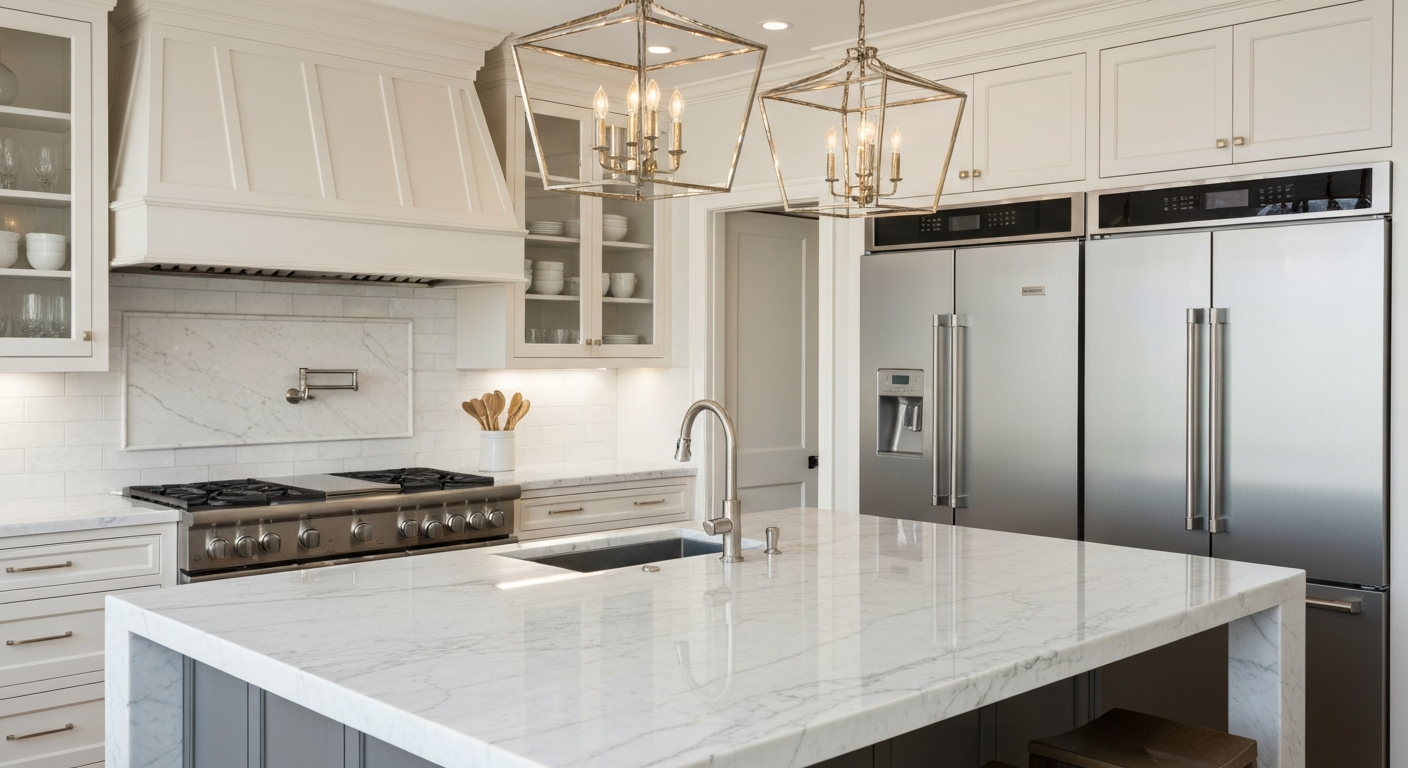
For nearly a decade, the all-white kitchen was the undisputed default of American home design. Builder showrooms led with it. Real estate stagers leaned on it. Home improvement television made it gospel. It was considered the safest, most universally appealing choice a homeowner could make.
That era has officially ended.
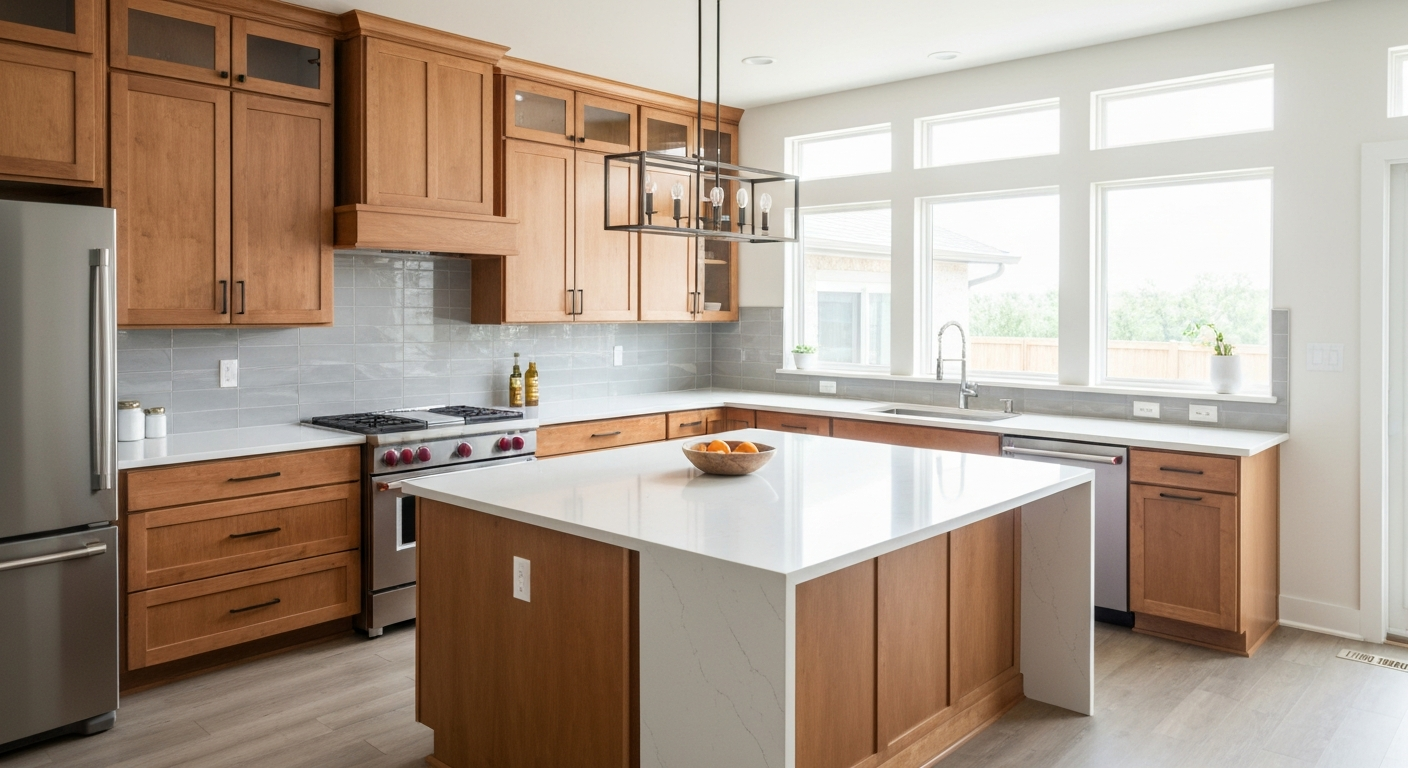
Recent industry data, including extensive surveys of homeowners who recently completed or are planning kitchen remodels, reveals a definitive shift: wood cabinets have now surpassed white cabinets as the most popular choice. The margin may be thin, but the trajectory is unmistakable, confirmed by parallel data from major kitchen and bath associations and design firms reporting from the field.
This is not a sudden, unpredictable swerve. It is the culmination of a slow build. Warm midtone woods, walnut, white oak, and natural-grain finishes have been climbing the trend lists for several years. What changed recently is that homeowners stopped treating wood as a bold, risky choice and started treating stark white as a dated, overly sterile one.
The Broader Shift Toward Warmth and Texture
The transition away from all-white kitchens is part of a much broader shift in interior color palettes and material preferences:
- Warm Neutrals Replacing Cool Grays: The ubiquitous "builder gray" of the 2010s has been entirely replaced by soft beiges, greiges, mushroom, taupe, and earthy clay tones. These warmer neutrals dominate wall colors, flooring choices, and large upholstery.
- Saturated Jewel-Tone Accents: While neutral bases remain popular, homeowners are introducing saturated colors in controlled, deliberate doses. Emerald green islands, deep navy lower cabinets, and sapphire-toned powder room vanities are highly requested. Two-tone kitchens (e.g., wood lowers with soft white uppers, or colored islands with neutral perimeter cabinets) remain a dominant strategy.
- Textured and Tactile Finishes: The demand for highly polished, perfectly smooth surfaces is waning. Instead, there is a surge in textured cabinet faces (fluted, reeded, and slatted wood), super-matte finishes that resist fingerprints, and natural stone with honed or leathered finishes rather than high-gloss polish. The "feel-it-with-your-hands" quality of a material is now a primary selling point.
- Color Drenching in Secondary Spaces: Painting walls, ceilings, doors, and trim in the exact same deep, saturated tone - once considered a severe design risk - is now one of the most specified looks for secondary bathrooms, powder rooms, home offices, and formal dining rooms.
The unifying thread across all these trends is a rejection of spaces that feel like generic rental staging. The modern palette is warmer, more lived-in, and highly personal. The design economics of "selling the listing photo" with generic white boxes are starting to lose to "making the house feel like a permanent home."
Where the ROI Actually Lives
There is a persistent disconnect between what design magazines showcase as beautiful and what actual real estate data proves is profitable. If you are remodeling purely for your own enjoyment and plan to stay in the home for twenty years, ROI is a secondary concern. But if you are remodeling with an eye toward eventual resale or appraisal value, the data tells a very specific story.
The industry's most cited sources for project-level resale return - such as the annual Cost vs. Value Report - analyze dozens of markets to determine which projects actually pay back their cost. The headline takeaway consistently surprises homeowners: the highest-ROI projects in America are almost all on the outside of the house, and the highest-ROI interior project is the smallest one.
Top Remodeling Projects by National ROI
| Remodeling Project | Average Job Cost | Average Resale Value | National ROI |
|---|---|---|---|
| Garage Door Replacement | $4,500 | $12,000 | 268% |
| Steel Entry Door Replacement | $2,500 | $5,400 | 216% |
| Manufactured Stone Veneer | $11,500 | $17,500 | 153% |
| Refinishing Hardwood Floors | $3,500 | $5,100 | 147% |
| Minor Kitchen Remodel (Midrange) | $28,000 | $31,500 | 113% |
| Wood Deck Addition | $18,200 | $17,300 | 95% |
| Fiber Cement Siding Replacement | $21,500 | $19,000 | 88% |
| Midrange Bathroom Remodel | $26,000 | $20,800 | 80% |
| Universal-Design Bathroom | $40,000 | $24,500 | 61% |
| Major Upscale Kitchen Remodel | $90,000+ | $32,000 | 36% |
Note: ROI percentages are national averages and can vary significantly by local market, neighborhood comp ceilings, and the specific quality of the work performed.
Analyzing the ROI Data
Several critical lessons jump off this table:
1. Curb Appeal is Supreme: The fact that a garage door replacement and a steel entry door replacement sit at the very top of the list is not an anomaly. Curb appeal is not a soft, subjective concept - it is the literal moment a buyer's offer takes shape. Buyers form an emotional and financial opinion of a house before they even walk through the front door. A new, high-quality garage door dramatically updates the facade of a home for a fraction of the cost of interior work.
2. The Minor vs. Major Kitchen Gap: The gap between a minor and major kitchen remodel is enormous and highly instructive. A $28,000 minor kitchen remodel (typically involving refacing or painting cabinets, replacing countertops, updating hardware, and buying new energy-efficient appliances while keeping the existing layout) returns over 100%. You get back more than you spent. Conversely, a $90,000+ major custom remodel (moving walls, changing plumbing lines, custom inset cabinetry, luxury appliances) returns roughly 36%. Buyers pay for clean, functional, and updated. They rarely pay dollar-for-dollar for your specific luxury tastes.
3. The Rise of Universal Design: One of the strongest single-year ROI gains in recent reporting went to a category most younger homeowners do not think about: universal-design bathrooms. This category jumped significantly in value recovery. As the buyer pool ages, features that allow for safe, long-term living are transitioning from "nice-to-have" to "must-have" for a massive demographic segment.
The overarching pattern across every interior category is identical: Midrange beats upscale on percentage return, every time, in almost every market. The dollar value added at the top of the spec sheet might be larger, but the percentage recovered is much smaller. The gap between cost and added value gets wider the more you spend.
The Kitchen Strategy: Refresh, Don't Rebuild
Kitchens remain the most-renovated room in America. They are the heart of the home, the center of entertaining, and the room most scrutinized by potential buyers. Real estate agents consistently report higher buyer demand for kitchen upgrades than for any other interior improvement.
However, the kind of kitchen project that wins in the current market looks very different from the gut-renovations of the past.
The median spend for a minor kitchen remodel sits around $20,000 to $28,000, while major remodels easily surpass $55,000, climbing to $75,000 or more for kitchens over 250 square feet. The homeowners spending at the very top of the market are the ones eating the largest ROI loss. For a full breakdown, see our kitchen remodel cost guide.
Making the Existing Footprint Work Harder
The most striking data point in recent kitchen renovation studies is that nearly 70% of renovating homeowners are keeping their kitchen the exact same size. Furthermore, over half are not changing the fundamental layout at all. Moving load-bearing walls, bumping out exterior additions, and completely relocating plumbing stacks are no longer the default moves. The new default is making the existing footprint work significantly harder through better storage and organization.
This functional optimization is playing out in several clear ways:
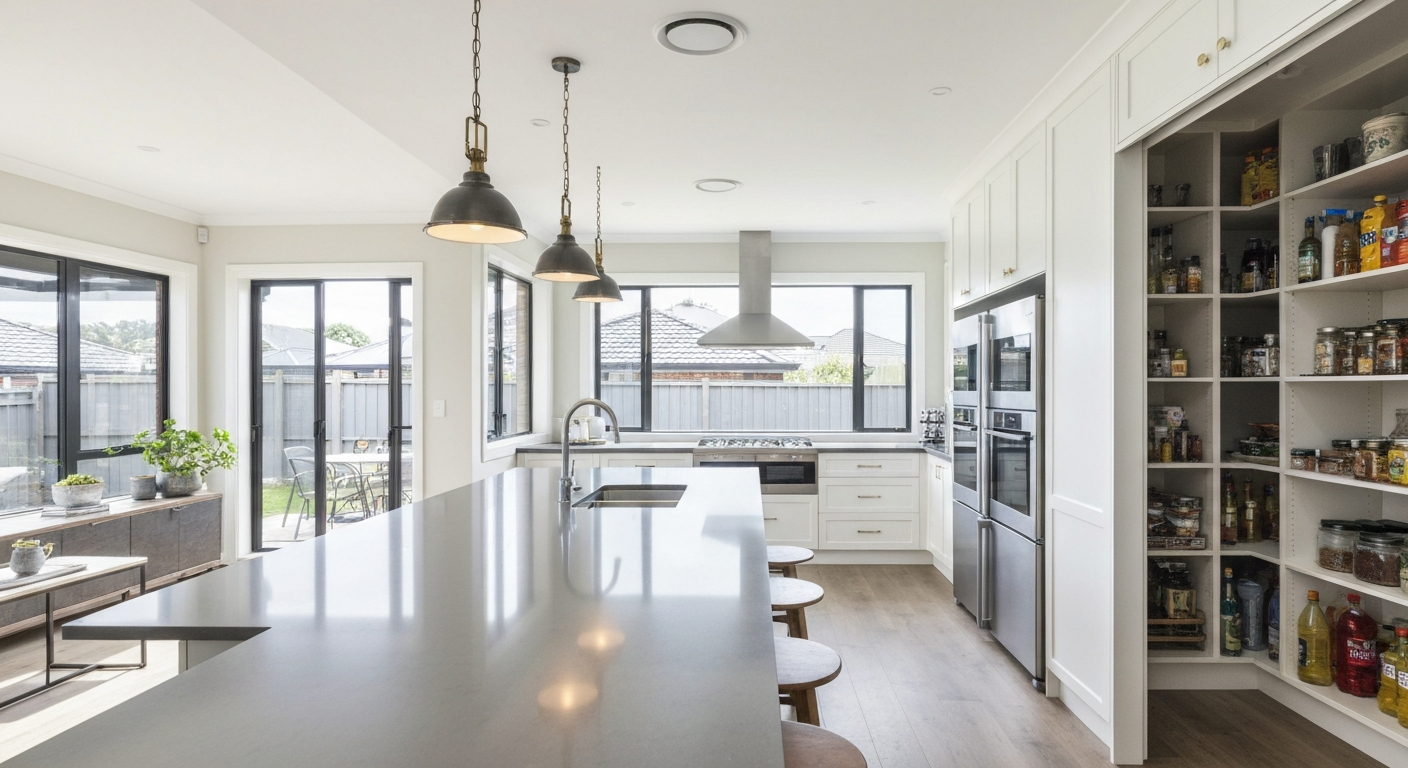
- Dedicated Pantries are Essential: Walk-in pantries or highly organized built-in pantry cabinets are the number one requested feature in kitchen remodels. Homeowners are prioritizing bulk storage and hiding small appliances.
- Beverage and Coffee Stations: Dedicated zones for coffee making, wine storage, or general beverage prep are now standard expectations in mid-to-high-end remodels, keeping traffic out of the primary cooking zone.
- The "Back Kitchen" Migration: Once reserved for ultra-luxury custom homes, the concept of a "scullery" or "back kitchen" is migrating into mainstream remodels. The visible, main kitchen stays clean and minimalist, while the prep mess, dirty dishes, and small appliances live in a secondary, hidden space.
- Upgrading Hard Surfaces: The vast majority of the budget in a minor remodel is concentrated on hard surfaces. Over 90% of homeowners upgrade countertops (with engineered quartz and quartzite dominating), and 85% upgrade backsplashes (with ceramic tile and continuous stone slabs leading the choices).
If you have a functional layout, the highest-ROI move is rarely tearing it down to the studs. It is a thoughtful, high-impact refresh of cabinets, counters, hardware, lighting, and appliances, kept tightly within the $20,000–$30,000 range.
Aging-in-Place is No Longer a Niche
This is perhaps the single biggest structural shift in the remodeling industry, and many homeowners and amateur flippers have not yet caught up to it.
According to extensive surveys by organizations like AARP, 75% of adults aged 50 and older state a strong desire to remain in their current home as they age. To make this possible, a massive wave of proactive remodeling is occurring. Over 70% of these homeowners expect to add bathroom modifications such as grab bars, no-slip flooring, or curbless showers.
Industry studies reflect this reality: nearly 70% of all bathroom remodelers now incorporate special-needs or aging-in-place features into their projects. Crucially, most of these homeowners are not designing for a medical need that exists today - they are designing for a need they expect to emerge in five, ten, or fifteen years.
This demographic reality matters for two major reasons:
1. It Changes the Definition of "Good Design"
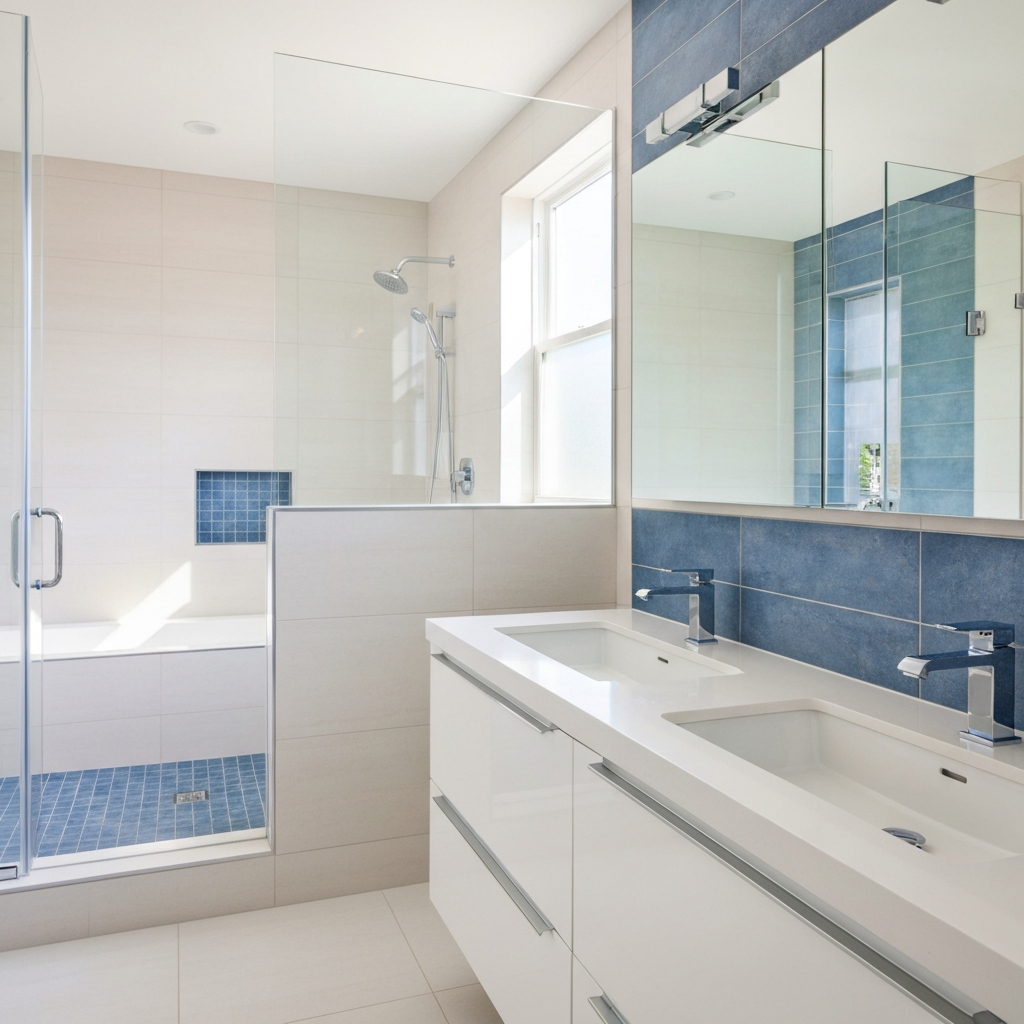
Historically, "accessibility features" looked medical, institutional, and clinical. That is no longer true. Features like curbless walk-in showers, wider doorways, lever-style door handles, knee space under sinks, contrasting countertop edges for better visibility, abundant undercabinet lighting, and deep pull-out drawers in lower cabinets are now simply considered better, more luxurious design. The design world has embraced universal design, proving that a bathroom can be fully accessible while looking like a high-end spa. None of it looks medical; all of it ages gracefully with the homeowner.
2. The Financial Case is Undeniable
The financial return on universal design has caught up to the demographic demand. Universal-design bath remodels have seen massive jumps in ROI. This gain comes at exactly the moment the Baby Boomer generation (who still account for over half of all renovators) and Generation X are prioritizing these features. The buyer pool for homes that do not require immediate accessibility retrofits is massive and highly motivated.
If you are remodeling a primary bathroom today, the question is no longer "should I include aging-in-place features?" The question is "which ones, and how beautifully can they be integrated?" Our bathroom remodel cost guide shows what a full bathroom project actually costs.
The Supply Chain Reality: Tariffs and Sourcing
If you are pricing a major kitchen or bathroom project, there is a macroeconomic data point your contractor is dealing with that directly impacts your budget: international trade tariffs.
Tariffs on imported materials - specifically kitchen cabinets, vanities, and certain flooring materials - have fundamentally altered the cost structure of remodeling. A significant share of the mid-market, budget, and ready-to-assemble (RTA) cabinetry sold in the U.S. has historically been imported.
As tariffs on these imported goods increase, the practical implications for homeowners are immediate:
- Import Pricing Has Risen: The cost advantage of imported cabinetry has shrunk significantly.
- Domestic Manufacturers Gain Ground: Domestic and North American cabinet manufacturers are highly competitive again, offering better lead times and comparable pricing to high-tariff imports.
- Sourcing Strategy is Critical: Locking in pricing early or explicitly choosing domestic product lines can produce meaningful savings on the cabinet line item.
Cabinets often account for 25% to 35% of a total kitchen budget. A 20% price increase on that single line item moves the total cost of the project by thousands of dollars. When planning a remodel, asking your designer or contractor about the country of origin and the tariff exposure of the materials you are selecting is a necessary part of budget management.
Outdoor Living: The Most Cost-Effective Square Footage
One of the clearest, most sustained trend lines in recent remodeling data is the dominance of outdoor projects. Well over half of all renovation activity now includes an outdoor component, with notable jumps in deck additions, outdoor lighting, exterior security, and comprehensive landscape redesign.
The ROI numbers support this shift:
- Wood Deck Additions: Return roughly 95% of their cost nationally.
- Composite Deck Additions: Return roughly 89% of their cost.
- Manufactured Stone Veneer: Returns over 150% (often used to upgrade the front facade or outdoor kitchen bases).
However, the trend is not merely about building a standard 10x10 square deck. It is about the creation of "garden rooms" - discrete, structured outdoor zones with highly defined purposes.
Homeowners are treating their landscapes as extensions of their floor plans, dividing wide-open lawns into specific areas: a dining patio with a pergola, a fire pit lounge for evening gathering, a designated play area, and a quiet reading nook. The same shift that happened indoors - moving away from chaotic, noisy open-floor-plans toward defined-purpose rooms - is happening in the backyard.
For homeowners focused on ROI and utility, the outdoor strategy is almost always cheaper per square foot than building an indoor structural addition. Decks, patios, and outdoor kitchens stretch the livable area of the home for a fraction of what a foundation-up room addition costs, and they appeal to a massive segment of the buyer pool. For paint that survives the weather, see our exterior paint guide for harsh climates.
Silent Luxuries: Wellness Features Replace Tech Gimmicks
In previous years, the "must-have" remodeling list was dominated by smart home technology: smart locks, smart thermostats, connected lighting, and app-controlled appliances. Today, those features have moved from being "differentiators" to mere "table stakes." The vast majority of homebuyers simply expect a baseline of smart home capability.
What is emerging at the high end of the market is a category the industry calls "silent luxuries" - wellness and comfort features that do not shout, but profoundly improve the daily experience of living in the home.
This category includes:
- Natural Light Optimization: Extensive use of skylights, sun tunnels, and enlarged window banks to maximize daylight.
- Air and Water Quality: Whole-home HEPA air filtration systems and comprehensive water purification systems built directly into the plumbing.
- Spa-Grade Bathrooms: Steam showers, aromatherapy integration, soaking tubs, radiant heated floors, and built-in shower seating.
- Acoustic Privacy: Upgraded interior wall insulation, solid-core doors, and specialized drywall to create truly quiet home offices and bedrooms.
- Circadian Lighting: Advanced LED systems that automatically shift color temperature throughout the day to support natural sleep cycles.
While these features are difficult to isolate in standard Cost vs. Value ROI reports, they show up consistently in surveys of what premium buyers cite as "must-have" amenities. They are moving the design language of the home away from a showpiece to impress guests, and toward a personal retreat designed for the occupants' physical and mental well-being.
The Three Biggest Mistakes Homeowners Make
If you analyze thousands of remodeling projects across different markets, three specific mistakes show up repeatedly, destroying budgets and capping ROI.
Mistake 1: Over-Improving for the Neighborhood
This is the single most expensive remodeling error in America. Putting a $70,000 luxury kitchen into a $300,000 home is a massive over-improvement. The real estate market will cap your financial return because the neighborhood's comparable sales (comps) will cap the home's appraisal value. A buyer looking in a $300,000 neighborhood cannot get a mortgage for $400,000 just because your kitchen is spectacular. You must match your finish level to your neighborhood's ceiling - or be completely honest with yourself that you are spending the money entirely for your own enjoyment, with no expectation of getting it back.
Mistake 2: Chasing Aesthetics Over Function
Homeowners who finish a remodel and say they regret it rarely complain about the paint color. They complain about a project that looks great in photos but lives poorly in reality. A kitchen with beautiful marble but no prep space, a bathroom with gorgeous tile but zero storage, or an open floor plan with terrible acoustics. The current trend toward defined-purpose rooms and hidden storage is a direct correction for a decade of homeowners over-prioritizing the aesthetic "reveal" over daily functionality.
Mistake 3: Underestimating the Budget and Scope Creep
Industry data shows that nearly 40% of all renovators exceed their initial budget. The primary culprits are choosing higher-end materials mid-project and expanding the scope of work once the walls are open. A 15% to 20% contingency fund is not pessimism; it is the realistic price of doing business with older houses, unpredictable supply chains, and human decision-making. If you cannot afford the project plus a 20% contingency, you cannot afford the project. For practical ways to keep a project on budget, see how to save money on building a house, and if you plan to borrow, what a home equity loan is.
A Practical Filter for Your Next Project
If you are sorting through trends and trying to figure out where to actually allocate your budget, use this simple, three-question filter before signing a contract:
- How long am I staying in this house?
- Under 2 years: Stick to cosmetic updates only (paint, hardware, landscaping).
- 2 to 5 years: Focus on a minor kitchen refresh, a midrange bath update, and strong exterior curb appeal.
- 5+ years: Build what improves your daily life, as ROI matters less than your long-term enjoyment and utility.
- What does my specific neighborhood support? Pull the recent sales data for the top 25% of homes within a half-mile radius. That establishes your finish ceiling. Pricing your remodel beyond that ceiling guarantees a financial loss.
- Will this still look appropriate in ten years? Trends like warm woods, functional storage, and neutral bases age gracefully. Hyper-specific, loud trends (like a bright magenta vanity or overly intricate tile patterns) act as a decade-stamp, dating the home instantly.
Frequently Asked Questions
What remodeling projects have the best ROI?
Exterior projects consistently offer the best ROI. Garage door replacements, steel entry doors, and manufactured stone veneer regularly return over 100% of their cost. For interiors, a minor, midrange kitchen remodel (around $25,000 to $30,000) yields a much higher percentage return than a major upscale kitchen gut-renovation.
Should I remodel my kitchen or my bathroom first?
If you are preparing to sell, a minor kitchen remodel generally offers a higher ROI and stronger buyer appeal than a bathroom remodel. However, if the kitchen is functional but the primary bathroom is severely dated or failing, updating the bathroom to a clean, midrange standard is critical. If you are staying in the home, prioritize the space that causes you the most daily friction.
How much does a kitchen remodel actually cost?
A minor kitchen remodel (refacing cabinets, new counters, new appliances, keeping the layout) averages $25,000 to $30,000. A major midrange remodel (new cabinets, new layout, island addition) averages $50,000 to $75,000. A major upscale remodel (custom inset cabinets, luxury appliances, structural changes) easily exceeds $90,000 to $120,000+.
Is it worth it to add an outdoor kitchen or deck?
Yes. Wood and composite deck additions are among the highest ROI projects available, often returning 85% to 95% of their cost. They are highly valued by buyers as cost-effective extensions of the home's livable square footage.
What does "aging-in-place" or "universal design" mean?
It refers to designing a home so it can be safely and comfortably used by people of all ages and mobility levels. Key features include curbless walk-in showers, wider doorways, lever-style handles instead of knobs, slip-resistant flooring, and enhanced lighting. These features are highly sought after by the massive demographic of aging homeowners.
Final Thoughts
The modern remodeling market is defined by pragmatism. The projects that offer the best return on investment are the same projects that genuinely improve the daily function of the home: secure and beautiful exteriors, highly functional and warm kitchens, accessible bathrooms, and usable outdoor living spaces.
By avoiding the trap of over-improvement, focusing on midrange quality, and prioritizing function over fleeting aesthetic trends, homeowners can navigate the complexities of construction costs while protecting the long-term value of their largest asset.
Data in this article reflects national averages from industry sources including the Zonda Cost vs. Value Report, U.S. Houzz Kitchen and Bathroom Trends Studies, NKBA Trends Reports, and Harvard Joint Center for Housing Studies. ROI figures vary significantly by local market and neighborhood. Always consult with a local real estate professional and licensed contractor to determine the viability of a project in your specific area.