Top 5 Kitchen Remodeling Trends for Suburban Homes: Costs, ROI, and Design Shifts
The suburban kitchen has evolved from a purely functional prep space into the undisputed center of the American home. Today, kitchen remodeling is not just about updating worn-out cabinets; it is about fundamentally changing how the space operates to accommodate working from home, multi-generational living, and advanced culinary technology.
For homeowners planning a renovation this year, the decisions are more complex than picking out a granite countertop. The industry is seeing a massive shift away from the stark, all-white, sterile kitchens of the 2010s toward warmer, more textured, and highly functional spaces. At the same time, new energy regulations and technological advancements are changing the appliances we choose.
This guide breaks down the top five kitchen remodeling trends for suburban homes, detailing specific product examples, installer considerations, and the real-world cost impact of each choice. Whether you are planning a simple cabinet refresh or a full down-to-the-studs gut renovation, understanding these trends will help you maximize your investment and ensure your new kitchen remains relevant for the next decade.
Key Takeaways
- The "Back Kitchen" or scullery is the most requested layout addition in homes over 2,500 square feet, allowing the main kitchen to remain a pristine entertaining space.
- Induction cooking has officially crossed into the mainstream, appearing in over 40% of premium suburban remodels due to safety, speed, and changing gas regulations.
- Warm, earthy color palettes - including walnut, mushroom, and deep greens - have dethroned the all-white kitchen.
- Dedicated beverage centers are now a standard expectation, moving coffee and wine prep out of the primary cooking zone.
- Seamless slab backsplashes offer high visual impact and zero grout maintenance, though they require precise templating and higher material budgets.
- A mid-range kitchen remodel averages $28,000 to $45,000, while a full gut renovation can easily exceed $85,000.
Kitchen Remodeling Cost Breakdown
Before diving into the design trends, it is crucial to understand the financial landscape of a kitchen remodel. Costs have stabilized compared to the volatile pandemic years, but labor shortages and material tariffs continue to impact the final budget. (To learn more about how broader material and labor trends are shaping costs, read our Home Remodeling Trends & ROI report). Financing a big project? See what a home equity loan is and how it works.
Here is a realistic look at what suburban homeowners can expect to spend based on the scope of the project.
| Remodel Scope | Typical Cost Range | What It Includes | Expected ROI |
|---|---|---|---|
| Cabinet Refresh (Minor) | $15,000 – $28,000 | Refacing or painting existing cabinets, new hardware, new mid-range countertops, minor lighting updates, keeping existing layout and appliances. | 85% – 113% |
| Mid-Range Remodel | $35,000 – $65,000 | Semi-custom cabinets, new quartz countertops, new mid-tier appliances (e.g., GE Profile, Bosch), new flooring, updated lighting, minor layout tweaks. | 65% – 80% |
| Full Gut Renovation | $85,000 – $150,000+ | Complete tear-out to the studs, structural changes (moving walls/plumbing), custom cabinetry, luxury appliances (Sub-Zero, Wolf), premium lighting, and seamless slab backsplashes. | 45% – 55% |
Understanding these tiers helps frame the trends below. Some trends, like a new paint palette, fit into a minor refresh. Others, like adding a back kitchen, require a full gut renovation and structural work. For a complete line-by-line budget, see our kitchen remodel cost guide.
Trend 1: The "Back Kitchen" or Working Scullery
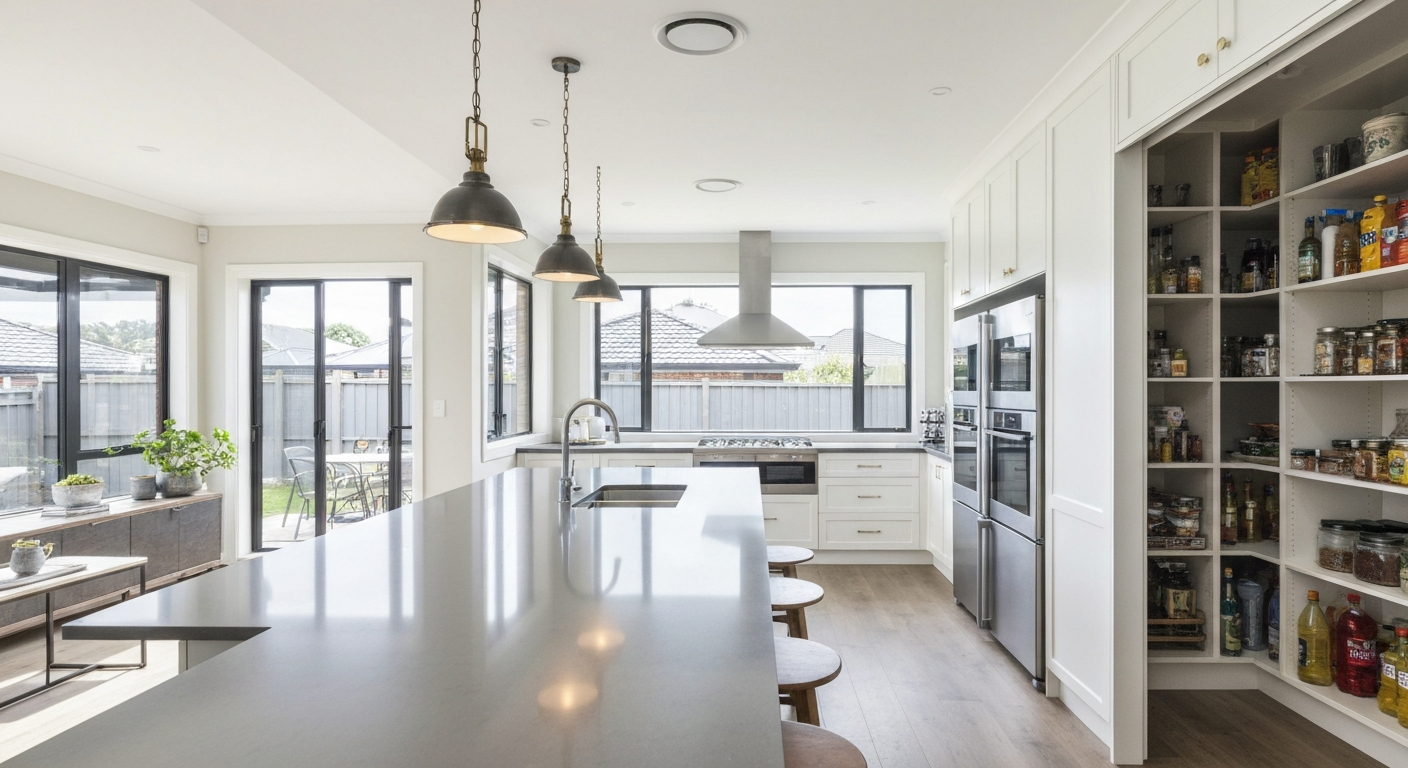
If there is one layout trend defining the modern suburban kitchen, it is the rise of the "back kitchen," also known as a scullery, messy kitchen, or working pantry.
As open-concept floor plans completely erased the walls between the kitchen and the living room, homeowners realized a significant drawback: everyone can see the mess. The back kitchen solves this by providing a secondary, hidden space for the actual work of cooking and cleaning.
What It Includes
A true back kitchen goes beyond a walk-in pantry. It typically features secondary countertops, a prep sink, the microwave, a second dishwasher, and small appliances like toasters, blenders, and stand mixers. This leaves the main kitchen island completely clear for entertaining, homework, and socializing.
Specific Product Examples
- Cabinetry: Often utilizes open shelving or lower-cost utility cabinets compared to the main kitchen.
- Appliances: Drawer microwaves (like the Sharp 24-inch Microwave Drawer) and secondary dishwashers (like the Fisher & Paykel Double DishDrawer).
- Sinks: Deep, utilitarian stainless steel prep sinks rather than decorative fireclay.
Installer Considerations
Adding a back kitchen is not a simple weekend project. It requires significant plumbing and electrical work. Your contractor will need to run new water lines, drainage, and dedicated 20-amp circuits for the small appliances. If you are converting an existing closet or bumping out a wall, structural engineering and permitting are required.
Before/After Cost Impact
- Added Cost: $12,000 – $25,000+ depending on plumbing runs and appliance choices.
- Value Add: Extremely high appeal for luxury buyers; keeps the main kitchen looking like a showroom.
Trend 2: Induction Cooking Takes the Lead
For decades, the hallmark of a high-end suburban kitchen was a massive, commercial-style gas range. Today, that paradigm has shifted entirely to induction cooking.
Driven by a combination of indoor air quality concerns, changing municipal gas regulations, and massive leaps in technology, induction cooktops are now specified in over 40% of premium remodels.
Why Induction is Winning
Induction uses magnetic fields to heat the cookware directly, rather than heating the air around it. This means water boils in a fraction of the time, the kitchen stays cooler, and the glass surface is safe to touch seconds after a pot is removed. Furthermore, the smooth glass surface can be cleaned with a single wipe, eliminating the tedious scrubbing of heavy cast-iron gas grates.
Specific Product Examples
- Mid-Range: Bosch 800 Series 36-inch Induction Cooktop (approx. $2,800).
- High-End: Wolf 36-inch Contemporary Induction Cooktop (approx. $4,500) or the Thermador Freedom Induction Cooktop, which allows you to place pots anywhere on the surface.
Installer Considerations
Switching from gas to induction requires electrical upgrades. Most induction cooktops require a dedicated 40-amp or 50-amp 240-volt circuit. If your home has an older 100-amp or 150-amp electrical panel, you may need a full panel upgrade (costing $2,000 to $4,000) before you can install the appliance.
Before/After Cost Impact
- Added Cost: $1,500 – $4,500 for the cooktop, plus $500 – $3,500 for electrical upgrades.
- Value Add: Future-proofs the home against changing gas regulations and appeals to safety-conscious families.
Trend 3: Warm, Earthy Color Palettes and Textured Woods
The era of the stark, all-white kitchen with cool gray accents is officially over. In its place, a wave of warmth, texture, and organic materials has arrived. Homeowners are seeking spaces that feel grounded, inviting, and lived-in.
The Shift in Tones
Instead of bright white, designers are specifying soft mushrooms, creamy taupes, and warm greiges. When color is used, it leans toward deep, muted earth tones - specifically forest greens, muddy blues, and terracotta.
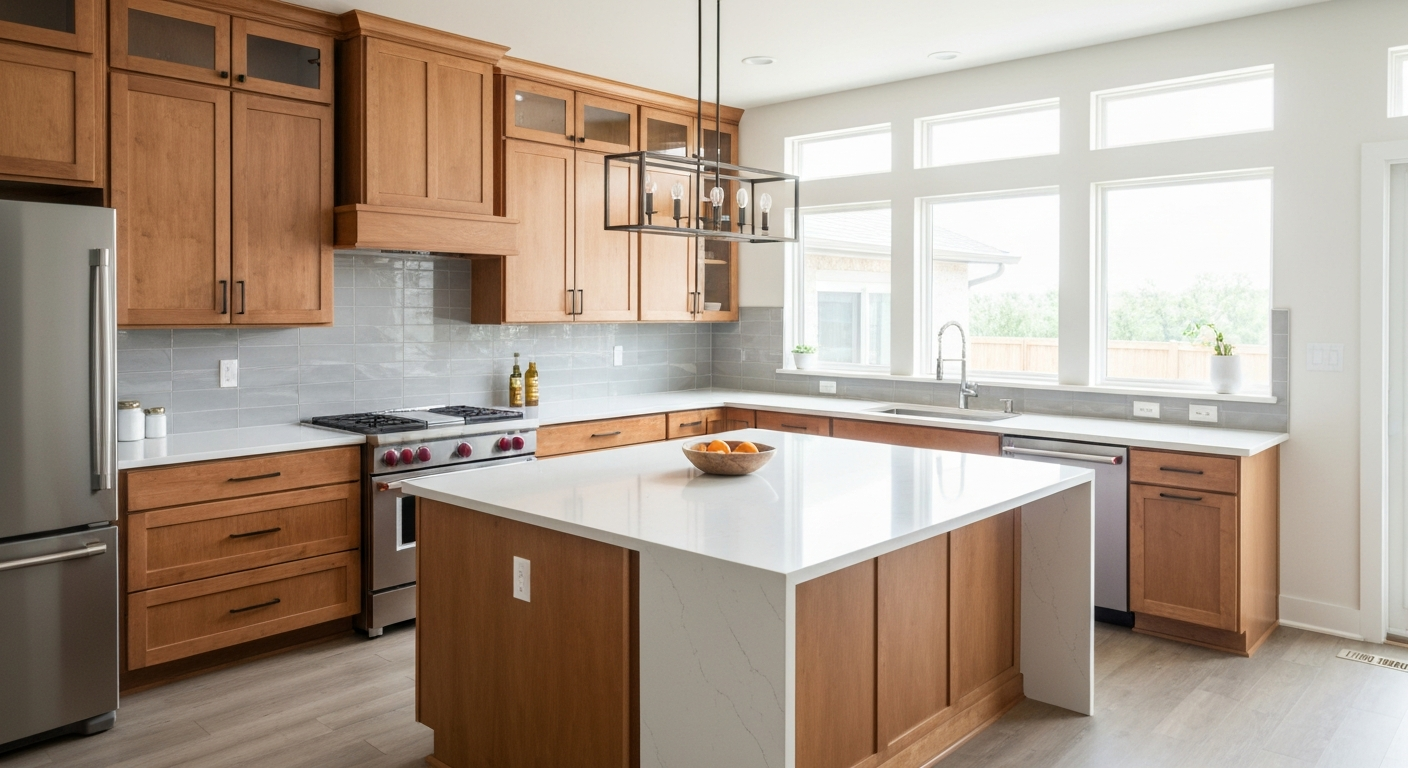
Wood is also making a massive comeback, but not the glossy cherry or honey oak of the 1990s. Today’s wood cabinets feature matte finishes, natural grains, and lighter species like white oak or rich, mid-tone walnut. Two-tone kitchens remain popular, often pairing a painted island in a deep green with natural wood perimeter cabinets.
Specific Product Examples
- Cabinet Finishes: Sherwin-Williams "Evergreen Fog" or Benjamin Moore "Revere Pewter."
- Hardware: Unlacquered brass that patinas over time, or matte black for a modern contrast.
- Wood Species: Rift-sawn white oak with a clear, ultra-matte sealant.
Installer Considerations
Matching wood grains across custom cabinetry requires a highly skilled finish carpenter. If you are mixing painted cabinets with stained wood, ensure your contractor sources them from the same manufacturer to guarantee the door profiles and overlay styles match perfectly.
Before/After Cost Impact
- Added Cost: Natural wood veneers and custom stain matching typically add 15% to 25% to the cost of cabinetry compared to standard painted finishes.
- Value Add: Creates a timeless, high-end aesthetic that avoids the "cookie-cutter" look of builder-grade white kitchens.
Trend 4: Dedicated Beverage Centers
As our morning and evening routines have evolved, so has the kitchen layout. The dedicated beverage center has become a must-have feature in suburban remodels, effectively moving the traffic of coffee making and wine pouring out of the primary cooking zone.
The Anatomy of a Beverage Center
A well-designed beverage center is typically located on the periphery of the kitchen, often near the dining room or family room transition. It serves as a self-contained station for drinks, preventing guests or family members from getting in the cook's way.
Specific Product Examples
- Refrigeration: Undercounter beverage centers with dual temperature zones (e.g., Marvel or Zephyr 24-inch beverage coolers).
- Coffee Systems: Built-in, plumbed espresso machines (e.g., Miele or Thermador built-in coffee makers).
- Storage: Custom pull-out drawers for K-cups, tea bags, and coffee beans, paired with floating glass shelves for stemware.
Installer Considerations
If you opt for a built-in coffee maker, your plumber must run a dedicated water line to the location. Undercounter refrigerators require proper ventilation; ensure your cabinet maker leaves the appropriate clearances specified by the appliance manufacturer, or the compressor will burn out prematurely.
Before/After Cost Impact
- Added Cost: $3,000 – $8,000+ depending on the level of built-in appliances and custom cabinetry.
- Value Add: Dramatically improves kitchen traffic flow and adds a distinct luxury touch that buyers love.
Trend 5: Seamless Slab Backsplashes
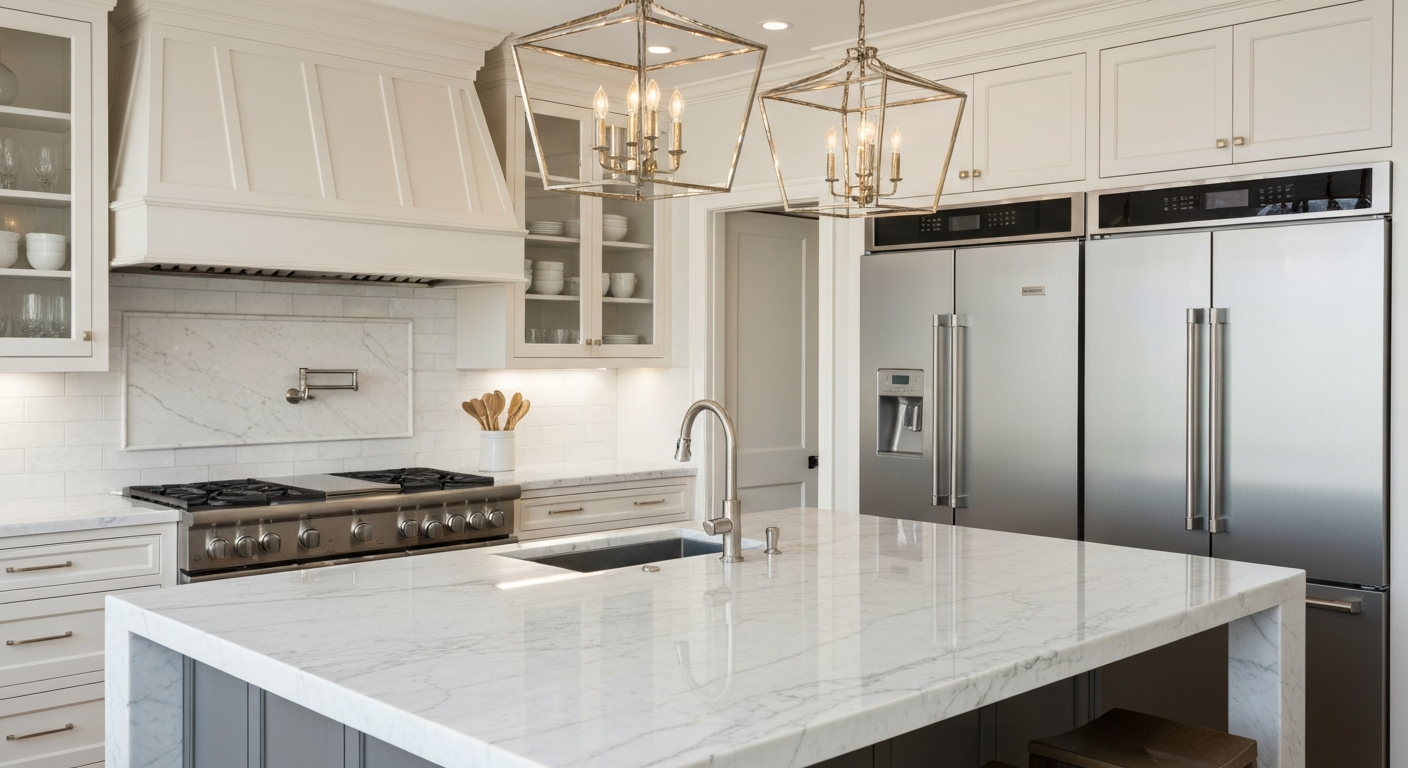
Subway tile will always be a classic, but the dominant luxury trend is the seamless slab backsplash. Instead of using small tiles with hundreds of grout lines, homeowners are choosing to run their countertop material straight up the wall to the bottom of the upper cabinets, or even all the way to the ceiling behind the range.
The Visual and Functional Appeal
A slab backsplash creates a dramatic, unbroken visual plane that highlights the natural veining of the stone (or engineered quartz). Functionally, it is the ultimate low-maintenance surface. There is no grout to scrub, no sealant to reapply, and spaghetti sauce splatters wipe off effortlessly.
Specific Product Examples
- Materials: Engineered quartz (like Cambria or Silestone) for durability, or natural quartzite (like Taj Mahal) for unique, organic veining.
- Design Execution: "Bookmatching" two slabs behind the range so the veining mirrors itself for a stunning focal point.
Installer Considerations
This is not a DIY project. Slabs are incredibly heavy and require precise laser templating. Your walls must be perfectly plumb and flat; if they bow, the rigid slab will not sit flush. Furthermore, electrical outlets must be meticulously planned. Many designers are moving outlets to the underside of the upper cabinets to avoid cutting holes in the beautiful stone slab.
Before/After Cost Impact
- Added Cost: A slab backsplash typically doubles the material and fabrication cost of your countertop budget, adding $3,000 to $7,000+ to the project. For general strategies to keep a large project on budget, read how to save money on building a house.
- Value Add: Provides a breathtaking "wow" factor and eliminates long-term grout maintenance.
Contractor Selection: 5 Questions to Ask Before Hiring
A kitchen remodel is one of the most expensive and disruptive projects you can undertake. Hiring the right general contractor or specialized kitchen remodeler is critical to protecting your investment. Before signing a contract, ask these five essential questions:
1. Do you use in-house crews or subcontractors for MEP?
MEP stands for Mechanical, Electrical, and Plumbing. Knowing who is actually doing the technical work behind your walls is vital. If they use subcontractors, ask for the names of the companies and verify their licenses.
2. How do you handle dust control and site protection?
A professional remodeler should have a specific protocol for dust mitigation, including ZipWalls, negative air pressure machines (air scrubbers), and floor protection (like Ram Board) leading from the front door to the kitchen.
3. What is your exact payment schedule?
Never pay more than 10% to 30% upfront. A standard schedule might be 10% at signing, 30% at the start of demolition, 30% after rough-in inspections, 20% at cabinet delivery, and 10% after the final punch list is complete.
4. Will you pull all necessary permits?
If a contractor asks you to pull the permit as an "owner-builder" to save money, walk away immediately. The person who pulls the permit is legally responsible for the work. A reputable contractor will always handle permitting.
5. How do you handle change orders?
Unexpected issues (like finding water damage behind a wall) will happen. Ask for their written change order process. No extra work should be performed, and no extra money charged, without a signed document detailing the exact scope and cost.
Frequently Asked Questions
What is the best ROI project in a kitchen remodel?
Cosmetic updates offer the best Return on Investment. A "minor kitchen remodel" (painting cabinets, updating hardware, new counters, and a new sink) typically returns over 85% of its cost. Major gut renovations return less (around 50%) but drastically improve daily quality of life.
Should I choose quartz or natural stone for my countertops?
Engineered quartz remains the most popular choice due to its durability, stain resistance, and zero-maintenance requirements. However, natural quartzite (not to be confused with quartz) is gaining ground for luxury remodels because it offers the beauty of marble with the hardness of granite.
How long does a full kitchen remodel take?
A full gut renovation typically takes 8 to 12 weeks from the day demolition begins. However, the planning, design, and material procurement phase can take 2 to 4 months prior to that. Never let a contractor start demolition until all cabinets and major appliances are sitting in their warehouse.
Are open floor plans going out of style?
Not entirely, but they are being modified. The "broken plan" is trending, where homeowners use architectural elements like cased openings, glass partitions, or strategically placed beverage centers to create distinct zones while maintaining a sense of flow.
Do I need a designer, or can the contractor design it?
While many design-build firms have excellent in-house designers, a complex remodel benefits greatly from an independent Certified Kitchen and Bath Designer (CKBD). They will optimize the layout down to the inch, ensuring proper clearances, traffic flow, and ergonomic storage solutions that a general contractor might overlook.
Final Takeaway
The suburban kitchen remodel is defined by a balance of high-tech functionality and warm, organic aesthetics. By incorporating trends like induction cooking, back kitchens, and dedicated beverage centers, homeowners can create a space that is as efficient as it is beautiful. Just remember: the success of these upgrades relies entirely on hiring a qualified contractor who understands the structural and electrical requirements behind the drywall.