A bathroom is the most expensive room in the house to renovate per square foot, and the reason is simple: almost every inch involves a skilled trade or a specialty material. Plumbing, waterproofing, tile, electrical, and finish carpentry all stack into a small footprint. That is why a project can swing from $5,000 to $50,000 depending on three or four decisions you make early.
This guide breaks down what homeowners actually spend, where every dollar goes, what you get back at resale, and how to keep the budget under control without cutting the corners that matter.
The short answer
The typical full bathroom remodel runs around $12,000, with most homeowners spending between $6,600 and $18,000. The full spectrum is wide:
| Project tier | Cost range | What it covers |
|---|---|---|
| Cosmetic refresh | $3,000 to $10,000 | Paint, new fixtures and hardware, vanity swap, tub reglaze, same layout |
| Mid-range full remodel | $10,000 to $25,000 | New tile, shower, vanity, flooring, and fixtures on the same footprint |
| High-end / upscale | $30,000 to $75,000 | Premium materials, custom tile, frameless glass, possible layout changes |
| Luxury primary suite | $50,000 to $120,000+ | Custom everything, freestanding tub, heated floors, structural work |
The single biggest variable is not square footage. It is whether you move the plumbing, what you do with the shower, and the grade of tile and fixtures you choose. We will come back to those drivers below.
Cost by bathroom type and size
The kind of bathroom you are renovating sets the floor for your budget. A powder room with two fixtures is a different project from a primary suite with a double vanity, a soaking tub, and a separate shower.
| Bathroom type | Typical size | Cost range |
|---|---|---|
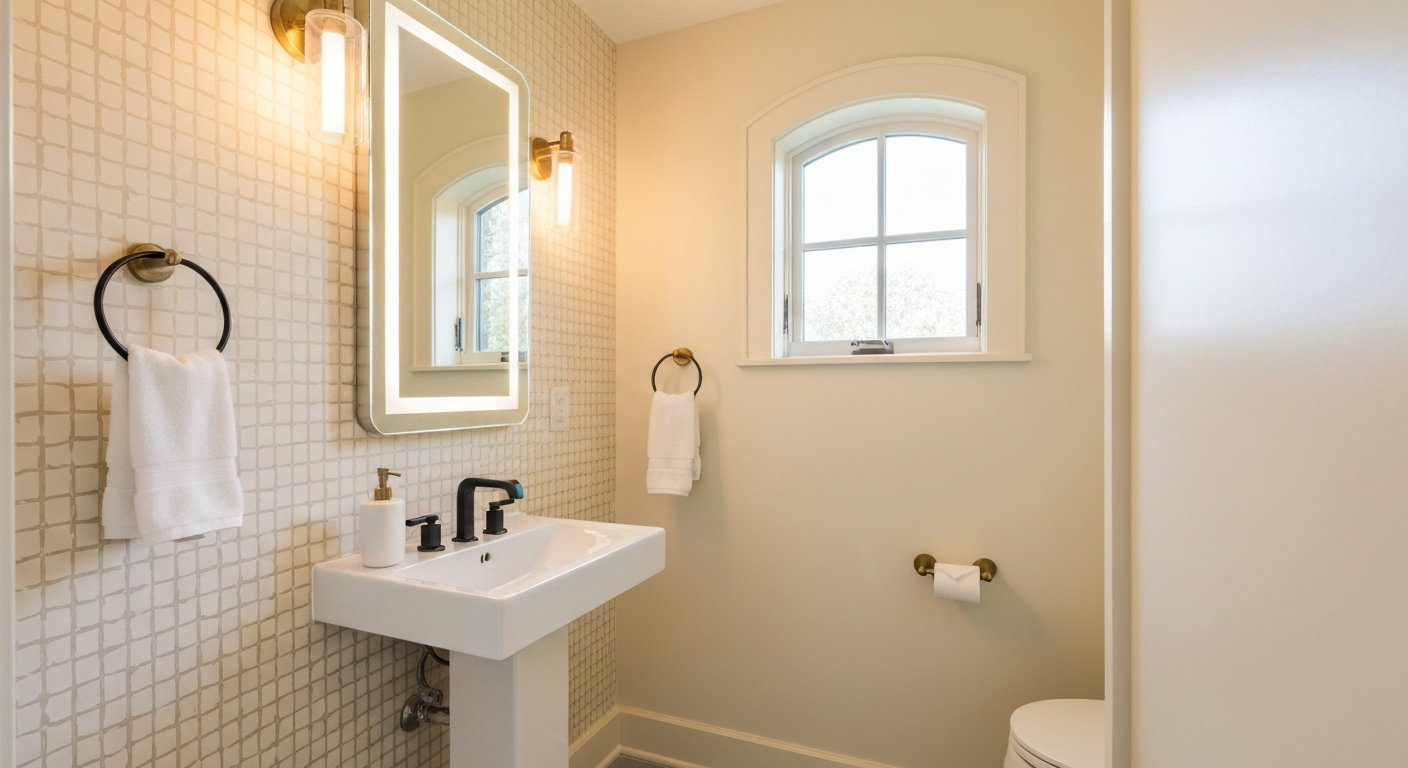
| Half bath / powder room (toilet and sink only) | 15 to 30 sq ft | $3,000 to $8,000 |
| Small full bath | 35 to 45 sq ft | $5,000 to $15,000 |
| Guest / standard full bath | 40 to 80 sq ft | $8,000 to $22,000 |
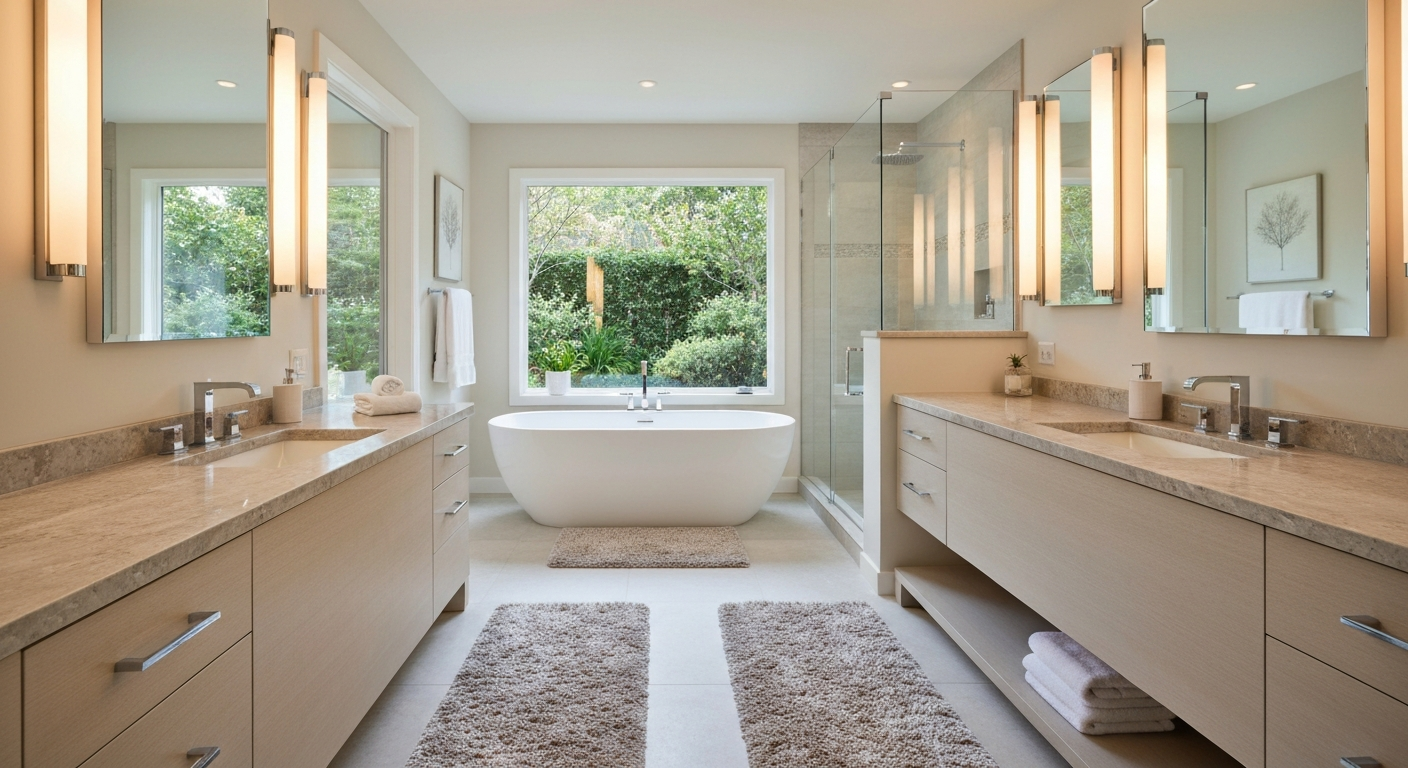
| Primary / master bath | 100 to 150 sq ft | $18,000 to $50,000+ |
Half baths are the cheapest to remodel because they skip the most labor-intensive elements entirely: there is no shower waterproofing, no tub, and far less tile. Primary baths cost the most not just because of the space, but because that is where homeowners tend to add double vanities, custom showers, and high-end finishes.
Cost per square foot
Per-square-foot pricing is useful for an early estimate, even though final cost depends on finish quality more than floor area.
| Quality level | Cost per square foot |
|---|---|
| Budget | $70 to $150 |
| Mid-range | $150 to $400 |
| Luxury | $500+ |
Two things surprise people here. First, bathrooms often cost more per square foot than kitchens, because the plumbing is denser and nearly every surface needs a waterproof, skilled installation. Second, smaller bathrooms tend to cost more per square foot than larger ones. The fixed costs of plumbing, a vanity, a toilet, and labor mobilization get spread across fewer feet, so a tiny bathroom can have a deceptively high rate. For a fuller comparison with the other big-ticket room, see our kitchen remodel cost guide.
Where the money goes: line-item breakdown
This is the part most homeowners want and most quotes leave vague. Here is what individual components run, including materials and installation where noted.
| Component | Typical cost range |
|---|---|
| Demolition and disposal | $1,000 to $2,500 |
| Plumbing (fixtures stay in place) | $1,500 to $3,000 |
| Plumbing (relocating fixtures) | add $2,000 to $8,000 |
| Electrical (lighting, outlets, exhaust fan) | $800 to $2,500 |
| Permits | $100 to $1,000 |
| Vanity, stock size (30 to 36 inch) | $200 to $600 |
| Vanity, custom | $1,500 to $4,000 |
| Countertop | $400 to $4,300 |
| Toilet | $150 to $900 (smart toilets $1,500 to $5,000) |
| Sink and faucet | $400 to $1,150 |
| Bathtub (acrylic to stone resin) | $400 to $4,000 (refinishing an existing tub: $300 to $600) |
| Shower (prefab pan to custom tile) | $1,200 to $8,000 |
| Tile, floor and surround (installed) | $2,000 to $8,000 |
| Flooring | $700 to $4,200 |
| Lighting fixtures | $150 to $2,000 |
| Paint | $150 to $900 |
The two largest material line items in almost every project are the tile work and the vanity-and-countertop combination. Everything behind the wall, standard PEX plumbing and Romex wiring, has no meaningful premium version, so that is rarely where the money goes. The money goes into what you see and touch every day.
The 3 factors that drive your final cost
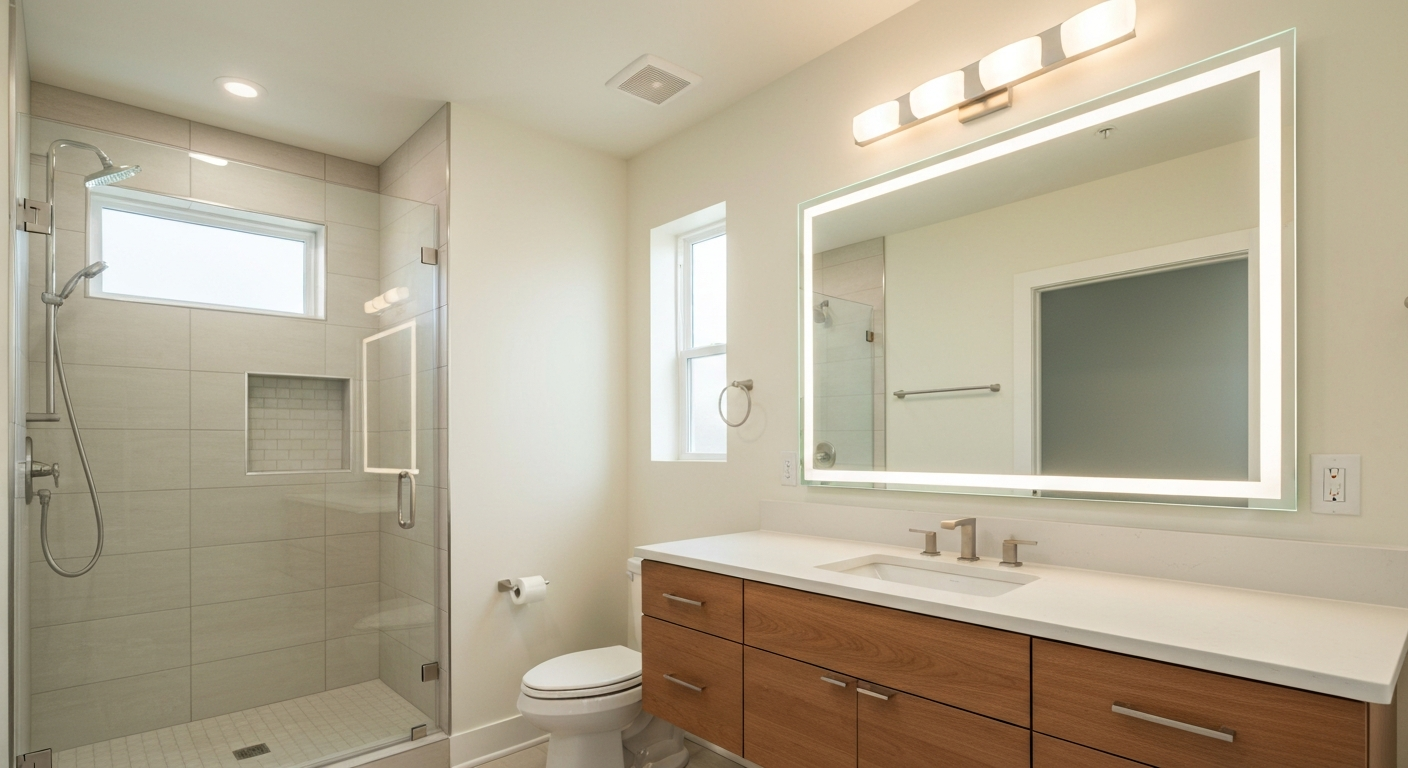
Once the bathroom type is set, three decisions move your number more than anything else.
1. Whether you move the plumbing. Keeping the toilet, sink, and shower in their existing locations keeps plumbing manageable, usually $1,500 to $3,000. Relocating any of them means rerouting supply and drain lines, which can add $2,000 to $8,000 on its own. If you can live with the current layout, you keep thousands in your pocket.
2. What you do with the shower. A prefab shower pan installs in a few hours for a few hundred dollars. A custom-tiled walk-in shower with a waterproof membrane, a bench, and a glass enclosure can run $3,000 to $8,000 once labor and materials are counted. The popular tub-to-walk-in-shower conversion is one of the biggest single swings in a remodel budget, and one of the best resale plays, which we cover below.
3. The grade of tile and fixtures. Ceramic tile starts around $2 per square foot; high-end porcelain, natural stone, and glass climb to $30 or more. A two-piece toilet is $150; a smart toilet is $5,000. Same room, very different invoice. This is where you have the most control, and where spending strategically pays off.
Labor vs. materials: how the budget splits
Labor is the largest single expense in nearly every bathroom remodel, typically 40 to 65 percent of the total. Materials make up the rest. The labor share is high because the work is trade-heavy: a licensed plumber, an electrician, and a skilled tile setter all command premium rates, and tile setting alone runs $10 to $25 per square foot in labor.
Current trade labor rates look roughly like this:
- General contractor: $50 to $150 per hour
- Plumber: $75 to $175 per hour
- Electrician: $50 to $145 per hour
- Tile setter: $10 to $25 per square foot
A general contractor will also fold in overhead and project management, commonly 15 to 20 percent of the total. That is the cost of someone scheduling the trades, ordering materials, and standing behind the work.
Bathroom remodel ROI: what you get back
Bathrooms are consistently one of the better home-improvement investments, but returns vary sharply by how much you spend. According to resale value research, a mid-range remodel recovers roughly 60 to 70 percent of its cost, while upscale and luxury projects recover only 30 to 50 percent, because high-end finishes are personal and rarely translate dollar for dollar at sale.
The counterintuitive winner is the cosmetic refresh. Because the investment is small, a paint-and-fixtures update can recover 80 to 100 percent of its cost, simply by removing a dated bathroom as an objection for buyers.
| Upgrade | Approximate ROI |
|---|---|
| Cosmetic refresh (paint, fixtures, hardware) | 80 to 100% |
| Walk-in shower conversion | 55 to 85% |
| New vanity and countertop | 60 to 80% |
| Updated lighting and mirror | 50 to 80% |
| New tile and flooring | 55 to 75% |
| Modern toilet and faucets | 65 to 75% |
| Heated floors | 40 to 50% |
| Custom stonework / luxury fixtures | 30 to 45% |
The more useful ROI question for most owners is not resale percentage but how long you plan to stay. If you will be in the home ten years, you get the full daily value of a bathroom you actually enjoy. If you are selling in two years, keep the scope conservative: neutral tile, quality fixtures, clean finishes, nothing niche. For a deeper look at which projects pay off, see our breakdown of home remodeling trends and ROI. For projects outside the bathroom, see which curb appeal and exterior upgrades return the most at resale.
Regional cost differences
Where you live can change the bottom line by a third or more, and labor is the main reason. High-cost metros like New York, San Francisco, and Boston commonly run 20 to 35 percent above the national average. A contractor charging $90 an hour in a major city might charge $50 in a rural market for the same scope. City permitting, parking, delivery logistics, and stricter inspections add further soft costs. Rural and lower-cost-of-living areas land below the national figures.
How long a bathroom remodel takes
Budget your calendar as carefully as your wallet. Material lead times can delay a start before any work begins.
- Cosmetic refresh: 1 to 2 weeks
- Standard full remodel: 3 to 5 weeks
- Gut renovation with layout changes: 6 to 10 weeks
- Add 1 to 4 weeks if permits are required
- Add 2 to 6 weeks of lead time for custom vanities or specialty tile
A roughly typical sequence inside a full remodel: 1 to 2 days of demolition, 2 to 3 days of rough plumbing and electrical, 3 to 5 days of tile, and 2 to 3 days for fixtures and finishing, with inspection holds in between.
Hidden costs and how to budget for them
About one in three homeowners reports their bathroom remodel cost more than expected, almost always because of what got uncovered after demolition. Set aside a contingency of 10 to 20 percent of your total budget before you start.
The usual surprises:
- Water damage and rot. Old leaks behind tile or under the floor often surface during demo. Improper waterproofing is the leading cause of bathroom remodel failures, and a failed shower can run $5,000 to $15,000 to repair down the road, so do not skimp on the membrane and never let anyone tile directly over drywall in a wet area. Remodeling a manufactured home? Our manufactured home remodel guide covers moisture management and cost ranges specific to those homes.
- Outdated plumbing. A small fixture move can balloon into a pipe upgrade if the existing lines are corroded or aged copper.
- Subfloor repair. Soft or rotted subfloor under a tub or toilet has to be replaced before new flooring goes down.
- Mold remediation. Hidden moisture means hidden mold, which is its own line item once exposed.
How to save without cutting corners
You can take real money out of a bathroom remodel without ending up with a project that looks cheap or fails early.
- Keep the layout. This is the biggest lever. Leaving the toilet, sink, and shower where they are avoids the $2,000 to $8,000 plumbing relocation entirely.
- Refinish instead of replace. A structurally sound tub can be professionally refinished for $300 to $600 instead of $1,500 to $5,000 for replacement plus installation.
- Use stock sizes. A 30 or 36 inch stock vanity and a standard shower base cost a fraction of custom, and they fit off-the-shelf doors and tops.
- Spend where it shows. Put the budget into tile, the vanity, lighting, and the shower, the things people see and touch. Save on what is behind the wall, where there is no premium that matters.
- DIY the safe parts. Demolition, painting, and installing accessories are reasonable do-it-yourself tasks. Leave plumbing, electrical, waterproofing, and tile to professionals, where mistakes are expensive to undo.
- Do it all at once. Phasing a remodel repeats setup and labor costs. A single coordinated project is usually cheaper than the same work spread across two.
Financing a bathroom remodel
For a project in the five-figure range, many homeowners tap home equity rather than draining savings. A home equity loan gives you a fixed lump sum at a fixed rate, which works well when you know your total budget up front. If you would rather borrow as you go, a line of credit is the flexible alternative. Either way, understand the rates and terms before you commit. Our guide on how a home equity loan works walks through the math and when it makes sense. For larger projects, compare your options in home equity loan vs. construction loan.
Get a localized estimate
Every figure here is a national benchmark. Your actual cost depends on your market, your bathroom's condition, and the finishes you choose. Run your project through our construction cost calculator for a localized breakdown before you talk to a single contractor, so you walk into those conversations knowing what a fair bid looks like.
Frequently asked questions
How much does a bathroom remodel cost on average? The national average for a full bathroom remodel is around $12,000, with most homeowners spending between $6,600 and $18,000. Cosmetic refreshes start near $3,000, while luxury primary suites can exceed $50,000.
How much does it cost to remodel a small bathroom? A small full bathroom of roughly 35 to 45 square feet typically runs $5,000 to $15,000. A half bath or powder room with just a toilet and sink usually falls between $3,000 and $8,000.
What is the most expensive part of a bathroom remodel? Labor is the single largest expense, at 40 to 65 percent of the total. Among materials, tile work and the vanity-and-countertop combination are usually the biggest line items.
Is a bathroom remodel worth it? Yes, for most homeowners. A mid-range remodel recovers about 60 to 70 percent of its cost at resale, and a small cosmetic refresh can recover 80 to 100 percent. The bigger payoff is daily use if you plan to stay in the home for several years.
How can I remodel a bathroom on a budget? Keep the existing layout to avoid plumbing relocation, refinish the tub instead of replacing it, choose stock-size fixtures, and spend your money on visible finishes like tile and the vanity. Demolition and painting are reasonable do-it-yourself tasks.
Do I need a permit to remodel a bathroom? Usually yes, if the work touches plumbing, electrical, or structure. Permits commonly cost $100 to $1,000 depending on your jurisdiction and scope. A purely cosmetic refresh with no system changes often does not require one.
How long does a bathroom remodel take? A cosmetic refresh takes 1 to 2 weeks, a standard full remodel takes 3 to 5 weeks, and a gut renovation with layout changes takes 6 to 10 weeks. Permits and custom material lead times can add several weeks on top.
Why do bathrooms cost more per square foot than other rooms? Bathrooms pack dense plumbing, waterproofing, electrical, and tile into a small space, and nearly every surface requires a skilled, waterproof installation. That high concentration of trade labor drives the per-square-foot cost above most other rooms, including kitchens.