Quick answer: New York construction faces a temperature swing from 28.7°F (-1.8°C) in January to 84.2°F (29°C) in July. Developers manage it with proactive weather planning, including thermal concrete curing, thermal blankets, hydronic ground heaters and predictive weather data, instead of halting work. It adds equipment and admixture costs, but prevents schedule delays, rework and extended loan interest.
For developers in New York, the benefit of climate mitigation goes beyond simply keeping workers comfortable. A high-rise construction site is a highly sensitive environment where chemical reactions, like concrete hydration, dictate the safety of the entire structure.
A long winter freeze or an aggressive summer heatwave can completely derail a project schedule. Equipment failure, frozen ground, fast-evaporating moisture, and weather delays can create months of financial disruption.
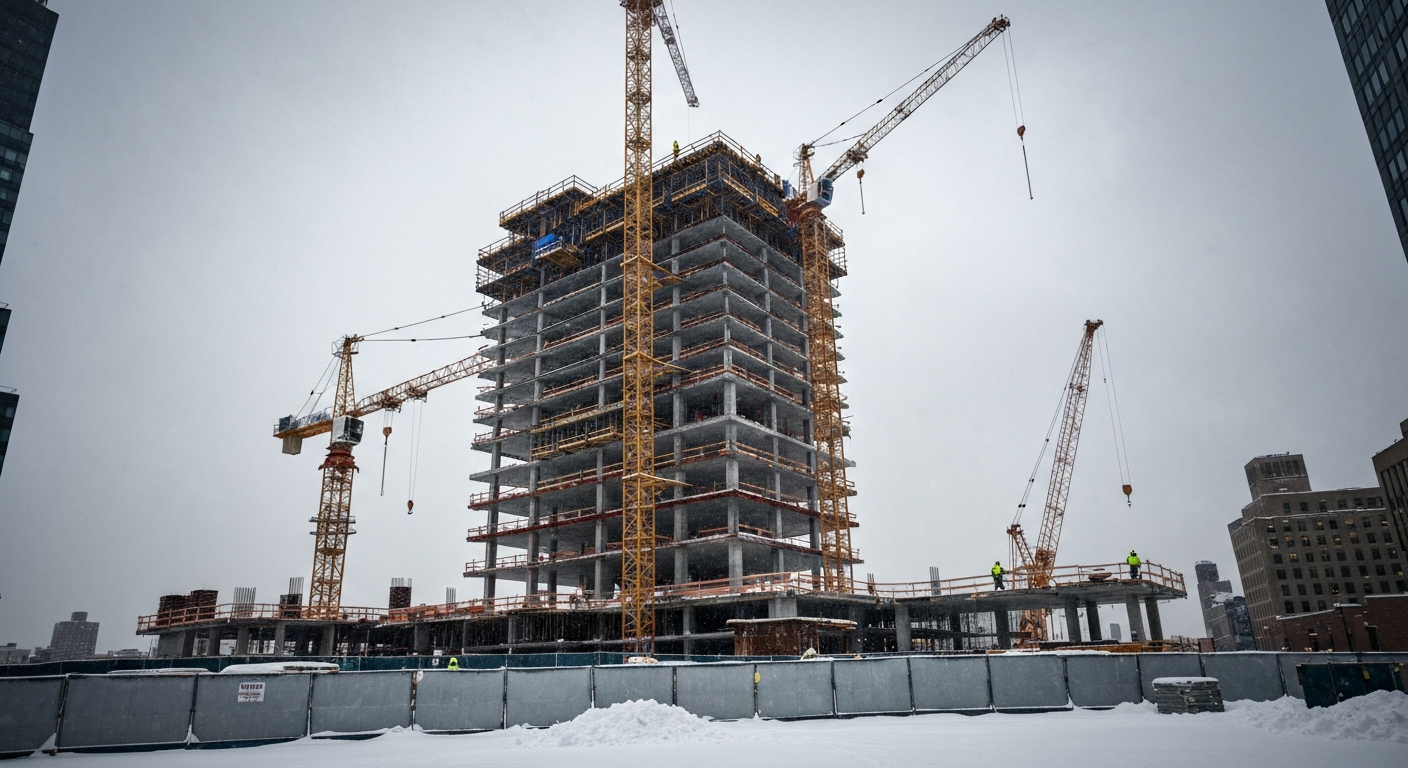
The New York commercial building sector shows how advanced weather management can reduce that disruption by shifting reactive planning into proactive, data-driven execution. Instead of halting work during a freeze, project managers utilize thermal blankets, heated enclosures, and chemical admixtures.
In traditional planning, weather is treated as an uncontrollable delay. In modernized construction, mitigating extreme weather is a scheduled, calculated workflow. That changes the entire project risk profile.
Project & Environmental Snapshot
| Topic Detail | Information |
|---|---|
| Location Focus | New York City, New York |
| Building Type | Commercial High-Rise & Infrastructure |
| Core Challenge | Severe seasonal temperature fluctuations |
| Temperature Range | 28.7°F (-1.8°C) in January to 84.2°F (29°C) in July |
| Primary Mitigation | Thermal concrete curing and predictive weather modeling |
| Main Advantage | Preventing structural micro-fractures and costly schedule delays |
What Is Thermal Concrete Curing?
Thermal concrete curing is a structural methodology where the internal and external temperatures of a concrete pour are artificially regulated to ensure optimal chemical hydration.
Concrete does not simply dry; it undergoes a complex, heat-generating chemical reaction. Depending on the season, this process requires precise intervention. In winter, this means adding chemical accelerators and utilizing hydronic heating systems to prevent the water inside the mix from freezing and expanding.
Once the concrete is poured, crews cover the slabs with thermal curing blankets to trap the heat. During the summer, the strategy reverses. Crews use retarding admixtures, continuous misting, and evaporation retarders to stop the concrete from drying too fast and cracking.
Proactive Mitigation vs. Reactive Construction
Proactive weather management is entirely different from reactive construction.
Reactive construction relies on standard materials and simply stops work when the weather becomes too severe. Proactive mitigation goes further. It incorporates chemical adjustments, specialized equipment, and temporary climate-controlled enclosures to keep the site operational.
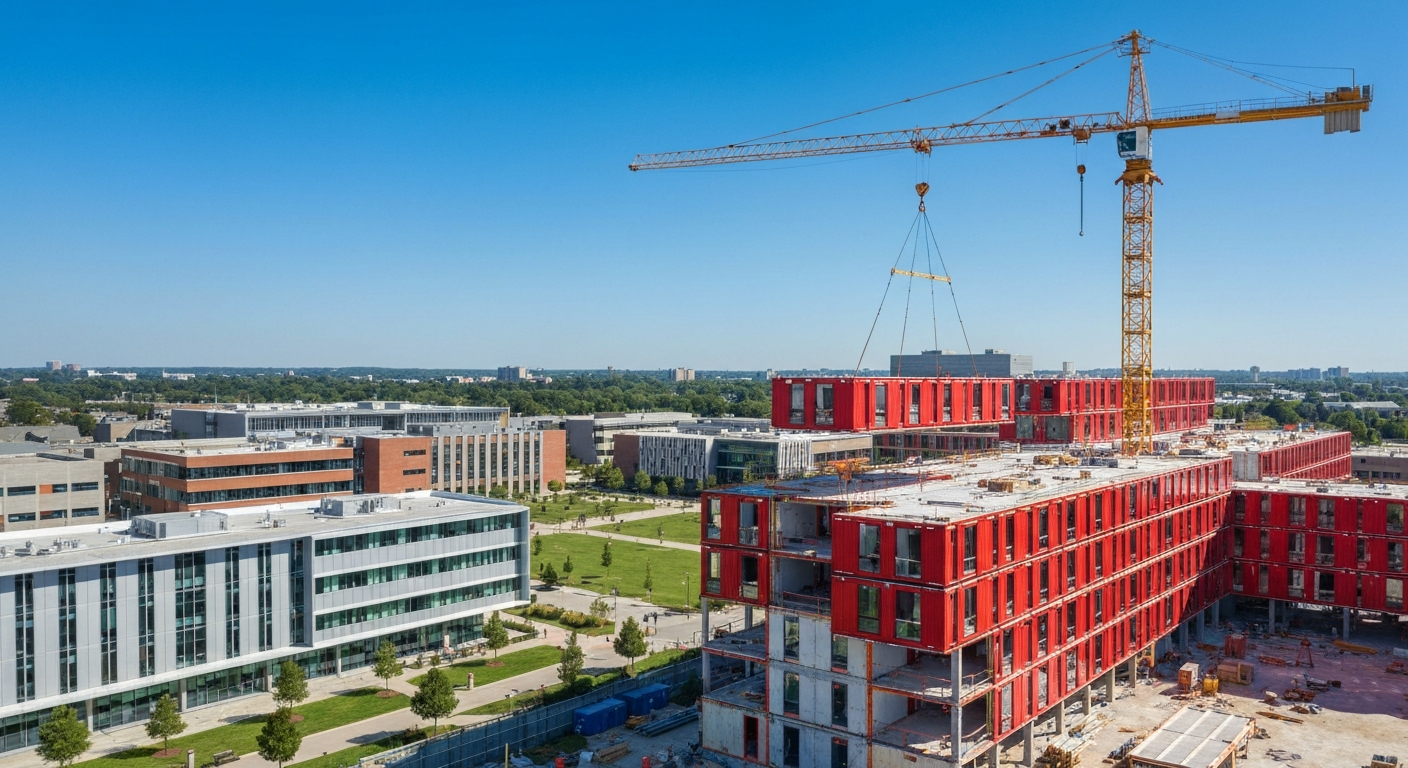
For commercial developers, this matters because every delayed day incurs massive labor and equipment costs. The more predictable the site environment, the more value project managers can provide to stakeholders. Off-site construction is another way to cut weather exposure; see our modular student housing case study at Bucknell West Campus.
The Challenge: Building Under a Tight Timeline in NY
New York developers constantly need to deliver projects on strict deadlines. Like many major urban developments, these projects face several constraints:
- Financial loan terms create fixed occupancy deadlines.
- Site disruption in high-density urban areas must be minimized.
- New York's deep freezes and summer heatwaves create severe seasonal risk.
- OSHA compliance requires strict workforce safety measures during extreme temperatures.
- Material logistics are often disrupted by regional snowstorms or hurricanes.
Traditional construction can handle these projects, but it often stretches across multiple seasonal periods. Weather delays, frost heave, frozen mortar, and heat-exhausted labor pools can severely slow progress.
For a developer, delay is exceptionally expensive. A late opening affects lease agreements, revenue planning, and municipal permit extensions. The proactive approach helps address these risks by treating the weather as a predictable engineering variable.
The Role of Predictive Data in the Project
One of the most important factors in navigating New York's climate is early data integration. The most successful projects use advanced predictive software and meteorological analytics.
This is a planning method that schedules highly sensitive tasks, like tower crane lifts or massive foundation pours, around micro-climate forecasting. This is different from checking a standard weather app and hoping for the best.
That mistake is common on smaller sites. Superintendents sometimes decide to push a pour forward, only for an unexpected freeze to ruin the top layer of the slab. By then, the rework costs are astronomical.
Design Strategy: Making Structures Climate-Resilient
A common concern about building in aggressive climates is long-term material fatigue. Owners do not want buildings that require constant exterior maintenance due to thermal expansion and contraction. For a homeowner-scale view of how climate affects finishes, see our guide to exterior paint for harsh weather climates.
The structural design must accommodate these physical shifts to support architectural quality, durability, and tenant safety.
Reaching New York’s top developers? Publish your Press Release with Buildority Times today.
Construction Approach: Managing the Seasons
Building through a New York calendar year can be understood through three main operational phases:
- Site preparation and ground thawing
- Foundation pouring and thermal curing
- Envelope sealing and worker safety management
The power of modern construction comes from keeping these phases moving regardless of the external temperature.
Phase 1: Site Preparation and Ground Thawing
While the winter weather sets in, crews must manage the frozen ground. This phenomenon, known as frost heave, occurs when soil water freezes and expands. Frost and soil also shape foundation choices at home scale; see foundation systems and structural design decisions.
This likely includes:
- Deploying hydronic ground heaters
- Managing snow removal logistics
- Trenching through hard, frozen soil
- Implementing severe erosion control for melting snow
Phase 2: Foundation and Factory-Mixed Admixtures
The concrete work is executed using specialized winter or summer mix designs. This is one of the most important advantages of working with advanced ready-mix suppliers.
A controlled mix creates a more predictable curing setting than a standard pour. Chemical accelerators and retarding admixtures allow crews to dictate the pace of the hydration process.
Phase 3: Workforce Safety and Enclosure
After the superstructure is erected, the focus shifts to protecting the workforce and sealing the building.
Working in extreme heat or cold requires careful safety regulations adherence. During winter, site managers coordinate heated break areas and thermal gear. In summer, the focus is entirely on hydration stations, shaded zones, and preventing heatstroke.
Timeline Comparison: Reactive vs. Proactive Weather Management
Implementing aggressive weather strategies keeps projects moving.
| Factor | Reactive Traditional Construction | Proactive Weather Management |
|---|---|---|
| Winter Excavation | Halts until spring thaw | Proceeds using hydronic ground heaters |
| Concrete Curing | High risk of freezing or cracking | Controlled via admixtures and thermal blankets |
| Worker Productivity | Drops significantly in extreme temps | Maintained through OSHA-compliant rest protocols |
| Schedule Risk | Extremely high due to weather delays | Lowered through meteorological software |
| Material Integrity | Susceptible to thermal stress | Protected via engineered expansion joints |
Cost Considerations for Weather Mitigation
Weather mitigation is often seen as an expensive line item. That is not entirely accurate when looking at the macro picture.
The better way to think about it is this: Weather mitigation reduces total project risk and prevents catastrophic schedule delays, even if it requires upfront equipment rentals.
For some projects, renting ground heaters and thermal blankets is expensive. However, the financial advantage comes from earlier occupancy, avoiding extended loan interest, preventing structural rework, and maintaining a predictable schedule.
Lessons Learned from Building in New York
The extreme climate cycle offers several lessons for developers, general contractors, and structural engineers.
- Weather Planning Must Start Early: The most successful projects begin with climate strategy during the earliest pre-construction stages.
- The Mix Design Must Match the Forecast: Concrete must be batched specifically for the temperature it will be poured in.
- Worker Safety Cannot Be Compromised: Heatstroke and hypothermia are severe risks. Hydration, thermal gear, and adjusted shift schedules must be planned months in advance.
- Predictive Data is Non-Negotiable: Professional meteorological software is a mandatory investment.
- Envelope Sealing Reduces Field Risk: Getting the building "dried in" as quickly as possible allows the interior trades to work in a controlled environment.
Frequently Asked Questions
What is cold-weather concreting?
Cold-weather concreting involves using specific techniques, such as chemical accelerators and thermal blankets, to ensure concrete cures properly and does not freeze when ambient temperatures drop below 40°F (4°C).
How does extreme heat affect building materials?
Extreme heat causes materials like structural steel to expand and concrete to cure too rapidly. Rapid curing leads to moisture evaporation, which causes shrinkage and severe surface cracking if not managed with retarders and misting.
What is frost heave in construction?
Frost heave is the upward swelling of soil during freezing conditions. It occurs when water trapped in the dirt turns to ice and expands, which can severely disrupt foundations and underground utility lines.
How do contractors thaw frozen ground?
Contractors use hydronic ground heaters, which circulate heated fluid through a network of hoses laid over the frozen soil, safely thawing the ground so excavation equipment can operate efficiently.
Why is predictive weather software important?
Predictive software gives project managers hyper-local, accurate data regarding wind speeds, temperature drops, and incoming storms, allowing them to safely schedule high-risk tasks like crane lifts and concrete pours.
Does weather mitigation increase construction costs?
While renting heating equipment and buying specialized admixtures adds direct costs, it ultimately saves money by preventing schedule delays, avoiding structural rework, and allowing developers to open the building on time.
What does "dried in" mean on a job site?
A building is considered "dried in" when the exterior shell, including the roof, windows, and weather barriers, is fully installed, protecting the interior from rain, wind, and snow so finish trades can begin work.