Roofing Innovations: Beyond Traditional Asphalt Shingles
For decades, the residential roofing conversation began and ended with 3-tab asphalt shingles. They were cheap, easy to install, and readily available. However, the landscape of residential roofing has fundamentally shifted. Driven by severe weather events, rising insurance premiums, and a push for energy efficiency, homeowners and builders are looking beyond basic asphalt.
Today’s roofing decisions are based on total lifecycle costs, extreme weather resilience, and architectural aesthetics. From standing seam metal to synthetic slate and building-integrated photovoltaics (solar shingles), the materials available today offer unprecedented durability and performance. (For more on how to pair your roof with the right exterior colors, read our Exterior Paint Guide for Harsh Weather Climates).
This comprehensive guide compares the top roofing innovations, detailing their costs, lifespans, wind resistance, and how your choice of material directly impacts your homeowner's insurance premiums.
Key Takeaways
- Traditional 3-tab asphalt shingles are rapidly losing market share to architectural shingles, metal, and synthetic alternatives due to superior wind and impact resistance.
- Standing seam metal roofing offers a 50+ year lifespan and exceptional fire resistance, making it the top choice in Wildland-Urban Interface (WUI) zones.
- Synthetic slate and cedar shakes provide the luxury aesthetic of natural materials without the immense weight, maintenance, or fire risks.
- Solar shingles (BIPV) have matured, acting as both the protective roof deck and the energy generator, offering a sleek alternative to bulky rack-mounted solar panels.
- Upgrading to a Class 4 impact-resistant roof can significantly lower homeowner insurance premiums in hail-prone states like Texas, Colorado, and Florida.
The Shift Away from Basic Asphalt
The standard 3-tab asphalt shingle is effectively obsolete in premium new construction and high-end remodeling. Its low wind resistance (often failing at 60 mph) and short lifespan (15-20 years) make it a poor long-term investment.
The new baseline for residential roofing is the architectural (or dimensional) asphalt shingle. These are thicker, multi-layered shingles that offer better wind resistance (up to 130 mph) and a more textured, premium look. However, for homeowners looking for true innovation and longevity, the market has moved toward metal, synthetics, and solar.
Roofing Materials Comparison
Understanding the cost and performance of modern roofing materials requires looking at the "Cost per Square." In roofing terminology, one "square" equals 100 square feet of roof area.
| Roofing Material | Avg Cost per Sq (Installed) | Expected Lifespan | Wind Resistance | Best Climate / Application |
|---|---|---|---|---|
| Architectural Asphalt | $400 – $650 | 20 – 30 years | Up to 130 mph | Budget-conscious remodels, standard residential |
| Standing Seam Metal | $900 – $1,500 | 50 – 70+ years | Up to 160 mph | Fire-prone areas, modern aesthetics, heavy snow |
| Synthetic Slate / Shake | $1,200 – $1,800 | 50+ years | Up to 110 mph | Historic districts, luxury homes, hail zones |
| Solar Shingles (BIPV) | $2,100 – $3,500+ | 25 – 30 years | Up to 130 mph | Eco-conscious builds, high sun exposure areas |
| Natural Slate | $1,500 – $3,000 | 100+ years | Up to 130 mph | Legacy estates (requires reinforced structural framing) |
Note: Costs vary significantly by region, roof pitch, and complexity (valleys, dormers, penetrations).
Innovation 1: Standing Seam Metal Roofing
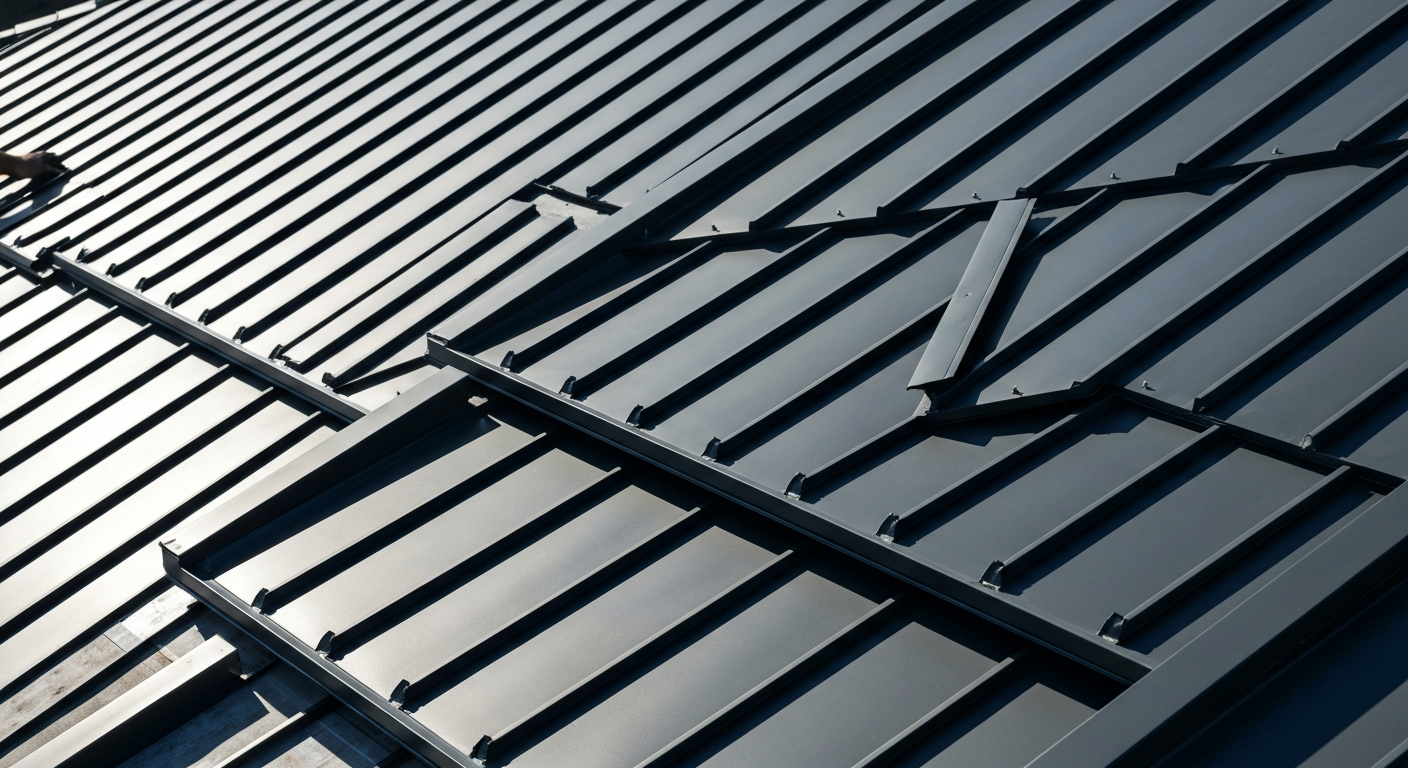
Metal roofing is no longer reserved for barns and commercial buildings. Standing seam metal roofs feature continuous panels that run from the ridge of the roof down to the eaves, with raised seams that interlock to keep moisture out.
Why It Is Trending
Unlike corrugated metal (which has exposed fasteners that can back out and leak over time), standing seam roofs use concealed fasteners. This makes them incredibly watertight and durable. They reflect solar radiant heat, which can reduce cooling costs by 10-25%.
Before/After Cost Impact
- Added Cost: Upgrading from architectural asphalt to standing seam metal on a typical 2,500 sq ft roof adds $15,000 to $25,000.
- Value Add: The roof will likely never need to be replaced in your lifetime, it increases home resale value by 1-6%, and it offers supreme protection against wildfires and high winds.
Innovation 2: Synthetic Slate and Shake
Natural slate is beautiful and lasts a century, but it is incredibly heavy, brittle, and expensive to install. Natural cedar shakes offer a gorgeous rustic look but require constant maintenance and are a severe fire hazard.
Synthetic roofing materials - made from engineered polymers, recycled plastics, and rubber - solve all these problems.
Why It Is Trending
Products from companies like DaVinci Roofscapes or Brava Roof Tile replicate the exact texture, color variation, and thickness of natural slate and cedar. However, they are lightweight (requiring no structural reinforcement), Class A fire-rated, and Class 4 impact-resistant. They will not crack, warp, rot, or attract insects.
Before/After Cost Impact
- Added Cost: Synthetics cost roughly double the price of premium asphalt, but are often 30-50% cheaper than natural slate.
- Value Add: Delivers the curb appeal of a luxury estate without the maintenance nightmare or structural engineering costs.
Innovation 3: Solar Shingles (BIPV)
Building-Integrated Photovoltaics (BIPV), commonly known as solar shingles, have finally reached maturity. Instead of drilling holes into a new roof to mount large, unsightly solar panels, the roof itself generates electricity.
Why It Is Trending
Products like the Tesla Solar Roof or GAF Energy’s Timberline Solar integrate seamlessly with the roofline. GAF’s system is particularly notable because it can be installed by standard roofers using a nail gun, rather than requiring specialized solar crews, drastically reducing installation time and costs.
Before/After Cost Impact
- Added Cost: A solar roof is a massive upfront investment, often exceeding $40,000 to $60,000 depending on the system size and battery storage options.
- Value Add: Provides total energy independence, qualifies for significant federal tax credits (currently 30% under the IRA), and eliminates the aesthetic penalty of traditional rack-mounted panels.
The Insurance Implication: Why Your Roof Material Matters
The relationship between your roof and your homeowner's insurance is tighter than ever. In states plagued by hail (Texas, Colorado) or wildfires (California, Oregon), insurance companies are dictating roofing choices through premiums and coverage limits. For how exterior upgrades affect resale value, see maximizing curb appeal with landscaping and exterior finishes and home remodeling trends and ROI.
Impact Resistance (Class 4)
If you live in a hail-prone region, upgrading to a Class 4 impact-resistant roof (the highest rating available) is almost mandatory. Materials like standing seam metal, synthetic slate, and specialized polymer-modified asphalt shingles can withstand 2-inch steel balls dropped from 20 feet without cracking. Many insurance providers offer premium discounts of 15% to 25% for homes with Class 4 roofs.
Fire Ratings (Class A)
In Wildland-Urban Interface (WUI) zones, a Class A fire rating is critical. This means the roof is highly resistant to fire and will not spread flames. Metal, synthetic slate, and concrete tiles achieve this rating easily, whereas untreated wood shakes are virtually uninsurable in these areas today.
Contractor Selection: 5 Questions to Ask Your Roofer
- Are you certified by the manufacturer? Manufacturer certification (like GAF Master Elite or CertainTeed SELECT ShingleMaster) ensures the crew is trained in specific installation techniques and allows them to offer extended, factory-backed warranties.
- Will you tear off the old roof or overlay it? Always insist on a full tear-off. Overlaying new shingles over old ones traps heat, hides rotting decking, and voids most manufacturer warranties.
- How do you handle roof ventilation? A new roof will fail prematurely if the attic cannot breathe. The contractor must calculate and install the correct balance of intake (soffit) and exhaust (ridge) ventilation.
- Do you use synthetic underlayment or traditional felt? Synthetic underlayment is standard now. It is lighter, stronger, and more water-resistant than traditional asphalt-saturated felt paper.
- What is your process for installing flashing? Most roof leaks occur at penetrations (chimneys, vents, skylights) and valleys. Ensure they use new, high-quality metal flashing and ice-and-water shield in all vulnerable areas.
Frequently Asked Questions
Is a metal roof noisy when it rains?
No. This is a common myth based on uninsulated barns. When installed over a solid wood roof deck with proper synthetic underlayment and attic insulation, a residential metal roof is no noisier than an asphalt roof during a rainstorm.
Does a darker roof make my house hotter?
Yes, dark roofs absorb more solar radiant heat, which can increase attic temperatures and air conditioning costs. However, modern "cool roofs" (available in both asphalt and metal) feature highly reflective granules or coatings that reflect UV rays, even in darker colors.
Can I install solar panels on a metal roof?
Yes, standing seam metal roofs are actually the best substrate for solar panels. The panels can be attached directly to the raised seams using specialized clamps (like S-5! clamps), meaning zero holes are drilled into your roof deck.
What is an Ice and Water Shield?
It is a waterproof, self-adhering membrane installed under the shingles at the eaves, valleys, and around penetrations. It is critical in cold climates to prevent water from backing up under the shingles when ice dams form on the edge of the roof.
How do I know if my roof decking needs to be replaced?
A reputable roofer will not know for sure until they tear off the old shingles. However, if your roof feels spongy when walked on, or if you see sagging between the rafters, you should budget for replacing sections of the plywood or OSB decking.
Final Takeaway
The roof is no longer just a functional necessity; it is a critical component of home performance, energy efficiency, and financial protection. By looking beyond traditional asphalt and investing in modern materials like standing seam metal or synthetic slate, homeowners can secure their property against extreme weather, lower their insurance premiums, and dramatically elevate their home's curb appeal. See how these materials fit into modern, durable home construction.